Grand Olympic Auditorium: A Legacy of Combat Sports and Counterculture
For decades, the Grand Olympic Auditorium stood as a titan of Los Angeles entertainment. From the roar of boxing crowds and the theatricality of professional wrestling to the raw energy of the punk rock movement, this venue was more than just a building; it was a cultural epicenter where sports and music collided.
During its peak in the 1920s and 1930s, the facility was a powerhouse of ticket sales. In 1936, it boasted more gate entries than Chicago Stadium and Madison Square Garden combined, and nearly double the ticket sales of its local rival, the Hollywood Legion Stadium.
Key Facts
- Peak Capacity: 10,400 seats during the 1920s and 1930s.
- Olympic History: Served as the largest indoor venue in the U.S. for the 1932 Summer Olympics.
- Combat Sports: A historic hub for boxing, wrestling, and roller derby (including the LA T-Birds).
- Music Legacy: A notorious venue for early punk rock and a filming location for major music videos.
- Current Status: Purchased in 2005 by the Glory Church of Jesus Christ.
The Golden Era of Combat Sports
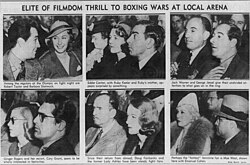
The auditorium's reputation was forged in the ring. It became a landmark for boxing, described by writer Charles Bukowski as a place where starlets and gallery boys alike gathered amidst thick cigar smoke to witness fierce fights.
The 1932 Summer Olympics
The venue played a pivotal role in international sports when it was leased by the 1932 Summer Olympics Organizing Committee. For a nominal fee, it hosted the training and competitions for weightlifting, wrestling, and boxing, marking its status as the largest indoor venue in the United States at the time.
Professional Wrestling and Roller Derby
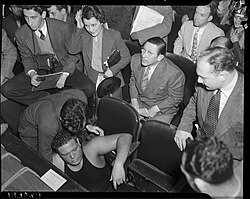
Throughout the mid-20th century, the arena was a sanctuary for wrestling legends. Icons such as André the Giant, Lou Thesz, and Gorgeous George graced its rings. The venue also hosted the Los Angeles T-Birds during the Roller Games era.
Transition to Music and Punk Rock
While rhythm and blues concerts appeared as early as 1951, and hard rock acts like Mountain and Ten Years After performed in the late 1960s, the venue's musical identity shifted dramatically after 1980. A concert by Public Image Ltd., produced by David Ferguson, sparked the auditorium's reputation as a notorious Punk Rock venue.
Promoters Gary Tovar and Goldenvoice Productions subsequently booked a wave of influential acts, including Black Flag, Dead Kennedys, Bad Religion, and Suicidal Tendencies. The venue's gritty atmosphere also made it a favorite for music video productions. High-profile artists including Bon Jovi ("Livin' On A Prayer"), Janet Jackson ("Control"), and Kiss filmed iconic videos within its walls.
Closure, Reopening, and Later Years
The arena closed in the mid-1980s as professional wrestling's center of gravity shifted toward national promotions like the WWF (now WWE) and regional hubs in Dallas and Minneapolis. However, it reopened in 1993 with a reduced capacity.
The Rave Scene and Controversy
In the 1990s, the venue became a hub for all-night rave parties. This era peaked with the "In Seventh Heaven" event on New Year's Eve 1996/1997. The party, which drew over 10,000 attendees, was shut down by the LAPD after dozens of people were hospitalized due to a suspected overdose of a legal high called Liquid fX, leading to clashes between revelers and riot police.
Final Combat Events
The arena hosted a few final high-profile wrestling events, including ECW's Heatwave pay-per-view in 2000—the promotion's only West Coast appearance—and XPW's Freefall in 2002, where New Jack famously tossed Vic Grimes off a 40-foot scaffold.
Venue Specifications Summary
| Era/Event Type | Capacity/Size |
|---|---|
| 1920s-1930s Peak Capacity | 10,400 |
| Post-1993 General Capacity | 7,300+ |
| Boxing/Wrestling (2000s) | 7,030 |
| Seated Concerts (2000s) | 4,514 |
| General Admission Concerts | 7,007 |
| Arena Floor Dimensions | 12,100 sq ft (110' x 110') |
The Final Chapter
In 2005, the property was purchased by the Glory Church of Jesus Christ, a Korean-American Christian church. While the "Grand Olympic Auditorium" name is no longer official, the site remains a point of reference for Los Angeles residents. In 2007, the building received a facelift, returning it to the original brown paint scheme it wore prior to 1993.
Frequently Asked Questions
What was the Grand Olympic Auditorium's role in the 1932 Olympics?
It served as the training and competition site for boxing, wrestling, and weightlifting, and was the largest indoor venue in the United States at that time.
Which famous musicians filmed videos at the venue?
Bon Jovi, Janet Jackson, Kiss, Survivor, and Van Halen all filmed music videos at the auditorium.
Why did the venue stop hosting weekly wrestling in the 1980s?
Promoter Mike Le Bell discontinued the shows due to low attendance as the professional wrestling boom shifted toward national promotions like the WWF and regional hubs in Dallas and Atlanta.
What happened during the "In Seventh Heaven" rave?
The 1996/1997 New Year's Eve event was shut down by the LAPD after dozens of attendees were hospitalized for suspected overdoses of Liquid fX, resulting in a melee between the crowd and riot police.
Who owns the property now?
The property was purchased in 2005 by the Glory Church of Jesus Christ.