1932 Summer Olympics: The Games of the X Olympiad in Los Angeles
The 1932 Summer Olympics, officially known as the Games of the X Olympiad, took place in Los Angeles, California, from July 30 to August 14, 1932. These Games were a landmark event in sporting history, not only for the athletic achievements but for their resilience during the global economic turmoil of the Great Depression.
Despite the economic climate, which led to a decrease in participating nations compared to the 1928 Amsterdam Games, Los Angeles successfully hosted a world-class event. The organizing committee was led by William May Garland, a real estate developer and sports enthusiast who spearheaded the city's efforts to bring the Olympics to the West Coast.
Host City Selection and Preparation
The road to Los Angeles began in 1923 at the 23rd IOC Session in Rome, Italy. In a rare turn of events, Los Angeles was the only city to submit a bid. Consequently, the city was selected by default to host the X Olympiad.
Security and Logistics
Maintaining order for thousands of visitors was a priority for the Los Angeles Police Department (LAPD). Chief Roy E. Steckel deployed 800 sworn officers, with 650 dedicated specifically to daily traffic control. To ensure seamless operations, officers worked 12-hour shifts and postponed vacations, supported by 150 university students acting as traffic assistants. These efforts resulted in very low crime rates throughout the duration of the Games.
The First Olympic Village
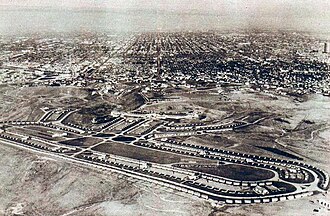
One of the most enduring legacies of the 1932 Games was the creation of the first official Olympic Village, providing a centralized housing location for the athletes.
Key Facts
- Dates: July 30 – August 14, 1932.
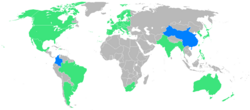
- Participants: 1,332 athletes (1,206 men, 126 women) from 37 nations.
- Scale: 117 events across 14 sports and 20 disciplines.
- Opening Ceremony: Attended by 101,022 people and opened by Vice President Charles Curtis.
- Notable Absence: U.S. President Herbert Hoover did not attend the Games.
- First-Timers: Colombia and the Republic of China made their Olympic debuts.
Venues and Infrastructure
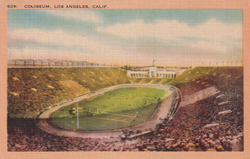
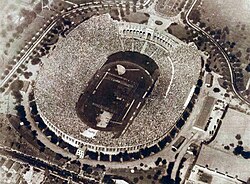
The Games utilized a variety of specialized venues across Los Angeles and surrounding areas. The centerpiece was the Los Angeles Memorial Coliseum, which hosted the opening and closing ceremonies, as well as athletics, equestrian, and field hockey events.
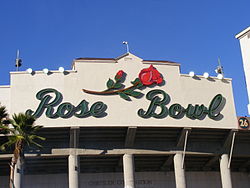
Other significant venues included the Rose Bowl in Pasadena for track cycling and the Long Beach Marine Stadium for rowing. The diversity of locations allowed the city to showcase its geography, from the harbor to the hills.
| Venue | Sports Hosted | Capacity |
|---|---|---|
| Los Angeles Memorial Coliseum | Athletics, Equestrian, Field Hockey, Gymnastics | 105,000 |
| Rose Bowl | Cycling (Track) | 85,000 |
| Long Beach Marine Stadium | Rowing | 17,000 |
| Swimming Stadium | Swimming, Diving, Water Polo, Modern Pentathlon | 10,000 |
| Grand Olympic Auditorium | Boxing, Weightlifting, Wrestling | 10,000 |
The Sporting Program
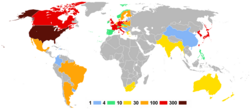
The 1932 program featured 117 events. Notably, football was excluded from these Games following a proposal by Jules Rimet to promote the newly established professional World Cup tournament. The sport would not return to the Olympics until the 1936 Berlin Games.
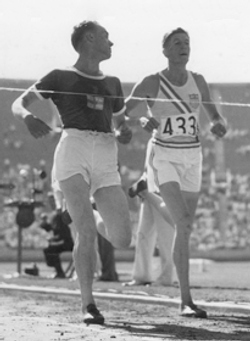
Athletic achievements were highlighted by performances such as Dunc Gray of Australia, who won a gold medal in the 1000m time trial cycling event with a world-record time of 1m 13s.
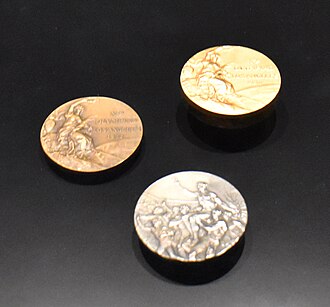
The medals awarded during these Games featured the traditional Trionfo design, symbolizing the victory and prestige of the Olympiad.
Legacy and Impact
The 1932 Games are remembered as a success and a blueprint for future Olympic organization. The attendance record of 101,022 at the opening ceremony remained unbeaten until the Sydney 2000 Games.
The infrastructure left behind continued to serve the public for decades. The Rose Bowl became a legendary venue for American football, and the Los Angeles Harbor evolved into one of the most significant sea ports in the Western United States. Looking forward, the 2028 Summer Olympics will return to Los Angeles, with the Coliseum and Rose Bowl set to become the first stadiums to host three different Olympiads.
Frequently Asked Questions
Why did fewer nations participate in the 1932 Olympics than in 1928?
The Games took place during the Great Depression, and the resulting economic hardship prevented several nations from traveling to Los Angeles.
Who officially opened the 1932 Summer Olympics?
The Games were officially opened by Vice President Charles Curtis.
Which sport was notably missing from the 1932 program?
Football was dropped from the 1932 Games to avoid conflict with and promote the newly created professional World Cup tournament.
What was the cost of tickets for the opening ceremony?
Tickets for the opening ceremony were sold for US $3, which is approximately US $56.02 in 2024 currency.
What was the significance of the 1932 Olympic Village?
The 1932 Games introduced the first official Olympic Village, creating a dedicated residential area for athletes during the competition.