Grammatical Gender: How Languages Categorize Nouns
In the study of linguistics, a grammatical gender system is a specialized form of a noun class system. In these languages, nouns are assigned to specific gender categories. Unlike biological sex, these categories often have little to nothing to do with the real-world qualities of the objects or people they describe. While English has largely moved away from this system, many other world languages rely on it to structure their grammar.
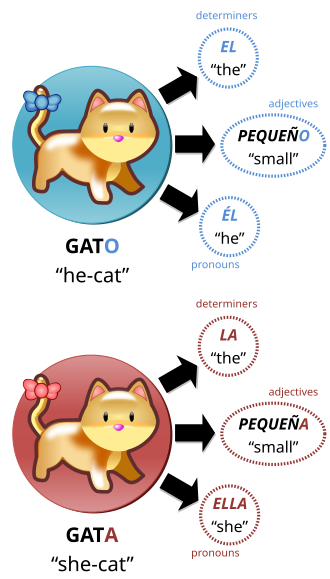
In a gendered language, most or all nouns inherently carry a gender value. This classification triggers a ripple effect throughout the sentence: determiners, adjectives, and pronouns must change their form to agree with the noun they refer to, a process known as agreement or concord.
Key Facts
- Gender Variety: Most languages have two to four genders, though some have as many as 20.
- Common Divisions: Typical systems include masculine/feminine, masculine/feminine/neuter, or animate/inanimate.
- Function: Grammatical gender serves as a tool for disambiguation, helping listeners identify which noun a pronoun or adjective refers to.
- Assignment: Gender can be determined by the word's meaning (semantic), its sound or spelling (morphological), or by arbitrary convention.
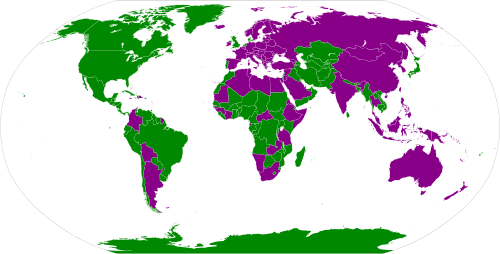
- Global Prevalence: Surveys suggest that approximately half of the world's languages utilize some form of grammatical gender.
Common Gender Contrast Systems
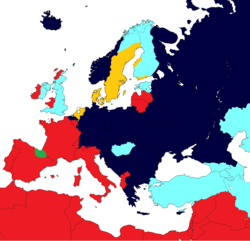
Different languages organize their nouns using various contrast systems. The most frequent include:
- Masculine–Feminine: Common in Romance languages like Spanish and French.
- Masculine–Feminine–Neuter: Found in languages such as German, Icelandic, and Classical Latin.
- Animate–Inanimate: A system that distinguishes between living beings and non-living objects.
- Common–Neuter: A simplified system where a single "common" gender covers both masculine and feminine entities.
How Gender is Manifested in Language
Grammatical gender is not just a label; it manifests physically in the structure of the language through inflection (changing the form of a word) and agreement.
Inflection and Agreement
Gender often changes the spelling or pronunciation of related words. For example, in Welsh, the word for "son" (mab) changes when preceded by a definite article (y mab) or an adjective (y mab mawr). Similarly, in Spanish, the article changes from el (masculine) to la (feminine) depending on the noun.
| Gender | Number | Article | Noun | English Translation |
|---|---|---|---|---|
| Masculine | Singular | el | plato | the dish |
| Masculine | Plural | los | platos | the dishes |
| Feminine | Singular | la | guitarra | the guitar |
| Feminine | Plural | las | guitarras | the guitars |
Pronoun Influence
Gender also extends to pronouns. In Arabic, the phrase "I love you" changes based on the gender of the person being addressed (uḥibbuk a for male, uḥibbuk i for female). In Portuguese, the word for "thank you" changes based on the gender of the speaker (obrigado for male, obrigada for female).
Categorizing Nouns into Genders
Languages use three primary methods to decide which gender a noun belongs to:
1. Morphological Criteria (Form)
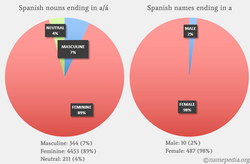
Gender is determined by the word's ending. In many Indo-European languages, an "a" or "e" ending often signals feminine gender. In Spanish, roughly 89% of nouns ending in -a or -á are feminine, and 98% of given names ending in -a follow this rule.
2. Semantic Criteria (Meaning)
Gender is based on the meaning of the word. While "woman" is typically feminine, some languages have strict semantic rules. Zande, for instance, has four genders: male human, female human, animal, and inanimate. Interestingly, some inanimate objects in Zande (like the moon or metal rings) are categorized as animate due to their shape or mythological roles.
3. Arbitrary Conventional Criteria
Some assignments are simply traditional and have no logical basis. In some cases, gender can even shift. In Norwegian, some nouns can be either masculine or feminine depending on the dialect or the speaker's desire for formality.
Grammatical vs. Natural Gender
It is important to distinguish between natural gender (the biological sex of a referent) and grammatical gender (the category assigned by the language). These two do not always align.
There are many instances where a word's grammatical gender contradicts its natural gender. For example:
- In Irish, cailín ("girl") is grammatically masculine.
- In Scottish Gaelic, boireannach ("woman") is masculine.
- In Slovenian, dekle ("girl") is neuter.
- In Czech, děvče ("young girl") is neuter.
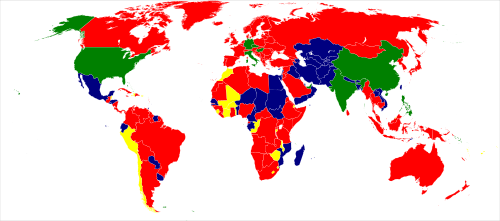
Gender in Borrowed Words
When a language borrows a word from another, it must assign it a gender. This usually happens in one of two ways:
- Borrowing Language Rules: The new word is assigned a gender based on its meaning (natural gender) or because it rhymes with an existing native word. If neither applies, it usually takes the language's "unmarked" or default gender.
- Donor Language Rules: The word retains the gender it had in its original language.
Frequently Asked Questions
Does English have grammatical gender?
Modern English does not have a grammatical gender system for nouns. Gender in English is primarily reflected only in pronouns (such as he, she, and it).
What is the difference between animate and inanimate gender?
Animate gender is assigned to living beings (humans, animals), while inanimate gender is assigned to non-living objects. Some languages, like Slavic languages, use these distinctions to change how adjectives and nouns are declined.
Can a noun have more than one gender?
In most languages, each noun is assigned only one gender. However, in some languages like Norwegian, certain nouns can be either masculine or feminine depending on the dialect or level of formality.
Why do some languages have a neuter gender?
The neuter gender is often used for objects that are neither masculine nor feminine, or as a collective category. In Icelandic, the neuter plural can be used to refer to groups of people of mixed gender.
How does grammatical gender help in communication?
It acts as a tool for disambiguation. By ensuring that adjectives and pronouns agree with the gender of the noun, the speaker can make it clear which person or object they are referring to, even if the noun itself was mentioned earlier in the conversation.