Government Publishing Office: The Backbone of American Official Information
For over 160 years, a vital agency has worked behind the scenes to ensure the citizens of the United States have access to the official records of their government. Originally known as the Government Printing Office, the agency underwent a significant transformation in 2014, rebranding as the Government Publishing Office (GPO) to reflect its evolution from traditional print to a modern, digital-first information provider.
Operating under the jurisdiction of the federal government and overseen by the United States Congress Joint Committee on Printing, the GPO serves all three branches of the federal government. From the official publications of the Supreme Court to the daily notices of the Executive Office of the President, the GPO ensures that the nation's most critical documents are produced and distributed with accuracy and integrity.
Key Facts
- Established: March 4, 1861.
- Headquarters: Washington, D.C.
- Motto: "Keeping America Informed."
- Core Services: Production of U.S. passports, official government journals, and digital information access via GovInfo.
- Digital Evolution: Transitioned from paper-heavy operations to digital document distribution and preservation.
A Rich History of Service
The agency's roots can be traced back to the era of Benjamin Franklin, who served as a "publick printer" for the colonies. However, the modern institution was formally created by a congressional joint resolution in 1860 and began operations on March 4, 1861. At its inception, the office employed 350 people, a number that grew significantly to a peak of 8,500 employees in 1972.
The shift toward computer technology in the 1980s and the gradual replacement of paper with electronic distribution led to a steady decline in staff numbers, which stood at 1,644 in 2025. Despite these changes, the GPO's physical presence remains iconic. Its headquarters, a large red brick structure located at the corner of North Capitol Street NW and H Street NW, is a rare architectural exception in a city dominated by marble and granite buildings.

Core Responsibilities and Publications
The GPO's activities are legally defined by Title 44 of the United States Code. While the agency often contracts out much of the federal government's printing, it maintains in-house production for the most essential official journals of government. These include:
- The Congressional Record: The official record of the proceedings and debates of the U.S. Congress.
- The Federal Register: The daily publication for rules, proposed rules, and notices from federal agencies.
- United States Code: The codification of the general and permanent laws of the United States.
- Public and Private Laws: The official text of legislation passed by Congress.
- House and Senate Journals: Official records of the legislative chambers.
Passport Production and Security
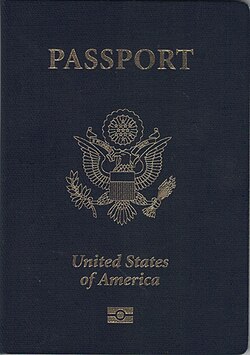
One of the GPO's most recognizable roles is the production of U.S. passports, a service it has provided since the 1920s. Since 2006, the agency has focused on producing e-passports. These documents feature an embedded electronic chip in the cover that contains the same information printed on the page, such as the bearer's name, photo, and birth details. The GPO produces the blank e-passports, while the Department of State handles the application and issuance process.
Additionally, the GPO designs, prints, and encodes Trusted Traveler Program cards (such as NEXUS, SENTRI, and FAST) for the Department of Homeland Security.
Digital Access and Information Dissemination
As the demand for print has declined, the GPO has pivoted toward digital preservation. In 1993, the GPO Electronic Information Access Enhancement Act paved the way for online government information. This evolution led to the launch of GovInfo in 2016, a mobile-friendly website that allows the public to access the Congressional Record, the Federal Register, and the U.S. Code at no charge.
Information dissemination is managed by the Superintendent of Documents (SuDocs), who oversees the Federal Depository Library Program (FDLP), the Cataloging and Indexing Program, and the Publication Sales Program. This ensures that government data is not just produced, but is findable and accessible to all.
Summary of Agency Overview
| Category | Details |
|---|---|
| Agency Executive | Hugh Halpern, Director |
| Parent Agency | U.S. Congress Joint Committee on Printing |
| Primary Website | gpo.gov |
| Key Digital Platform | GovInfo |
| Security | GPO Police (Security Services Division) |
Frequently Asked Questions
Why was the name changed from "Printing Office" to "Publishing Office"?
The name change occurred in December 2014 via an act of Congress. This shift reflected the agency's transition from a focus on physical printing to a broader mission of digital document production, preservation, and publishing.
What is the role of the Superintendent of Documents?
The Superintendent of Documents is responsible for the dissemination of information. This is achieved through various programs, including the Federal Depository Library Program and the Cataloging and Indexing Program.
How can I access government documents for free?
You can access many official materials, including the Federal Register and the U.S. Code, for free through GovInfo, the GPO's mobile-friendly website.
Does the GPO print U.S. currency?
No. While the GPO handles many government printing needs, the Bureau of Engraving and Printing is the agency responsible for printing United States currency.
What is the purpose of the GPO Police?
The GPO Police are part of the Security Services Division. Their mission is to protect the persons and property within the GPO premises and adjacent areas, and they hold concurrent jurisdiction with local law enforcement in Washington, D.C.