Congressional Record: The Official History of United States Legislative Debates
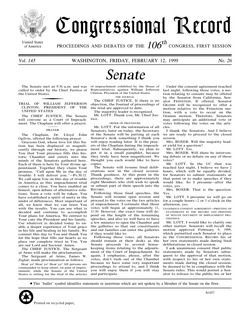
The Congressional Record serves as the definitive, official account of the proceedings and debates within the United States Congress. Published by the United States Government Publishing Office (GPO), this vital document captures the essence of American democracy by recording the words and actions of lawmakers as they shape national policy. Whether through daily editions or permanent bound volumes, the Record provides a transparent window into the legislative process.
Key Facts
- First Published: 1873
- Publisher: United States Government Publishing Office (GPO)
- Frequency: Daily when Congress is in session
- Legal Authority: Authorized by Chapter 9 of Title 44 of the United States Code
- Primary Sections: House, Senate, Extensions of Remarks, and the Daily Digest
Structure and Content of the Record
To ensure comprehensive coverage, the Congressional Record is organized into four distinct sections, each serving a specific purpose in documenting legislative activity:
The House and Senate Sections
These sections contain the formal proceedings of the two separate chambers of Congress. They provide the primary account of floor debates and official actions taken by members of the House of Representatives and the Senate.
Extensions of Remarks
The Extensions of Remarks section is used to include speeches, tributes, and other material that was not spoken during open proceedings. This often includes full testimonies from witnesses in committee hearings who may only provide a summary in person. While Senators rarely use this section, it is frequently utilized by Members of the House of Representatives. In legal contexts, much of this material is classified as secondary authority, forming part of a statute's legislative history.
The Daily Digest
Included at the back of each issue since the 1940s, the Daily Digest acts as a summary of the day's floor and committee activities. It essentially functions as a table of contents for each daily issue, allowing researchers to quickly navigate the day's events.
Revising and Extending Remarks
By custom, members often "revise and extend" their remarks after they have been delivered on the floor but before the Record is published. To maintain accuracy, recent editions distinguish these revised remarks from verbatim reports by using a specific bullet symbol or a different typeface.
The Evolution of Congressional Documentation
The journey toward a complete record of debates was a long one. In the early years of the United States, there was no formal record of debates. While the Constitution requires Congress to keep a journal of its proceedings, the House and Senate Journals historically only recorded basic actions and votes, rather than the nuances of debate.
Predecessors to the Congressional Record
Before the current system was established in 1873, several publications attempted to capture the legislative spirit:
- Register of Debates (1824): Published by Joseph Gales and William Seaton, this provided summaries of leading debates rather than verbatim transcripts.
- Annals of Congress (1834–1856): A retroactive compilation covering debates from 1789 to 1824, primarily using newspaper accounts.
- Congressional Globe (1833): Founded with support from President Andrew Jackson, this publication began using stenographers in 1851 to provide near-verbatim reports.
Accessing the Records
Today, the Congressional Record is highly accessible through various digital platforms. Researchers can find historical records through the Library of Congress and modern updates via Congress.gov. Digital versions of bound editions are available on govinfo.gov for specific ranges, including 1873–2001 and 2005–2015, while daily editions from 1994 to the present are also available online.
| Feature | Details |
|---|---|
| First Issue Year | 1873 |
| Language | English |
| Digital Access | Congress.gov, govinfo.gov, Library of Congress |
| Legal Status | Official record of proceedings |
Frequently Asked Questions
What is the difference between the House Journal and the Congressional Record?
The House Journal is a requirement of the Constitution that records only basic actions and votes, whereas the Congressional Record provides a detailed account of debates and proceedings.
How can I tell if a speech in the Record was revised after it was spoken?
In recent years, revised remarks are identified by a "bullet" symbol or by being printed in a typeface that is visibly different from the verbatim reports.
What is secondary authority in the context of the Congressional Record?
Much of the material in the Extensions of Remarks section is considered secondary authority, meaning it is used as part of the legislative history of a statute rather than being the law itself.
Where can I find the oldest available Congressional Record?
Records prior to 1875 can be accessed via the Library of Congress "American Memory Century of Lawmaking" website.
What is the purpose of the Daily Digest?
The Daily Digest summarizes the day's committee and floor activities and serves as a table of contents for each issue.