Gouldian Finch: The Vibrant Rainbow Bird of Australia
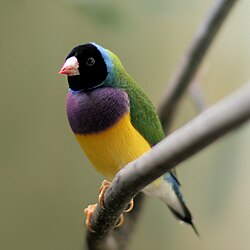
The Gouldian finch (Chloebia gouldiae), frequently referred to as the rainbow finch or Gould's finch, is one of the most visually stunning passerine birds in the world. Native to the rugged landscapes of northern Australia, this small bird is celebrated for its kaleidoscopic plumage and unique biological traits.
First described in 1844 by British ornithologist John Gould—who named the species in honor of his late wife, Elizabeth—the bird was brought to his attention via specimens provided by naturalist Benjamin Bynoe. While French naturalists Jacques Bernard Hombron and Honoré Jacquinot had described the bird years earlier, Gould's classification cemented its place in ornithological records.
Key Facts
- Native Range: Northern Australia, specifically the Kimberley and Northern Territory.
- Diet: Primarily seed-eaters, consuming up to 30% of their body weight daily.
- Appearance: Characterized by red, black, or yellow heads and purple or mauve chests.
- Conservation: Listed as Least Concern by the IUCN, but Endangered under Australia's EPBC Act.
- Unique Ability: Females can bias the sex of their offspring based on the mate's head color.
Physical Characteristics and Variations
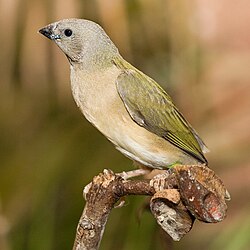
Gouldian finches typically measure between 125 and 140 mm (4.9–5.5 inches) in length. Both sexes exhibit a brilliant array of black, green, yellow, and red markings, though females generally possess less intense coloration. A primary distinguishing feature is the chest color: males typically have a purple chest, while females display a lighter mauve hue.
One of the most fascinating aspects of the species is its head color polymorphism. In the wild, these birds appear with red, black, or yellow heads. While once thought to be three distinct species, science has confirmed these are simply color variants of a single species. In aviculture, selective breeding has further introduced mutations, including silver, blue, and yellow backs.
The Mystery of the Nestling Tubercles
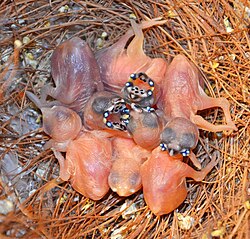
Newly hatched chicks possess prominent rounded tubercles—small, knob-like structures—at the back of the gape (the opening of the mouth). These tubercles have an opalescent lustre that reflects light. Although they have been incorrectly described as phosphorescent in the past, scientific evidence confirms they are not luminescent but simply reflect available light.
Habitat and Distribution
The natural range of the Gouldian finch is concentrated in northern Australia, with strong populations in the Northern Territory and the Kimberley region. Because of their beauty, they were exported globally before the Australian government banned the export of native fauna, leading to the establishment of stable captive populations worldwide.
In the wild, their behavior shifts with the seasons. During the breeding season, they frequent rough scree slopes with sparse vegetation. In the dry season, they become nomadic, traveling wherever food and water are most abundant. Outside of breeding, they often integrate into mixed flocks of masked and long-tailed finches, sometimes numbering between 1,000 and 2,000 individuals.
Diet and Foraging
As specialized seed eaters, Gouldian finches have a high metabolic demand, eating nearly a third of their body weight every day. Their diet varies by season:
- Breeding Season: They primarily consume ripe and half-ripe sorghum grass seeds.
- Dry Season: They forage mainly on the ground for various seeds.
- Wet Season: Spinifex grass seed (Triodia sp.) becomes a critical food source.
While researchers have identified six different species of grass seed in their diet, there is currently no evidence that they consume insects.
Breeding and Genetic Adaptation
Gouldian finches typically nest in tree hollows during the early dry season. The courtship process involves the male bobbing and ruffling his feathers, expanding his chest and forehead plumage to attract a mate. A clutch usually consists of 4 to 8 eggs, with both parents sharing brooding duties during the day, while the female remains on the eggs at night.
Young birds leave the nest between 19 and 25 days and reach full independence by 40 days. To ensure they are fed in the darkness of the tree hollow, chicks use their brightly colored gapes and loud calls to signal their parents.
Sex-Ratio Control
In a remarkable display of biological adaptation, females in Northern Australia can influence the sex of their offspring. Genetic incompatibility between red-headed and black-headed birds can lead to high mortality rates (up to 80%) in female offspring. To counter this, females mating with a bird of a different head color may over-produce sons, sometimes reaching a ratio of four males to one female.
Conservation Status and Threats
The conservation history of the Gouldian finch is complex. While the IUCN Red List currently classifies them as Least Concern, the Australian Government lists them as Endangered under the Environment Protection and Biodiversity Conservation (EPBC) Act 1999.
The population plummeted in the 20th century, dropping from hundreds of thousands to an estimated 2,500 or fewer by the 1980s. While air sac mites were once suspected as the cause, the primary threats are now identified as:
- Wildfires: Late dry season fires destroy the seeds they eat and the tree hollows they need for nesting.
- Climate Change: Cyclones and shifting weather patterns have reduced the availability of nesting hollows in the Northern Territory.
Summary Table: Gouldian Finch Overview
| Feature | Detail |
|---|---|
| Scientific Name | Chloebia gouldiae |
| Average Length | 125–140 mm |
| Primary Diet | Grass seeds (Sorghum, Spinifex) |
| Native Region | Northern Australia |
| Nesting Site | Tree hollows |
| Key Threat | Extensive wildfires and habitat loss |
Aviculture and Popular Culture
Due to their striking colors and relatively low maintenance, Gouldian finches are highly prized in aviculture. They are generally docile and coexist well with other grass finches, waxbills, and parrot finches.
Historically, they were the most sought-after species for trappers in the Kimberley District. Between 1934 and 1939, they were the most exported finch species from Australia. Today, they remain an icon of natural beauty, even serving as the inspiration for the ViewSonic company logo.
Frequently Asked Questions
Why is the Gouldian finch called the rainbow finch?
It earned this nickname because of its vibrant, multi-colored plumage, which includes bright red, yellow, green, purple, and black feathers.
Are the nodules on the chicks' beaks glowing?
No. Although often described as phosphorescent, the opalescent tubercles at the edges of the gape simply reflect light; they are not luminescent.
How do Gouldian finches control the gender of their babies?
Females can bias the sex of their offspring toward males when mating with a partner of a different head color to overcome genetic incompatibilities that would otherwise cause high female mortality.
What is the main threat to wild populations?
The primary threat is the increase in extensive wildfires during the late dry season, which destroys both their food sources (seeds) and their breeding sites (tree hollows).
Can Gouldian finches be kept as pets?
Yes, they are popular in aviculture due to their beauty and low care requirements, though it is now illegal to export them from Australia.