Global Biodiversity Information Facility (GBIF): Open Access to Planetary Life Data
In an era where protecting the natural world is more critical than ever, access to accurate, comprehensive data is the foundation of conservation. The Global Biodiversity Information Facility (GBIF) is an international organization dedicated to making scientific data on biodiversity available via the internet. By utilizing advanced web services, GBIF transforms fragmented biological records into a unified, searchable resource for the global community.
Launched in 2001, GBIF serves as a central hub that connects data provided by numerous institutions worldwide. Its primary goal is to ensure that information regarding the distribution of plants, animals, fungi, and microbes—along with their scientific names—is accessible to anyone, anywhere.
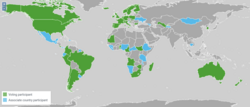
Key Facts
- Founded: 2001 (Active for 25 years).
- Scope: Worldwide coverage of biodiversity and natural history.
- Core Data: Species distribution and scientific naming for plants, animals, fungi, and microbes.
- Growth: Biodiversity data available through the portal has increased by over 1,150% in the last decade.
- Access: Free and open access to support sustainable development.
The Mission and Strategic Priorities
The overarching mission of GBIF is to facilitate free and open access to biodiversity data to underpin sustainable development. To achieve this, the organization focuses on several key strategic priorities:
- Data Mobilization: Encouraging partners to share and digitize biodiversity records.
- Standardization: Developing protocols to ensure interoperability (the ability of different systems to exchange and use information) and scientific integrity.
- Informatics Architecture: Building a digital framework that allows diverse data types from disparate sources to be interlinked.
- Capacity Building: Promoting the development of analytical tools to improve environmental decision-making.
Connecting Biology to Sustainability
GBIF strives to create informatics linkages across the entire spectrum of biological organization, ranging from genes to entire ecosystems. By integrating georeferencing (assigning a physical location to a piece of data) and GIS tools (Geographic Information Systems), GBIF connects raw biological data to urgent issues facing science, society, and global sustainability.
This collaborative effort is bolstered by partnerships with other major international organizations, including:
- The Catalogue of Life partnership
- Biodiversity Information Standards
- The Consortium for the Barcode of Life (CBOL)
- The Encyclopedia of Life (EOL)
- GEOSS (Global Earth Observation System of Systems)
A significant driver of GBIF's recent growth has been the participation of citizen scientists—volunteers who contribute valuable observations to the global database.
Recognition and Awards
To encourage excellence in biodiversity informatics (the application of computer science to biological data), GBIF has a history of recognizing outstanding contributions. From 2002 to 2014, the organization awarded the Ebbe Nielsen Prize, which carried a value of €30,000.
Since 2018, the GBIF Secretariat has transitioned its recognition program to present two annual awards: the GBIF Ebbe Nielsen Challenge and the Young Researchers Award.
GBIF Overview Summary
| Feature | Details |
|---|---|
| Type of Site | Biodiversity and Natural History |
| Area Served | Worldwide |
| Commercial Status | Non-commercial |
| Launch Year | 2001 |
| Primary Data Types | Distribution data and scientific names |
| Official URL | www.gbif.org |
Frequently Asked Questions
What exactly is GBIF?
The Global Biodiversity Information Facility (GBIF) is an international organization that provides a single portal for searching and accessing scientific biodiversity data from institutions around the world via the internet.
What kind of data can be found on the GBIF portal?
The portal primarily hosts distribution data for animals, plants, fungi, and microbes, as well as comprehensive scientific names data.
Is the data provided by GBIF free to use?
Yes, GBIF's mission is to facilitate free and open access to biodiversity data worldwide to support sustainable development.
How has GBIF grown in recent years?
The amount of biodiversity data available through GBIF has increased by more than 1,150% over the past decade, aided significantly by contributions from citizen scientists.
Who are GBIF's primary partners?
GBIF works with several international entities, including the Encyclopedia of Life (EOL), the Catalogue of Life partnership, Biodiversity Information Standards, GEOSS, and the Consortium for the Barcode of Life (CBOL).