German Culture: A Legacy of Art, Philosophy, and Innovation
Germany's cultural identity is a rich tapestry woven from its central position in Europe and a history spanning over a millennium. From the medieval Holy Roman Empire to the modern Federal Republic, the nation has evolved from a collection of diverse regional customs into a global powerhouse of art, music, science, and technology. This evolution is marked by a deep commitment to education, craftsmanship, and a unique ability to preserve historical heritage while leading contemporary trends.
Key Facts
- Language: German is the official language, with approximately 100 million native speakers worldwide.
- Literature: Germany is the world's third-largest book market, trailing only the English-speaking market and China.
- Sports: Association football is the most popular sport, and the German Football Association is the largest of its kind globally.
- Economy: The textile industry is the second-largest producer of consumer goods after food.
- Global Image: Recognized by BBC polls as having one of the most positive global influences in the early 2010s.
Language and Linguistic Diversity
German serves as the official and predominant language and is one of the 24 official working languages of the European Union. While 77% of private households speak only German at home, the country recognizes several minority languages under the European Charter for Regional or Minority Languages, including Danish, Upper Sorbian, Lower Sorbian, North Frisian, Saterland Frisian, and Romani. Low German is specifically recognized as a regional language.
Beyond its borders, German is spoken by roughly 180 million people globally, including 80 million non-native speakers. Multilingualism is common among citizens, with 67% capable of communicating in at least one foreign language.
Intellectual and Artistic Heritage
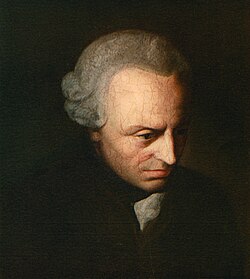
Germany is often described as the land of poets and thinkers. Its literary tradition is anchored by giants such as Goethe and Schiller, and its philosophical legacy includes the influential works of Immanuel Kant and Karl Marx.
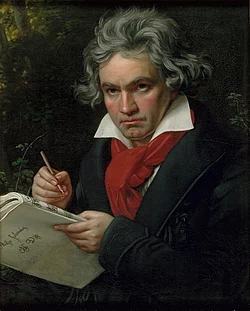
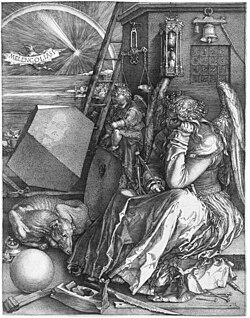
The nation's contribution to the arts is equally profound. In music, the heritage stretches from the Baroque precision of Bach to the Romantic power of Beethoven. In the visual arts, the precision of Albrecht Dürer and the revolutionary modernist architecture of the Bauhaus school have left an indelible mark on global design.
![Bauhaus building (Germany). The Bauhaus style co-started modernist architecture.[30]](/images/13/dd/13dd59b67e81451f883011bc93c21e2c578f1527e08e70fa0e7ceb4d82e42905.jpg)
The Printing Revolution and Publishing
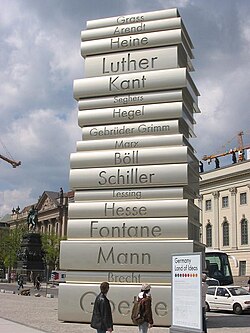
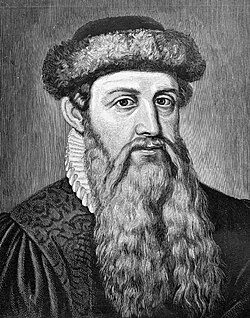
The invention of the movable-type printing press by Johannes Gutenberg sparked a global printing revolution. Today, this legacy continues as German-speaking publishers produce approximately 700 million copies of books annually. The Frankfurt Book Fair remains the world's most significant event for international book trading, boasting a tradition of over 500 years.
Society, Politics, and Military History
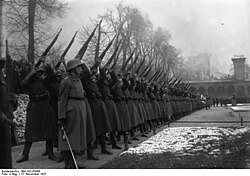
Historically, the military played a central role in German society, particularly during the rise of Prussia under Frederick the Great and the subsequent unification in 1871. Following the devastation of World War II and a period of demilitarization, the Bundeswehr was established in 1955 as a NATO force.
Politically, since 1949, the landscape has been dominated by the Christian Democratic Union (CDU) and the Social Democratic Party (SPD). While these two have provided every chancellor to date, coalition governments often include the Free Democratic Party (FDP) or Alliance 90/The Greens. More recently, the party The Left and the right-wing populist Alternative for Germany (AfD) have gained representation in the Bundestag.
Modern Lifestyle and Leisure
German society is characterized by a high value on leisure and travel. Germans are among the world's most prolific international travelers, spending more on foreign trips than any other nationality as of 2008, with a preference for Spain, Italy, and Austria. This is supported by generous labor laws, where employees typically receive between 25 and 30 paid vacation days annually.
Cuisine and Traditions
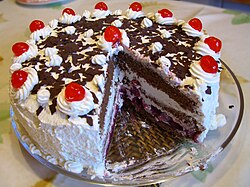
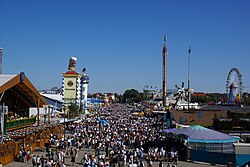
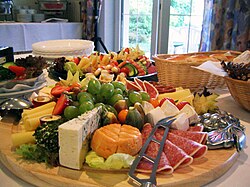
While wine is growing in popularity, beer remains the national drink, with over 1,500 breweries producing more than 5,000 varieties, including Pils, Weizenbier, and Kölsch. The culinary landscape is diverse, ranging from the famous Schwarzwälder Kirschtorte (Black Forest cake) to traditional cold meat buffets.
Sports and Gaming
Sport is an integral part of daily life, with 27 million citizens belonging to sports clubs. Association football is the dominant sport; the Bundesliga is one of the most attended professional leagues globally, and the national team has won the FIFA World Cup four times (1954, 1974, 1990, 2014).
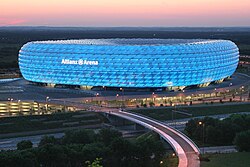
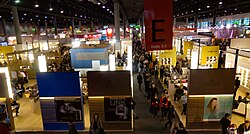
Germany is also a hub for digital entertainment. Gamescom in Cologne is the world's largest gaming event, attracting hundreds of thousands of visitors and exhibitors from dozens of countries.
![The Gamescom in Cologne is the world's largest gaming event, with 370,000 visitors and 1,037 exhibitors from 56 countries attending the event in 2018.[73]](/images/bd/2a/bd2abb8c60d760d386aac4ba0d36412498453cf06f653a48b86dfc36d23db35d.jpg)
Industry and Design
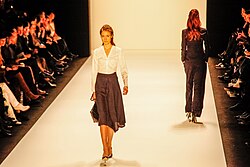
The German textile industry is a major economic driver, consisting of roughly 1,300 companies. Berlin serves as the epicenter for creative fashion, hosting the biannual Berlin Fashion Week and the Bread & Butter trade fair.
| Category | Key Detail | Statistic/Example |
|---|---|---|
| Language | Native Speakers | ~100 Million |
| Publishing | Annual Book Volume | 700 Million copies |
| Sports | Football Association Members | 6.3 Million+ |
| Fashion | Textile Industry Revenue | 28 Billion Euro (2010) |
| Leisure | Avg. Paid Vacation Days | 25 to 30 days |
Frequently Asked Questions
What are the most common minority languages recognized in Germany?
Germany recognizes Danish, Upper Sorbian, Lower Sorbian, North Frisian, Saterland Frisian, and the Romani of the German Sinti and Roma as minority languages, while Low German is classified as a regional language.
How significant is the German book market globally?
Germany ranks third in international book statistics, following only the English-speaking market and the People's Republic of China, producing about 80,000 titles annually.
Which sports are most popular in Germany?
Association football is the most popular sport, though handball, volleyball, basketball, ice hockey, and tennis also attract significant spectator interest.
What is the role of the Bundeswehr in modern Germany?
Established in 1955 following a period of post-WWII demilitarization, the Bundeswehr serves as Germany's military force and is a member of NATO.
How does the German fashion industry contribute to the economy?
The textile industry is the second-largest producer of consumer goods in Germany after food, with nearly 44% of its products being exported.