German Constitutional Reforms of October 1918
In the final weeks of the First World War, the German Empire underwent a rapid and dramatic political transformation. Known as the Oktoberreformen (October Reforms), these legislative changes attempted to pivot the nation from an autocratic system to a parliamentary monarchy. While these reforms were intended to stabilize the empire and secure better peace terms from the Allies, they arrived too late to prevent the total collapse of the imperial system.
The reforms, which officially took effect on October 28, 1918, fundamentally altered the power dynamics of the state. For the first time, the office of the chancellor became dependent on the confidence of the Reichstag (the imperial parliament) rather than the sole will of the Emperor. Additionally, the power to declare war or sign peace treaties was shared between the Reichstag and the Bundesrat (the federal council representing the states).
Key Facts
- Effective Date: October 28, 1918.
- Primary Change: The Chancellor became accountable to the Reichstag via votes of confidence/no confidence.
- War Powers: Declarations of war and peace treaties required consent from both the Reichstag and Bundesrat.
- Key Figure: Prince Max von Baden served as the reform-era Chancellor.
- Outcome: The reforms were short-lived, superseded by the German Revolution and the 1919 Weimar Constitution.
The Road to Reform: War and Political Pressure
The Imperial Political Structure
Under the 1871 constitution, the German Empire was a federation of princes led by the King of Prussia, who served as the German Emperor. The Emperor held immense power, acting as the commander-in-chief of the Army and Navy and appointing the chancellor, who was responsible only to the crown. The government lacked a traditional cabinet of responsible ministers, relying instead on state secretaries with limited autonomy.
The Impact of World War I
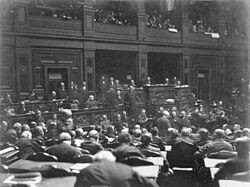
While the Reichstag initially supported the war effort in 1914, support eroded over time. By July 1917, a majority passed the Reichstag Peace Resolution, signaling a desire for a negotiated end to the conflict. This led to the creation of the Inter-Party Committee, a coalition-like forum including the Social Democratic Party (SPD), the Catholic Centre Party, and the Progressive People's Party.
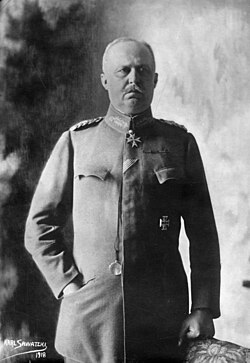
By late 1918, Germany's military position had deteriorated. The Supreme Army Command, led by Generals Paul von Hindenburg and Erich Ludendorff, pushed for democratization not out of conviction, but as a strategic move. They believed a more democratic government would be more palatable to U.S. President Woodrow Wilson and could serve as a scapegoat if the eventual peace treaty was unfavorable.
The Implementation of the October Reforms
The Appointment of Max von Baden
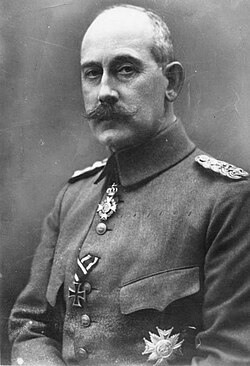
On October 3, 1918, the Emperor appointed Prince Max of Baden as chancellor. A liberal non-partisan, Max von Baden brought SPD politicians into the government for the first time and successfully secured the dismissal of Ludendorff and the end of unrestricted submarine warfare.
Legislative Changes and Parliamentary Struggle
The transition was not seamless. Initial reform bills proposed by the Ministry of the Interior were viewed as insufficient by the Inter-Party Committee, which demanded full parliamentary accountability and civilian control over the military. After significant debate and a formal expression of confidence in the Chancellor on October 24, the Reichstag approved a series of amendments that shifted the balance of power.
Core Constitutional Changes
- Executive Accountability: The Reichstag gained the power to force the chancellor's resignation through a vote of no confidence.
- Ministerial Responsibility: The chancellor and ministers became accountable to both the Bundesrat and the Reichstag.
- Military Oversight: Ministers of War for the various states became responsible to the parliament and the Bundesrat, requiring them to countersign military appointments and promotions.
- Government Composition: Reichstag deputies could now serve as state secretaries without losing their parliamentary seats.
| Feature | Pre-Reform System | Post-Reform System |
|---|---|---|
| Chancellor's Appointment | Appointed by and responsible to the Emperor | Dependent on Reichstag confidence |
| War/Peace Declarations | Imperial prerogative / Bundesrat approval | Required both Reichstag and Bundesrat consent |
| Military Command | Direct Imperial command (Kommandogewalt) | Subject to parliamentary control/countersigning |
| Cabinet Members | State secretaries responsible to Chancellor | Accountable to Reichstag and Bundesrat |
Collapse and the Birth of the Republic
The reforms were almost immediately overtaken by events. On October 29, the mutiny of the High Seas Fleet sparked the Kiel mutiny, which escalated into the German Revolution of 1918–1919. Workers' and soldiers' councils seized power across the country.
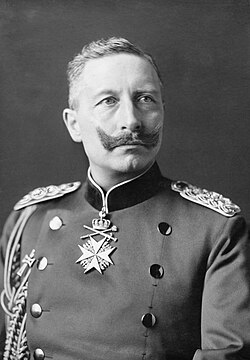
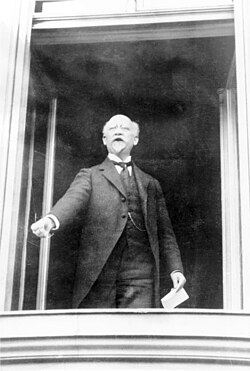
Fearing civil war and unable to convince Emperor Wilhelm II to abdicate voluntarily, Chancellor Max von Baden proclaimed the Emperor's abdication on November 9, 1918. Simultaneously, Philipp Scheidemann proclaimed the German Republic from the Reichstag building to preempt the establishment of a soviet republic.
The transition culminated in the Weimar Constitution of August 1919. This new document mirrored some of the October reforms—such as the chancellor's dependence on parliamentary confidence—but replaced the monarchy with a presidency. However, the lack of a "constructive vote of no confidence" (which requires a majority to agree on a successor before removing a leader) contributed to the political instability that plagued the Weimar Republic.
Frequently Asked Questions
Why were the October Reforms introduced?
The reforms were primarily a strategic attempt by the Supreme Army Command and the government to secure better peace terms from the Allies, specifically the United States, and to shift the blame for a potentially harsh peace treaty onto the political parties.
Did the reforms successfully create a parliamentary monarchy?
Only briefly. While the laws changed the structure of the government on paper, the outbreak of the German Revolution and the subsequent abdication of Kaiser Wilhelm II ended the monarchy entirely within days of the reforms taking effect.
What was the role of the Inter-Party Committee?
The Inter-Party Committee was a coalition of the SPD, the Catholic Centre Party, and the Progressive People's Party. They pushed for more decisive democratization than the government initially offered, insisting that the chancellor be formally accountable to Parliament.
How did the October Reforms influence the later Weimar Constitution?
The reforms established the precedent for a government dependent on parliamentary confidence. The Weimar Constitution adopted this model, though it lacked certain stability mechanisms (like the constructive vote of no confidence) that are present in modern German law.