George Seferis: The Diplomat Poet of Hellenic Humanism
George Seferis was a towering figure in 20th-century literature, blending a distinguished career in international diplomacy with a poetic voice that captured the essence of the Greek spirit. His work is defined by a profound sense of exile, a deep connection to the Hellenic world, and a commitment to humanist values that transcended national borders.
Early Life and the Experience of Exile
Born in Smyrna, Asia Minor (modern-day İzmir, Turkey), Seferis was the son of Stelios Seferiadis, a lawyer, professor, poet, and translator. His father's influence was pivotal, instilling in him a support for demotic Greek—the natural, spoken language of the people—over katharevousa, the formal and official version of the language used at the time.
After moving to Athens in 1914, Seferis pursued higher education in Paris from 1918 to 1925, where he studied law at the Sorbonne. A defining moment of his life occurred in September 1922, when the Turkish Army took Smyrna following a two-year Greek military campaign. This event forced many Greeks, including Seferis's family, to flee Anatolia. This trauma of displacement and the feeling of being an exile deeply informed his poetry, often manifesting in his fascination with the odyssey of Odysseus.
During his formative years, Seferis was heavily influenced by the works of T. S. Eliot, Ezra Pound, and Constantine P. Cavafy.
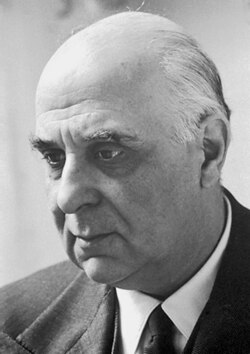
A Distinguished Diplomatic Career
Returning to Athens in 1925, Seferis entered the Greek Ministry of Foreign Affairs in 1926. He spent decades navigating the complexities of international relations, serving in various capacities across the globe.
- United Kingdom: Served from 1931–1934 and later as Ambassador from 1957 to 1961.
- Albania: Held a post from 1936 to 1938.
- World War II: Accompanied the Greek government-in-exile to Crete, Egypt, South Africa, and Italy before returning to Athens in 1944.
- Middle East: Served in Ankara, Turkey (1948–1950) and as minister to Lebanon, Syria, Jordan, and Iraq (1953–1956).
His professional success was matched by academic recognition, receiving honorary doctorates from the universities of Cambridge, Oxford, Thessaloniki, and Princeton.
The Connection to Cyprus
Seferis first visited Cyprus in November 1953, finding a landscape and cultural mixture that reminded him of his childhood summer home in Skala (Urla). This emotional connection ended a multi-year period of poetic silence, inspiring the work Imerologio Katastromatos III. Originally titled Cyprus, where it was ordained for me... (referencing Euripides' Helen), the work reflected a sense of homecoming.
Beyond art, Seferis utilized his diplomatic standing to seek a resolution to the Cyprus dispute involving the UK, Greece, and Turkey. He described his political leanings as liberal, democratic, or republican, marking one of the few instances where his personal emotions and political duties intertwined.
The Nobel Prize and Humanist Philosophy
In 1963, George Seferis became the first Greek citizen to be awarded the Nobel Prize for Literature. The committee recognized him for his "eminent lyrical writing, inspired by a deep feeling for the Hellenic world of culture." He had been nominated four times previously, with the winning nomination coming from Eyvind Johnson.
In his acceptance speech, Seferis pivoted from nationalism toward a broader humanist philosophy. He referenced the riddle of the Sphinx, noting that the answer "Man" destroyed the monster, and urged the world to apply that same humanism to destroy modern "monsters." While some viewed him as a nationalist, his focus was actually on the unifying strand of humanism found within the continuity of Greek culture.
| Category | Details |
|---|---|
| Birthplace | Smyrna, Asia Minor (Ottoman Empire) |
| Education | Law at the Sorbonne, Paris |
| Key Diplomatic Posts | UK, Albania, Turkey, Lebanon, Syria, Jordan, Iraq |
| Major Award | Nobel Prize in Literature (1963) |
| Literary Influence | T. S. Eliot, Ezra Pound, C. P. Cavafy |
| Death | September 20, 1971 (Athens) |
Resistance and Final Years
In 1967, Greece fell under the control of the Regime of the Colonels, a right-wing military junta characterized by torture and censorship. Seferis courageously opposed the regime. On March 28, 1969, he delivered a powerful statement via the BBC World Service and Athenian newspapers, declaring, "This anomaly must end."
Seferis passed away on September 20, 1971, due to pneumonia complicated by a stroke following surgery for a bleeding ulcer. He did not live to see the fall of the junta in 1974. At his funeral, he was honored as a popular hero, with crowds singing Mikis Theodorakis's setting of his poem "Denial," which had been banned by the regime.
Key Facts
- First Greek Nobel Laureate: He was the first person from Greece to win the Nobel Prize in Literature (1963).
- Diplomatic Reach: He served as the Greek Ambassador to the United Kingdom from 1957 to 1961.
- Language Advocate: He championed the use of demotic Greek over the formal katharevousa.
- Political Courage: He used the BBC to publicly denounce the military junta in 1969.
- Thematic Focus: His poetry frequently explored themes of exile and the continuity of Hellenic culture.
Frequently Asked Questions
Why was the theme of exile so prominent in Seferis's work?
The theme of exile stemmed from his childhood experience in Smyrna, which was taken by the Turkish Army in 1922, forcing his family to flee Anatolia. This sense of loss and displacement deeply influenced his poetry and his interest in the story of Odysseus.
What was Seferis's stance on the Greek language?
Influenced by his father, Seferis supported the use of demotic Greek, the natural language spoken by the people, rather than the formal, official language known as katharevousa.
How did Cyprus influence his poetry?
Seferis felt a strong emotional connection to Cyprus due to its resemblance to his childhood home in Skala. This inspiration led to the creation of Imerologio Katastromatos III, ending a period of several years during which he had not written poetry.
What did Seferis mean by his reference to the Sphinx in his Nobel speech?
He used the story of Oedipus answering the Sphinx's riddle with the word "Man" to emphasize a humanist philosophy. He suggested that recognizing our shared humanity is the key to destroying the "monsters" of the modern world.
How did Seferis react to the Regime of the Colonels?
Seferis took a firm stand against the repressive military junta, using the BBC World Service in 1969 to publicly demand that the "anomaly" of the regime's rule must end.