General Sir Nick Carter: A Legacy of British Military Leadership
General Sir Nicholas Patrick Carter is a distinguished retired senior officer of the British Army whose career spanned over four decades of global conflict and strategic reform. From his early days as a commissioned officer in 1978 to reaching the pinnacle of the UK's military hierarchy, Carter's trajectory reflects the evolving nature of modern warfare and the complexities of international peacekeeping.
Carter is perhaps best known for serving as the Chief of the Defence Staff (the professional head of the British Armed Forces) from June 2018 to November 2021. His tenure was marked by a focus on emerging threats, including cyber-attacks and hybrid warfare, as well as the management of the military's response during the early stages of the COVID-19 pandemic.
Key Facts
- Highest Rank: General
- Top Appointments: Chief of the Defence Staff (2018–21) and Chief of the General Staff (2014–18).
- Key Conflicts: The Troubles, Bosnian War, Kosovo War, Iraq War, and War in Afghanistan.
- Strategic Contribution: Primary architect of the Army 2020 concept.
- Education: Winchester College and the Royal Military Academy Sandhurst.
Early Career and Field Experience
Born in Nairobi, British Kenya, in 1959, Nick Carter began his military journey at the Royal Military Academy Sandhurst. He was commissioned into the Royal Green Jackets on April 8, 1978. His early years as a junior officer saw him deployed across diverse environments, including Cyprus, Germany, and Northern Ireland.
By the late 1990s, Carter had risen to the rank of lieutenant colonel and was appointed Commanding Officer of the 2nd Battalion, Royal Green Jackets. This period was defined by intense peacekeeping operations in the Balkans. In 1998, he deployed to Bosnia, and in 1999, he served in Kosovo.
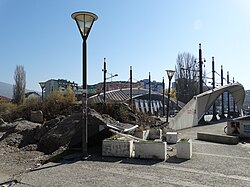
During the Kosovo conflict, Carter faced one of the most precarious assignments of his career at the Ibar River Bridge in Kosovska Mitrovica. Tasked with maintaining a fragile peace, he commanded a group of peacekeepers positioned between thousands of opposing Serbs and Albanians, a role he later described as being the "meat in the sandwich."
Rise to High Command
As Carter ascended through the ranks, his responsibilities shifted from tactical field command to strategic oversight. In 2004, as a brigadier, he took command of the 20th Armoured Brigade and led British forces in Basra during the Iraq War. His leadership extended into Afghanistan, where he served as General Officer Commanding 6th Division and Commander of the ISAF (International Security Assistance Force) Regional Command South.
Returning to the UK, Carter became a pivotal figure in military restructuring. As Deputy Commander Land Forces, he was the main architect of Army 2020, a comprehensive concept designed to reorganize the British Army's structure and capabilities for the future.
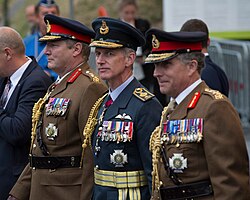
In September 2014, Carter reached the top of the Army's hierarchy as the Chief of the General Staff. He later transitioned to the role of Chief of the Defence Staff in June 2018, succeeding Air Chief Marshal Sir Stuart Peach.
Strategic Vision and Public Advocacy
During his time as Chief of the Defence Staff, General Carter became a vocal advocate for increased defence spending. He warned that the UK risked exposure to hybrid warfare—a blend of conventional military force and irregular tactics like cyber-attacks and disinformation—if it failed to keep pace with adversaries, specifically citing Russia.
Carter also took a firm stance on the legal challenges facing veterans of The Troubles in Northern Ireland. While acknowledging that genuine wrongdoing should be addressed, he vowed to protect serving and former personnel from "vexatious claims" that lacked merit.
Career Summary Table
| Period | Role/Appointment | Key Focus/Location |
|---|---|---|
| 1998–2000 | CO, 2nd Battalion, Royal Green Jackets | Bosnia and Kosovo |
| 2004–2005 | Commander, 20th Armoured Brigade | Basra, Iraq |
| 2009–2011 | GOC 6th Division / Commander ISAF RC South | Afghanistan |
| 2014–2018 | Chief of the General Staff | Head of the British Army |
| 2018–2021 | Chief of the Defence Staff | Head of UK Armed Forces |
Controversies and Perspectives
Like many high-ranking commanders in prolonged conflicts, Carter's leadership in Afghanistan drew mixed reviews. Some US officers, including Lieutenant General Daniel P. Bolger, criticized him as being "risk-averse" and claimed his approach hindered troops on the front line.
However, these claims were strongly contested by other senior leaders. Lieutenant General Ben Hodges and other subordinates defended Carter, arguing that his emphasis on minimizing civilian casualties was essential for the mission's success and that he frequently put himself in danger by visiting forward positions in key towns and villages.
Post-Military Life
Following his retirement from active service in November 2021, General Carter has remained active in global security. In 2024, he joined the Tony Blair Institute for Global Change, serving as a Strategic Counsellor for Peace and Security. He also continues his philanthropic work as the patron for the charity Supporting Wounded Veterans.
Frequently Asked Questions
What was General Sir Nick Carter's highest military rank?
General Sir Nick Carter achieved the rank of full General in the British Army.
What was the "Army 2020" concept?
Army 2020 was a strategic restructuring of the British Army for which General Carter was the main architect, aimed at redefining the force's structure and capabilities.
Which major conflicts did General Carter serve in?
He served in The Troubles in Northern Ireland, the Bosnian War, the Kosovo War, the Iraq War, and the War in Afghanistan.
What is the role of the Chief of the Defence Staff?
The Chief of the Defence Staff is the professional head of the United Kingdom's Armed Forces, responsible for providing military advice to the government and overseeing the strategic direction of the military.
What is General Carter's current role after retirement?
As of 2024, he serves as a Strategic Counsellor for Peace and Security at the Tony Blair Institute for Global Change.