Gary Giddins: The Definitive Voice of American Jazz Criticism
Gary Giddins (born 1948) stands as one of the most influential figures in the documentation and analysis of American jazz. As a prolific author, critic, and historian, Giddins has spent decades bridging the gap between the technical complexities of jazz performance and the public's understanding of the genre.
Giddins first gained widespread recognition through his work with The Village Voice, where he began writing in 1973. For thirty years, his influential "Weather Bird" column served as a critical touchstone for jazz enthusiasts until its conclusion in 2003.
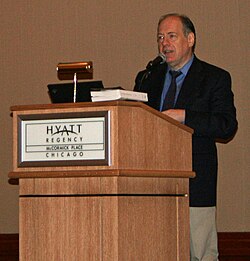
Key Facts
- Career Span: Wrote for The Village Voice from 1973 to 2003.
- Musical Contribution: Co-founded the American Jazz Orchestra in 1986 with John Lewis.
- Academic Leadership: Served as executive director of the Leon Levy Center for Biography at the CUNY Graduate Center for five years.
- Major Accolades: Recipient of a Guggenheim Fellowship (1986) and a Grammy Award for Best Album Notes (1986).
- Specializations: Renowned expert on Charlie Parker, Louis Armstrong, and Bing Crosby.
Literary and Musical Contributions
Beyond his journalism, Giddins has authored numerous books that serve as essential texts for jazz students and historians. His work often focuses on the tension between tradition and innovation—the process by which jazz evolves while remaining rooted in its historical foundations.
Defining Jazz Literature
Giddins has produced comprehensive biographies and critical surveys. Notable works include Celebrating Bird: The Triumph of Charlie Parker (1987) and Satchmo: The Genius of Louis Armstrong (1988). His 1998 book, Visions of Jazz: The First Century, earned significant critical acclaim, including the National Book Critics Circle Award.
The American Jazz Orchestra
In 1986, Giddins expanded his influence from the page to the stage by co-creating the American Jazz Orchestra with John Lewis. This ensemble focused on presenting a curated jazz repertory, featuring collaborations with legendary musicians such as Tony Bennett.
Film and Media Work
Giddins has been a vital contributor to jazz cinema and documentaries, ensuring that the oral history of the genre is preserved. He provided interviews for Ken Burns' 10-part PBS series Jazz and served as a narrator and interviewer for the NYU Jazz Master Class Series (2004–2007), which featured masters like Cecil Taylor and Hank Jones.
Since 2003, he has also served as a consultant and provided liner notes and commentaries for The Criterion Collection, extending his critical eye to classic cinema.
Career Summary and Recognition
| Category | Key Highlights | Notable Awards |
|---|---|---|
| Writing | The Village Voice, multiple jazz biographies | National Book Critics Circle Award, American Book Award |
| Music | American Jazz Orchestra | Grammy Award (Best Album Notes) |
| Film | PBS Jazz, NYU Master Class Series | Criterion Collection Consultant |
| Academic | Leon Levy Center for Biography | Honorary Doctorate (Grinnell College) |
Frequently Asked Questions
What is Gary Giddins' most famous column?
His most famous column was "Weather Bird," which appeared in The Village Voice from 1973 until 2003.
Which jazz musicians has Giddins written extensively about?
Giddins is particularly noted for his deep dives into the lives and works of Charlie Parker (Bird) and Louis Armstrong (Satchmo), as well as his extensive research on Bing Crosby.
Did Gary Giddins win any Grammy Awards?
Yes, he won a Grammy Award for Best Album Notes in 1986, following nominations in 1982 and 1990.
What was the purpose of the American Jazz Orchestra?
Created in 1986 by Giddins and John Lewis, the orchestra was designed to present concerts using a specific jazz repertory, featuring high-profile musicians like Tony Bennett.
What academic role did Giddins hold?
He served as the executive director of the Leon Levy Center for Biography at the Graduate Center of the City University of New York (CUNY) for a period of five years.