Crooning: The History and Evolution of Intimate Vocal Style
Crooning is a smooth, intimate style of singing that first emerged in the 1920s, fundamentally changing how vocalists interacted with their audience. Unlike the booming projection required for theater performances, crooning relies on a softer delivery that creates a sense of personal closeness between the singer and the listener.
This stylistic shift was made possible by the invention of improved microphones. These devices could capture quieter sounds and a broader range of frequencies, allowing singers to utilize the proximity effect—a phenomenon where moving closer to the microphone increases the bass response and creates a more intimate sound. This new approach was particularly popular among a youth subculture known as "bobby soxers." While the style developed alongside big bands, it reached its peak popularity from the 1940s through the late 1960s.

Key Facts
- Technological Catalyst: The advent of electrical recording and radio broadcasting enabled the softer crooning style.
- Defining Era: The style dominated popular music from the 1920s, peaking between the 1940s and late 1960s.
- Key Pioneers: Early figures include Gene Austin, Bing Crosby, and Rudy Vallée.
- Vocal Shift: The preferred voice range for crooners shifted from tenor to baritone in the early 1930s.
- Genre Influence: Crooning heavily influenced country music and continues through the modern interpretation of the Great American Songbook.
The Rise and Controversy of the Crooner
Before the microphone, singers had to project their voices to reach the back rows of a theater. The introduction of the microphone allowed for a more conversational and personal delivery. While Al Bowlly, Bing Crosby, Gene Austin, Art Gillham, and Vaughn De Leath are often credited as inventors of the style, Rudy Vallée is credited with bringing it to widespread popularity.
Vallée became a radio sensation with his signature greeting, "Heigh ho, everybody," broadcasting from a New York City nightclub. His appeal was so intense that his first film, The Vagabond Lover, was marketed with the phrase, "Men Hate Him! Women Love Him!" His popularity led to the "Vallee Peril," where mounted police were sometimes needed to manage crowds of swooning fans.
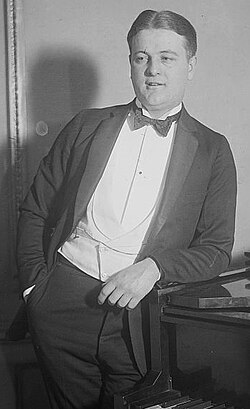
Despite its popularity, crooning faced significant backlash. By the early 1930s, the term "crooner" was often used pejoratively. The New York Singing Teachers Association (NYSTA) called the style "corrupt," and Cardinal William O'Connell of Boston described it as "base" and "degenerate." Even The New York Times dismissed it as a passing fad, comparing it to tandem bicycles and midget golf.
Diverse Interpretations: Female and Country Crooners
Female Crooners
While often associated with men, crooning was also adopted by female singers, particularly those with low alto voices. Early examples include Lee Morse, who appeared in Vitaphone shorts in 1930. In 1930, the Cleveland Plain Dealer identified an "All-American Crooning Eleven," which included Ruth Etting, Helen Morgan, Libby Holman, Bernadene Hayes, and Annette Hanshaw.
The style remained successful for women into the 1950s with artists like Teresa Brewer, Patti Page, and Anita O'Day. Later, in the 1960s and 1970s, the legendary blues singer Nina Simone was also described as a crooner.
Country Crooners
Bing Crosby's influence extended into country music, notably with his 1940 hit "San Antonio Rose." This paved the way for other artists to blend pop intimacy with country themes. Perry Como achieved a smash hit with "Deep in the Heart of Texas" in 1942, heavily influenced by Crosby's style.
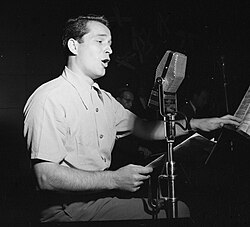
Other notable country crooners include Eddy Arnold, Jim Reeves, and Ray Price. The cross-pollination continued as pop crooners like Tony Bennett and Guy Mitchell scored hits with country songs, and Dean Martin recorded country music during his time with Reprise Records.
Modern Revival of the Great American Songbook
The crooner style saw a significant resurgence in the late 20th and early 21st centuries, focusing on the Great American Songbook (the collection of most influential American popular songs from the early 20th century).
Harry Connick Jr. played a pivotal role in this revival during the 1980s and 90s, specifically through the soundtrack for When Harry Met Sally (1989). This was followed by Michael Bublé in the early 2000s, who blended traditional swing and jazz with modern pop sensibilities.
Other contemporary figures keeping the tradition alive include Seth MacFarlane, who released acclaimed albums like Music Is Better Than Words (2011), and Michael Feinstein, who is dedicated to preserving the Songbook. Newer artists such as Tommy Ward, mentored by Quincy Jones, and the Dutch singer Dennis van Aarssen continue to bring the smooth, intimate style to modern audiences.
Summary of Crooning Eras
| Era | Key Characteristics | Notable Artists |
|---|---|---|
| 1920s - 1930s | Emergence of microphones; shift from projection to intimacy. | Rudy Vallée, Bing Crosby, Gene Austin |
| 1940s - 1960s | Peak popularity; association with big bands and pop standards. | Frank Sinatra, Perry Como, Al Bowlly |
| 1950s - 1970s | Expansion into country music and female alto vocals. | Ray Price, Nina Simone, Patti Page |
| 1980s - Present | Revival of jazz standards and the Great American Songbook. | Harry Connick Jr., Michael Bublé, Seth MacFarlane |
Frequently Asked Questions
What exactly is a crooner?
A crooner is a singer who uses a smooth, intimate vocal style. This style is characterized by a softer delivery that suggests a personal connection with the listener, rather than the loud projection used in traditional theater singing.
How did technology enable the crooning style?
The development of electrical recording and sensitive microphones allowed singers to be heard even when singing softly. Specifically, the proximity effect allowed vocalists to exploit lower frequencies by singing close to the microphone.
Why was crooning controversial in the 1930s?
Some critics, including religious leaders and singing teachers, viewed the style as "degenerate" or "corrupt." It was seen by some as an unnatural way of singing that lacked the discipline of traditional vocal projection.
Did Frank Sinatra consider himself a crooner?
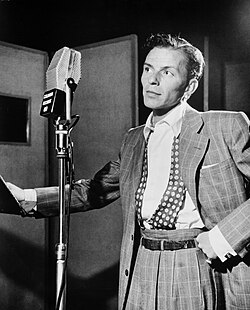
Interestingly, despite being one of the most famous examples of the style, Frank Sinatra did not consider himself or Bing Crosby to be "crooners." Other artists of the era, such as Russ Columbo, also rejected the label.
Who are the most prominent modern crooners?
Modern artists who have revived the style include Harry Connick Jr., Michael Bublé, and Seth MacFarlane, as well as preservationists like Michael Feinstein.