Garlic Chives: A Versatile Culinary and Ornamental Perennial
Known scientifically as Allium tuberosum, garlic chives—also referred to as Oriental garlic, Asian chives, or Chinese leeks—are a remarkable perennial plant with a rich history of cultivation. Native to the Chinese province of Shanxi, this species has traveled far beyond its origins, becoming a staple in Asian kitchens and a popular choice for gardeners worldwide.
Unlike common onions or garlic, garlic chives possess a distinct morphology and a flavor profile that leans more toward garlic than traditional chives. Whether used as a flavorful seasoning in a stir-fry or as a striking ornamental in a garden, this plant offers unique benefits across various cultures.
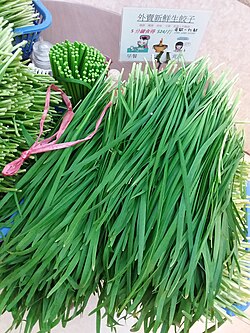
Key Facts
- Scientific Name: Allium tuberosum
- Flavor Profile: More similar to garlic than standard chives.
- Growth Habit: Rhizomatous, clump-forming perennial.
- Hardiness: Cold-hardy to USDA zones 4–10.
- Primary Uses: Culinary herb and ornamental plant.
- Flower Type: White flowers arranged in a round cluster called an umbel.
Botanical Description and Taxonomy
Allium tuberosum is a clump-forming perennial that grows from a small, tough, and fibrous rhizome (an underground plant stem that sends out roots and shoots). Its leaves are strap-shaped with triangular bases, measuring between 1.5 and 8 mm in width. In the late summer or autumn, the plant produces many white flowers on stalks that reach heights of 25 to 60 cm.
Taxonomically, the species belongs to the family Amaryllidaceae and the genus Allium. It is classified within the subgenus Butomissa, a group that includes only A. tuberosum and A. ramosum, which are often studied to determine if they represent distinct genetic entities.
Growth and Climate Adaptability
The plant's behavior varies significantly depending on the climate. In warmer regions (USDA zone 8 and above), garlic chives may remain green throughout the entire year. However, in colder climates (USDA zones 4 to 7b), the leaves and stalks die back to the ground during winter, only to resprout from the roots or rhizomes in the spring.
Global Distribution and Ecology
While the species originated in the Siberian–Mongolian–North Chinese steppes, it is now widely naturalized. It has been reported growing wild in several United States states, including Illinois, Michigan, Ohio, and Wisconsin. Due to its high aggressiveness and the availability of seeds, it is believed to be even more widespread across North America than official reports suggest.
In some parts of the world, such as Australia, A. tuberosum is classified as a noxious weed or an invasive species. This is because it can spread rapidly and create monocultures—areas where a single species dominates the landscape, often at the expense of local biodiversity.
Cultivation and Varieties
Garlic chives are considered easy to grow and are highly adaptable. They can be propagated by dividing existing clumps or by planting seeds. While many grow them for food, others value them as ornamental plants. Several cultivars have been developed for specific purposes:
- 'Shiva': Developed for improved leaf production.
- 'Nien Hua': Developed for improved flower stem production.
- 'Monstrosum': A giant variety used primarily for ornamental purposes.
Culinary Uses Across Cultures
The culinary applications of garlic chives are vast, utilizing the flat leaves, stalks, and even immature flower buds. In many Asian traditions, a method called blanching is used, where the plant is grown in dark environments to produce yellow garlic chives (jiǔhuáng), a highly regarded delicacy.
Regional Culinary Traditions
Different regions utilize the plant in unique ways:
- China: Used in dumplings (with egg, shrimp, or pork), stir-fries, and flatbreads. The flowers can also be fermented into sauce.
- Japan: Known as nira, it is used in miso soups, salads, and dishes like gyōza.
- Korea: Known as buchu, it is eaten fresh as namul, pickled as kimchi, or pan-fried in buchimgae.
- India: In Manipur, it serves as a substitute for onion and garlic and is used in the curry dish Maroi Thongba.
- Vietnam: Known as hẹ, it is often used in broths with sliced pork kidneys.
- Central Asia: Used as a filling for traditional dishes like manty and samsa.
| Feature | Details |
|---|---|
| Scientific Name | Allium tuberosum |
| Leaf Shape | Strap-shaped with triangular bases |
| Flower Color | White |
| USDA Hardiness | Zones 4–10 |
| Common Names | Chinese chives, Asian chives, Garlic chives |
Frequently Asked Questions
How does the flavor of garlic chives differ from regular chives?
While regular chives have a mild onion flavor, garlic chives have a flavor profile that is much closer to garlic.
Can I grow garlic chives in cold climates?
Yes, they are cold-hardy to USDA zones 4–10. In colder zones, the plant will die back to the ground in winter and resprout in the spring.
What are yellow garlic chives?
Yellow garlic chives (jiǔhuáng) are produced by growing the plant in dark environments to prevent chlorophyll development, resulting in white-yellow leaves with a subtler flavor.
Is garlic chives considered an invasive species?
In certain regions, such as parts of Australia and North America, it can be considered invasive or a noxious weed due to its ability to spread rapidly and form monocultures.
What parts of the plant are edible?
The flat leaves, the stalks, and the immature, unopened flower buds are all used for flavoring in various cuisines.