Ganghwa: A Journey Through Korea's Ancient History and Coastal Heritage
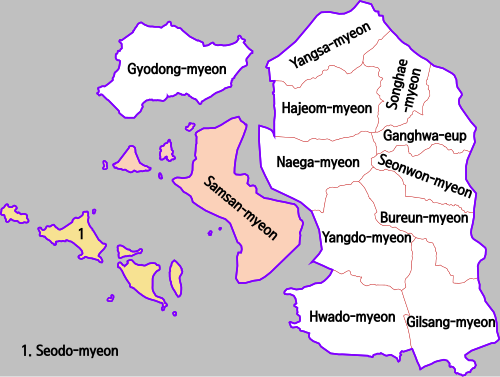
Located within the Incheon metropolitan area, Ganghwa County (Ganghwa-gun) serves as a living museum of Korean civilization. Comprising Ganghwa Island and its surrounding minor islands, this region offers a profound look into the prehistoric, medieval, and modern eras of the Korean peninsula.
From the mysterious stone structures of the Bronze Age to the pivotal diplomatic shifts of the 19th century, Ganghwa has consistently played a central role in the nation's narrative. Today, it remains a unique blend of agricultural tradition and significant historical landmarks.
Key Facts
- Location: Incheon, South Korea (Sudogwon region).
- Geography: Comprises Ganghwa Island and several minor islands.
- Total Area: 411.4 km².
- Population: Approximately 68,891 (as of September 2024).
- Primary Industries: Farming (primarily rice), fishery, and forestry.
- Heritage: Home to UNESCO-designated dolmen sites.
A Deep Dive into History
Prehistoric and Ancient Foundations
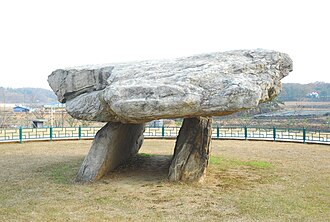
Ganghwa is renowned for its archaeological richness, spanning the Old Stone Age, New Stone Age, Bronze Age, and Iron Age. One of its most striking features is the abundance of dolmens—large stone megaliths used as prehistoric tombs. There are approximately 150 dolmens on the island, which are recognized as UNESCO World Heritage Sites. Unlike many other sites, these dolmens are located on mountain slopes at higher elevations, suggesting a historical connection to Bronze Age fishing activities, even though they are now separated from the sea.
Legend also intertwines with the landscape; Dangun, the mythical founder of Gojoseon, is said to have offered sacrifices to his ancestors at an altar atop Mani-san.
Medieval Conflicts and Resilience
The island's strategic location made it a focal point for military history. In the 9th century, the Unified Silla dynasty established a garrison to defend against piracy. Notably, the commander Wang Geon—who later founded the Goryeo Kingdom—built his military reputation at this very garrison. During the 13th century, the Goryeo court sought refuge on the island to escape Mongol invasions. Following the eventual capitulation to the Mongols, the island became the site of the Sambyeolcho Rebellion, led by elite forces resisting Mongol rule.
The 19th Century: A Turning Point
The 1800s brought significant international tension to Ganghwa. Following the crackdown on Catholic missionaries, a French punitive expedition arrived in 1866. Despite facing heavy losses in initial encounters, Korean forces, including a large contingent of 10,000 men, successfully routed the French forces during an attempt to occupy Cheondeung Temple.
However, the era of isolation ended shortly after. Following the General Sherman Incident, the United States Navy launched an expedition in 1871. Finally, in 1875, an incursion by the Japanese ship Unyo led to the signing of the Treaty of Ganghwa in early 1876. This unequal agreement officially opened Korea to Japanese trade, marking a major shift in the nation's international relations.
Economy and Local Specialties
The economy of Ganghwa is deeply rooted in the land and sea. Approximately 70% of the population is engaged in agriculture, with rice serving as the primary commodity. The region is also known for its forestry and fishing industries.
Ganghwa is home to several unique cultural and agricultural products:
- Hwamunseok: Traditional woven mats that have been exported to China and Japan since the Goryeo dynasty. These are produced through a dedicated home handicraft industry.
- Ganghwa Turnip: A local specialty with a cultivation history dating back to at least the 5th century, as noted in the 17th-century medical text, Dongui Bogam.
Climate Overview
Ganghwa experiences a seasonal climate with significant variations in precipitation. The wettest months are typically July and August, while the winters can be quite cold, with record lows reaching as low as -22.5°C (-8.5°F). The annual average precipitation is approximately 1,266.2 mm.
| Metric | Value |
|---|---|
| Annual Average Precipitation | 1,266.2 mm |
| Annual Mean Temperature | 11.3°C |
| Average Relative Humidity | 69.2% |
| Average Annual Sunshine Hours | 2,349 hours |
Frequently Asked Questions
What are the famous historical sites in Ganghwa?
Ganghwa is famous for its UNESCO World Heritage dolmen sites, the historical sites related to the Goryeo court's refuge, and various locations marking the 19th-century conflicts with French and Japanese forces.
Is Ganghwa Island part of Incheon?
Yes, Ganghwa County was incorporated into the Incheon Metropolitan City in 1995.
What is the main occupation of people living in Ganghwa?
About 70% of the citizens are involved in farming, with rice being the most important crop. Fishery and forestry are also significant occupations.
What makes Ganghwa's dolmens unique?
Ganghwa's dolmens are notable for being located on mountain slopes at higher elevations compared to other sites, which researchers believe may relate to Bronze Age fishing cultures.
What is Hwamunseok?
Hwamunseok is a traditional woven mat produced in Ganghwa through a home handicraft industry. It has a long history of being exported to neighboring countries like China and Japan.