Galicia: A Historical Journey Through a Multicultural Borderland
Galicia (known in Ukrainian as Halychyna) is a storied historical region that today spans the borders of modern-day Poland and Ukraine. Once a crucible of diverse ethnicities, languages, and faiths, this territory has served as a strategic crossroads in Eastern Europe for centuries. From its early days as a principality to its time as a crown land of the Austro-Hungarian Empire, Galicia's identity is defined by its complex layering of cultural influences.
The region is anchored by two of Eastern Europe's most culturally significant cities: Kraków and Lviv. Its history is not merely a chronicle of borders, but a narrative of coexistence and conflict between Polish, Ukrainian (Ruthenian), Jewish, and German populations.
Key Facts
- Total Area: Approximately 78,497 km².
- Major Cities: Kraków and Lviv.
- 1910 Population: 8,025,723 people.
- Demographic Diversity: Historically home to significant Polish, Ruthenian (Ukrainian), and Jewish communities.
- Modern Geography: Now divided between Poland and Ukraine.
Historical Evolution
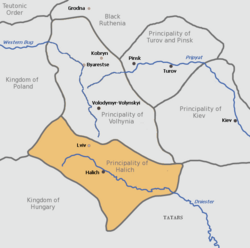
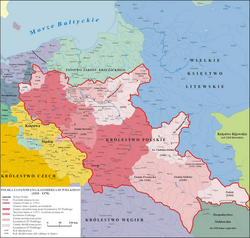
The nucleus of the region began with the Principality of Galicia in the 13th century. Over the following centuries, the territory underwent significant political shifts. A pivotal moment occurred between 1340 and 1392 during the Galicia–Volhynia Wars, which led to the annexation of the Kingdom of Ruthenia by the Kingdom of Poland.
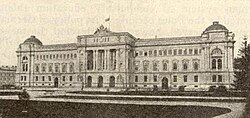
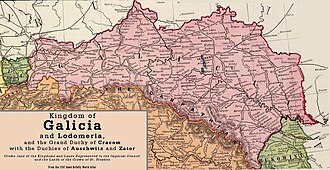
Later, the region became known as the Kingdom of Galicia and Lodomeria under Austrian rule. During this era, the legislative Diet of Galicia and Lodomeria was established in Lviv, the region's capital, cementing the city's role as a political and cultural hub.
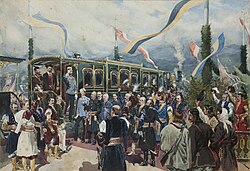
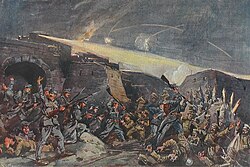
The 19th century saw Galicia integrated into the broader administrative framework of the Habsburg Monarchy. Visits from high-ranking officials, such as Emperor Franz Joseph I in 1880, highlighted the region's importance to the Austrian Empire. However, the early 20th century brought turmoil, exemplified by the brutal Siege of Przemyśl in 1915 during World War I.
Demographics and Cultural Fabric
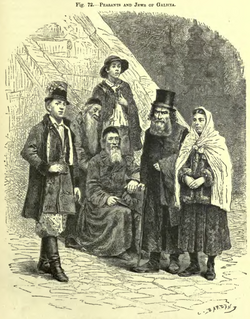
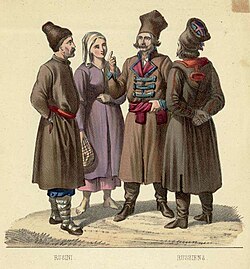
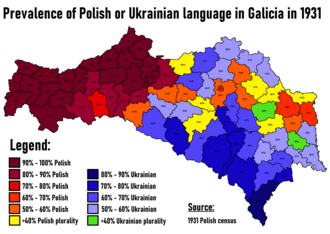
Galicia was renowned for its extreme ethnic and religious diversity. The population was a mosaic of Roman Catholics, Greek Catholics (Uniate), Orthodox Christians, and a substantial Jewish community. This diversity was reflected in the linguistic landscape, where Polish and Ukrainian (Ruthenian) were the dominant tongues, alongside Yiddish and German.
Linguistic and Religious Distribution
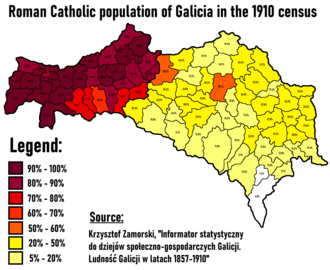
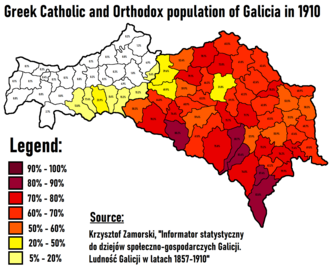
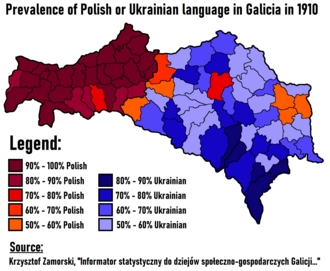
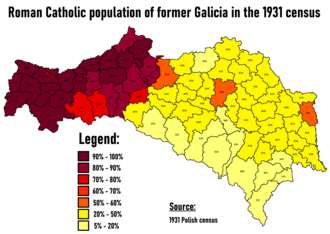
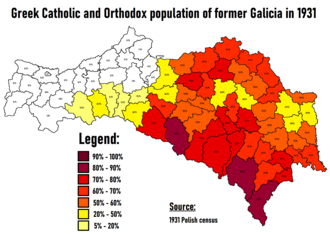
Census data from 1910 and 1931 reveal a distinct geographic split in demographics. Western areas, particularly around Kraków, were overwhelmingly Polish and Roman Catholic. In contrast, eastern districts showed a higher prevalence of Ukrainian speakers and Greek Catholic or Orthodox faiths.
Economy and Infrastructure
The economy of Galicia evolved from traditional agriculture to include industrial advancements. The region became notable for its oil and natural gas industry, which attracted investment and technical innovation. To support this growth and facilitate military movement, an extensive network of rail lines was developed across the territory by the late 19th century.
Regional Statistics Summary
| Metric | Detail |
|---|---|
| Total Area | 78,497 km² |
| 1910 Total Population | 8,025,723 |
| Population Density (1910) | 102.24/km² |
| Primary Languages | Polish, Ukrainian, Yiddish, German |
| Major Religious Groups | Roman Catholic, Greek Catholic, Orthodox, Jewish |
Frequently Asked Questions
What does the name "Galicia" refer to in this context?
In this context, Galicia refers to the historical region in Eastern Europe (Halychyna), not to the autonomous community in northwest Spain. It is a territory currently split between Poland and Ukraine.
Which cities were the most important in historical Galicia?
The two largest and most influential cities were Kraków and Lviv, with Lviv serving as the capital of the Kingdom of Galicia and Lodomeria.
What was the religious makeup of the region?
The region was highly diverse, consisting primarily of Roman Catholics (mostly Polish), Greek Catholics and Orthodox Christians (mostly Ruthenian/Ukrainian), and a significant Jewish population.
How did the borders of Galicia change over time?
It began as a principality, was annexed by Poland in the 14th century, became a crown land of the Austrian Empire (as Galicia and Lodomeria), and is now divided between the modern sovereign states of Poland and Ukraine.
What were the primary economic drivers of the region?
While agriculture was foundational, Galicia became a significant center for the oil and natural gas industry and developed a robust railway infrastructure by the end of the 19th century.