Freshwater: The Essential Lifeblood of Earth's Ecosystems
Water is the fundamental requirement for all known life. While much of our planet is covered by vast oceans, the specific type of water required by the majority of living organisms is freshwater. This naturally occurring liquid or frozen substance is characterized by its low concentration of dissolved salts and other total dissolved solids. Unlike seawater or brackish water, freshwater provides the necessary environment for most vascular plants, insects, amphibians, reptiles, mammals, and birds to thrive.
![Visualisation of the distribution (by volume) of water on Earth[a]](/images/8c/30/8c309d56d08de736124e1fc9be23b550df0a563534f6ea6f87708af5e7408c8e.webp)
Freshwater exists in many forms, ranging from the massive ice sheets and glaciers that store much of the world's supply to the flowing rivers and hidden underground aquifers that sustain life on a daily basis. It is a dynamic resource, constantly moving through the environment via precipitation, surface runoff, and groundwater flow.
Key Facts
- Freshwater accounts for less than 3% of the total water on Earth.
- Only about 1% of the world's freshwater is readily available for human use.
- Approximately 70% of freshwater reserves are frozen in Antarctica.
- Agriculture is the largest consumer, using roughly two-thirds of all extracted freshwater.
- Freshwater ecosystems support 41% of the world's known fish species.
Defining Freshwater and Its Systems
Scientifically, freshwater is often defined by its salinity. A common numerical definition is water containing less than 500 parts per million (ppm) of dissolved salts, though some sources use higher thresholds of 1,000 ppm or 3,000 ppm. It is important to note that freshwater is not always potable (safe to drink); much of it requires significant treatment to remove pollutants or excess minerals before it is suitable for human consumption.
Hydrological Classifications
Freshwater habitats are categorized into three primary systems based on how the water moves:
- Lentic systems: Still waters, such as ponds, lakes, swamps, and mires.
- Lotic systems: Running-water systems, such as rivers and streams.
- Groundwater: Water that flows through rocks and aquifers beneath the surface.
A unique transitional area known as the hyporheic zone exists between groundwater and lotic systems. This zone underlies many large rivers and can contain significantly more water than the visible open channel.
![A graphical distribution of the locations of water on Earth[b]](/images/7e/cb/7ecb52f2ca56356582d328b0dee715dc861f015270afcb4352556d7aafebbe38.webp)
The Global Distribution of Water
The distribution of water on Earth is heavily skewed toward saline environments. Oceans and seas make up approximately 97% of all water. The remaining 2.5–2.75% is freshwater, but the vast majority of that is locked away in ice and snow. Surface water, such as the water found in lakes, rivers, and swamps, represents less than 0.01% of the total freshwater supply.
| Water Type | Approximate Percentage of Total Water |
|---|---|
| Saline Water (Oceans/Seas) | ~97% |
| Freshwater (Glaciers/Ice/Snow) | 1.75% – 2% |
| Freshwater (Groundwater) | 0.5% – 0.75% |
| Freshwater (Surface Water/Other) | < 0.01% |
Understanding Groundwater and the Water Table
Groundwater resides in the spaces between soil particles or within rock crevices. The upper limit of this underground water is known as the water table. Below this level lies the saturated zone, where all spaces are filled with water. Above the water table is the unsaturated zone, which contains both air and water; the water held here is referred to as soil moisture.
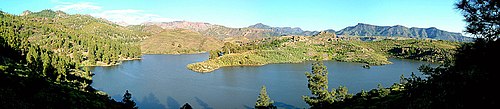
Challenges: Scarcity and Pollution
As the global population grows, the strain on finite freshwater resources intensifies. This has led to two distinct types of water scarcity:
- Physical Water Scarcity: Occurs when there is simply not enough water to meet all demands, including the needs of natural ecosystems. This is common in arid regions like North Africa and West Asia.
- Economic Water Scarcity: Occurs when water is available, but a lack of infrastructure, technology, or investment prevents people from accessing it. This is a significant challenge in many parts of sub-Saharan Africa.
Furthermore, freshwater is highly susceptible to pollution from human activities and natural processes like erosion. Climate change also threatens water security by altering the quality, quantity, and timing of water availability.
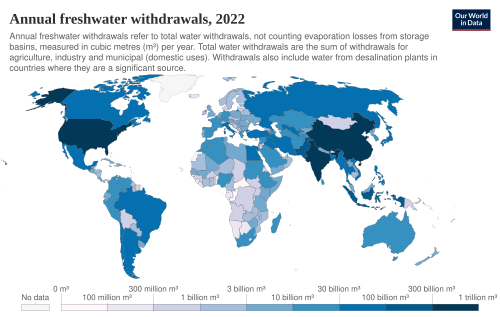
Global Conservation Goals
To combat these challenges, the United Nations established the Sustainable Development Goals (SDGs). Two specific targets focus on water: SDG 6 (Clean Water and Sanitation), which aims to increase water-use efficiency and reduce scarcity, and SDG 15 (Life on Land), which focuses on the conservation and restoration of inland freshwater ecosystems like wetlands and mountains.
Frequently Asked Questions
What is the difference between freshwater and potable water?
Freshwater refers to the concentration of dissolved salts (low salinity), whereas potable water refers to water that is safe for human consumption. Much freshwater is not potable without treatment due to pollutants or minerals.
How much of the world's freshwater is actually available for use?
While freshwater makes up about 3% of Earth's water, only about 1% of that is readily available for human use, as much of the rest is trapped in glaciers or deep underground.
What are lentic and lotic ecosystems?
Lentic ecosystems are bodies of still water, such as lakes and ponds. Lotic ecosystems are characterized by flowing water, such as rivers and streams.
What causes economic water scarcity?
Economic water scarcity is caused by a lack of investment in the necessary infrastructure, technology, or human capacity required to extract and distribute water from natural sources.
Why is agriculture so important to freshwater consumption?
Agriculture is a massive consumer of water resources, accounting for approximately two-thirds of all freshwater extracted from the environment globally.