Frederick Barbarossa: The Red-Bearded Emperor of the Holy Roman Empire
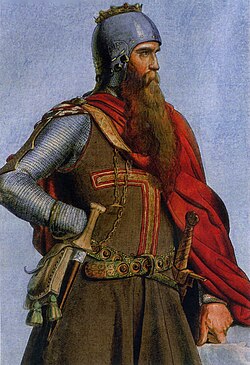
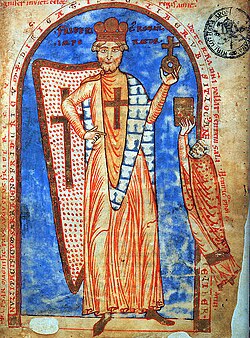
Frederick Barbarossa, born in mid-December 1122, stands as one of the most formidable figures of the Middle Ages. As the Holy Roman Emperor from 1155 until 1190, he navigated the complex political landscapes of Germany, Italy, and Burgundy. Known for his ambition and his struggle for imperial authority, he left an indelible mark on European history through his military campaigns and his ill-fated journey during the Third Crusade.
While history remembers him by the Italian nickname Barbarossa (meaning "Red Beard"), this moniker was actually coined by Florentines in 1298, long after his death. In reality, Frederick was blond, though contemporaries described his beard as reddish. In his own land, he was known as Kaiser Rotbart, or Emperor Redbeard.
Key Facts
- Full Name: Frederick I (Friedrich / Federico)
- Dynasty: House of Hohenstaufen
- Imperial Reign: 1155 – June 10, 1190
- Major Titles: Holy Roman Emperor, King of Germany, King of Italy, and King of Burgundy
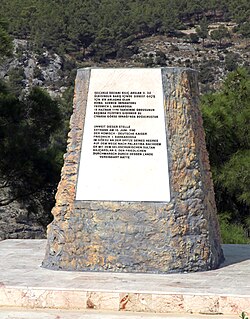
- Death: Drowned in the Saleph River during the Third Crusade
- Notable Legacy: First use of the term sacrum ("holy") in connection with the empire
Early Life and Ascent to Power
Frederick was the son of Duke Frederick II of the Hohenstaufen dynasty and Judith of Bavaria. Because his parents belonged to the two most powerful and often rival families in Germany—the Hohenstaufens and the Welfs—Frederick was seen as a unifying and acceptable candidate for the imperial throne.
His early adulthood was marked by religious zeal. In 1147, he joined the Second Crusade, despite the strong objections of his dying father, who wished for him to remain and care for the family. Shortly before departing, Frederick married Adelaide of Vohburg. Upon his father's death in April 1147, he succeeded him as the Duke of Swabia.
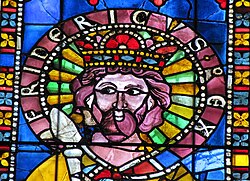
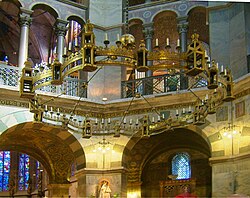
The path to the throne opened in February 1152 following the death of King Conrad III. Frederick was elected King of Germany in Frankfurt on March 4, 1152, and crowned in Aachen on March 9. This victory established the foundation for his lifelong pursuit of imperial dominance.
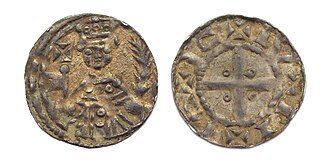
The Imperial Reign and Italian Campaigns
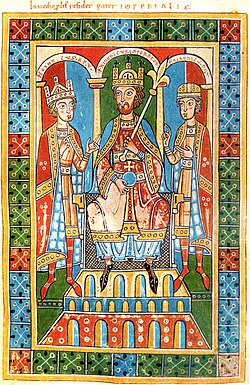
Frederick's coronation as Holy Roman Emperor took place on June 18, 1155, in Rome, performed by Pope Adrian IV. The event was marred by violence, as Frederick spent his coronation day suppressing a Roman riot that resulted in over 1,000 deaths.
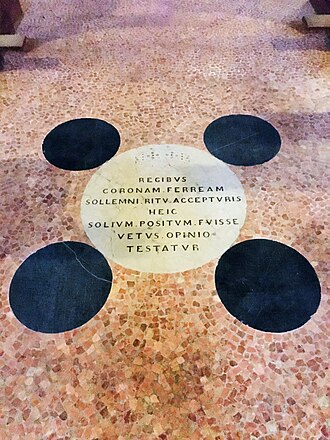
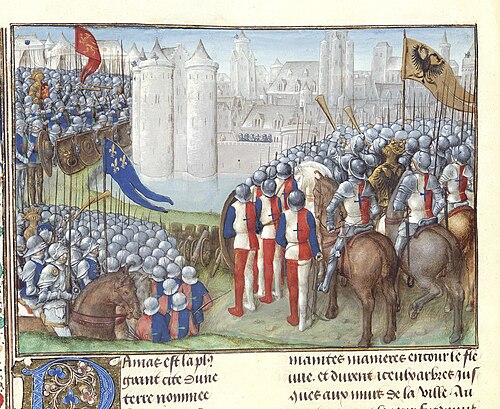
Much of Frederick's reign was defined by his efforts to assert control over the Italian city-states. His campaigns were characterized by a cycle of rebellion and retribution. In 1162, after a prolonged struggle, the city of Milan surrendered and was largely destroyed on the emperor's orders. This victory led other northern Italian cities, such as Brescia and Placentia, to submit to his rule.
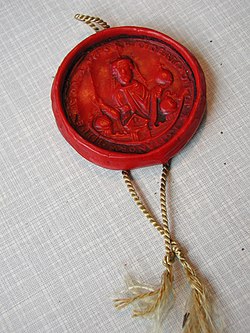
Conflict with the Papacy
Frederick's relationship with the Church was volatile. Following the death of Pope Adrian IV, a schism occurred between Pope Alexander III and the antipope Victor IV. Frederick supported Victor IV, leading Pope Alexander III to excommunicate the emperor in 1160. This conflict pushed the papacy into an alliance with the Norman state of Sicily against Frederick.
Domestic Policy and Burgundy
Beyond the battlefield, Frederick sought to stabilize his realms. Between 1152 and 1157, he proclaimed the Peace of the Land, a legal framework that established punishments for crimes and systems for resolving disputes. He also expanded his territorial claims, marrying Beatrice I, Countess of Burgundy, in 1156 and later being formally crowned King of Burgundy in Arles in 1178.
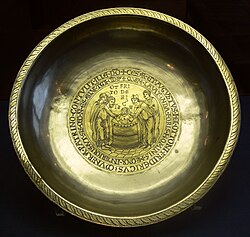
The Third Crusade and Death
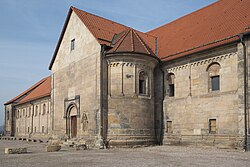
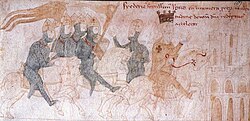
In 1188, Frederick took the crusader's vow at the Diet of Mainz. He organized what was described as one of the most meticulously planned expeditions of the era. While some later sources claimed an army of 100,000, modern scholars estimate the force was closer to 12,000–15,000 men, including 3,000–4,000 knights.
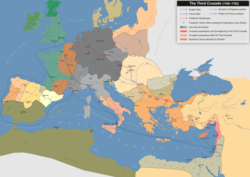
Frederick chose an overland route, traveling through Hungary, Serbia, and Bulgaria before entering Byzantine territory. He maintained a cautious diplomatic relationship with Emperor Isaac II to ensure his army could pass safely through the region. However, the journey ended in tragedy in 1190. While attempting to cross the Saleph River in Cilician Armenia, Frederick drowned.
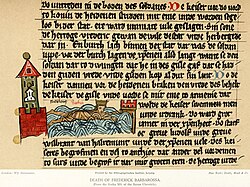
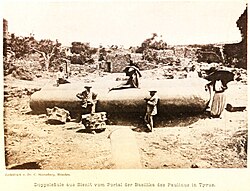
His death caused a collapse in morale, leading the majority of his army to abandon the Crusade before they could reach Acre. His remains were divided: his flesh was buried in the Church of St. Peter in Antioch, his bones in the Cathedral of the Holy Cross in Tyre, and his heart and inner organs in Saint Paul's Church in Tarsus.
Imperial Summary
| Title | Reign Period | Coronation Date/Location |
|---|---|---|
| Duke of Swabia | 1147 – 1152 | N/A |
| King of Germany (Romans) | 1152 – 1190 | March 9, 1152 (Aachen) |
| King of Italy | 1155 – 1190 | April 24, 1155 (Pavia) |
| Holy Roman Emperor | 1155 – 1190 | June 18, 1155 (Rome) |
| King of Burgundy | 1152 – 1190 | June 30, 1178 (Arles) |
Frequently Asked Questions
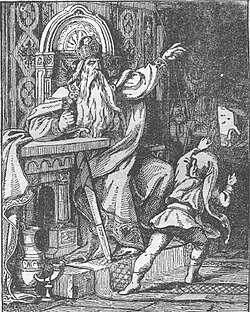
Why was Frederick I called "Barbarossa"?
The name Barbarossa is Italian for "Red Beard." It was first used by the Florentines in 1298 to distinguish him from his grandson, Frederick II. Although he was actually blond, his beard was described as reddish, and the name eventually became his most famous historical moniker.
How did Frederick Barbarossa die?
Frederick died on June 10, 1190, by drowning while attempting to cross the Saleph River in Cilician Armenia during the Third Crusade.
What was the "Peace of the Land"?
The Peace of the Land was a legal proclamation issued by Frederick between 1152 and 1157. It was designed to create social order by enacting punishments for various crimes and establishing formal systems for adjudicating disputes.
Who succeeded Frederick Barbarossa?
Frederick was succeeded by his eldest son, Henry VI, who served as Holy Roman Emperor.
What was Frederick's relationship with the Pope?
His relationship was highly contentious, particularly with Pope Alexander III. The two clashed over imperial authority and the legitimacy of the papacy, leading to Frederick's excommunication in 1160 and a long-standing political struggle.