Franklin Township, New Jersey
Located in the heart of Somerset County, Franklin Township is a diverse and historically rich municipality in New Jersey. Named after Benjamin Franklin, the township has evolved from its early roots as the Eastern precinct around 1745 to a bustling community that serves as a primary population center for its county.
With a blend of unincorporated communities, significant historical landmarks, and a robust infrastructure, Franklin Township offers a unique glimpse into the growth of the Garden State. From its strategic location along major transit corridors to its varied demographic landscape, the township remains a vital part of the region's social and economic fabric.
Key Facts
- Incorporation: February 21, 1798.
- Population: 68,364 (2020 Census).
- Land Area: 46.17 square miles.
- County Rank: 1st in population among 21 municipalities in Somerset County.
- Government: Faulkner Act (council-manager) form.
- Notable Landmarks: Van Wickle House and the historic Kingston Bridge.
Geography and Communities
Franklin Township covers a total area of 46.88 square miles, with the vast majority being land (46.17 sq mi) and a small portion consisting of water (0.71 sq mi). Its elevation averages 62 feet above sea level.
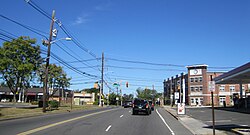
The township is composed of numerous unincorporated communities and census-designated places (CDPs). These areas vary in size and character, ranging from small hamlets to larger residential hubs.
- Somerset: The largest neighborhood in the township, with a 2010 population of 22,083.
- Franklin Park: A significant residential area with 13,295 residents (2010).
- East Franklin: A community of 8,669 residents (2010).
- Other Notable Areas: Franklin Center, Six Mile Run, Middlebush, Griggstown, and Weston.
Local Ecology and Landmarks
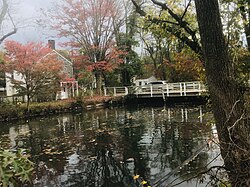
The township's landscape is dotted with natural beauty and historical sites. The D&R Canal provides a scenic corridor for residents and visitors alike, particularly during the autumn season.
Demographics and Population Growth
Franklin Township has experienced significant growth over the last two centuries. While the population fluctuated in the 19th century, the mid-20th century saw an explosion in growth, particularly between 1950 and 1970.
According to the 2020 Census, the population reached 68,364. The township is characterized by a diverse ethnic and racial composition. As of 2020, the population includes significant percentages of White (31.28%), Black or African American (24.18%), and Asian (23.13%) residents, with the Hispanic or Latino community making up 17.53% of the population.
| Census Year | Total Population | Percentage Change |
|---|---|---|
| 1790 | 2,068 | — |
| 1900 | 2,398 | -3.2% |
| 1950 | 9,601 | 62.4% |
| 2000 | 50,903 | 19.0% |
| 2020 | 68,364 | 9.7% |
Government and Infrastructure
The township operates under the Faulkner Act, utilizing a council-manager form of government. The Township Council serves as the legislative body, with the Mayor currently serving as the head of the council. Administrative duties are managed by the municipal clerk and the township manager.
Emergency Services
Public safety is maintained through a comprehensive network of volunteer fire companies and first aid squads. Fire protection is divided into districts, with companies such as the Somerset Fire & Rescue Company #1 and the Griggstown Volunteer Fire Company providing coverage. Emergency medical services are provided by several volunteer squads and a municipal contract with Robert Wood Johnson EMS.
Transportation
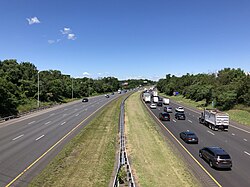
Franklin Township is a critical transit point in Somerset County. It is served by several major roads and highways, including Interstate 287, which facilitates high-volume northbound and southbound travel.
History and Culture
The township's history is preserved through various landmarks and districts. The Van Wickle House on Easton Avenue stands as a testament to early colonial architecture. In the Kingston area, the Kingston Bridge (built in 1798) is particularly notable, as it replaced a bridge demolished by George Washington's troops to hinder British pursuit.
Cultural diversity is further reflected in local institutions such as the Ukrainian Cultural Center, the St. Sophia Seminary and Library, and the St. Andrew Ukrainian School.
Notable Residents
Franklin Township has been home to a wide array of influential figures, including:
- Anthony Bartholomay: A mathematician known for molecular set theory.
- Roy E. LaGrone: An art director and member of the Tuskegee Airmen.
- Mary Griffith: An early American writer and scientist.
- Carlton Agudosi: Professional NFL wide receiver.
Frequently Asked Questions
Who is Franklin Township named after?
The township is named after Benjamin Franklin.
What is the current form of government in Franklin Township?
The township uses the Faulkner Act (council-manager) form of government, led by a Township Council.
Which community is the largest in the township?
Somerset is one of the largest neighborhoods and census-designated places within the township.
What is the historical significance of the Kingston Bridge?
Built in 1798, the Kingston Bridge replaced a structure that was demolished by George Washington's troops to prevent the British army from pursuing them.
How has the population of Franklin Township changed recently?
The population grew to 68,364 by the 2020 Census, though 2023 estimates show a slight dip to 68,233.