Frank Zappa: The Avant-Garde Architect of Modern Music
Few figures in 20th-century music were as prolific, provocative, or stubbornly independent as Frank Zappa. A virtuoso guitarist, composer, and conductor, Zappa defied categorization, blending rock, jazz, classical, and comedy into a singular, often satirical, sonic universe. From his early days in California to his global tours and late-career digital experiments, Zappa remained a fierce advocate for artistic freedom and intellectual rigor.
Throughout his career, Zappa acted as his own producer and label head, ensuring that his complex visions—often characterized by intricate rhythms and social commentary—were never diluted by commercial interests.

Key Facts

- Active Years: 1955–1993.
- Primary Roles: Composer, songwriter, conductor, filmmaker, and actor.
- Notable Band: The Mothers of Invention.
- Musical Range: Spanned rock, jazz fusion, classical, avant-garde, and musique concrète (a form of music using recorded sounds as raw material).
- Key Technology: Early adopter of the Synclavier, a high-end digital synthesizer and sampler.
- Death: December 4, 1993, at the age of 52.
Early Life and the Rise of the Mothers of Invention
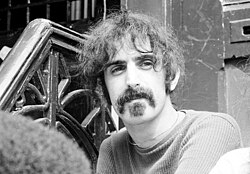
Zappa's musical journey began with a deep curiosity for sound and structure. In the mid-1960s, he formed The Mothers of Invention, a blues-rock outfit that quickly evolved into a vehicle for experimental music and social satire. After signing with Verve Records, Zappa released the seminal Freak Out! in 1966, marking the start of a career defined by challenging the status quo.
Seeking greater control over his output, Zappa moved to New York and established his own labels, Straight and Bizarre Records. This move allowed him to explore the boundaries of the recording studio, treating the tape machine as an instrument in its own right.
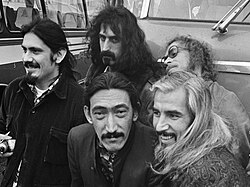
The Middle Years: Highs, Lows, and Artistic Evolution
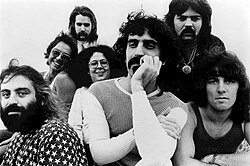
The 1970s were a period of intense volatility and creativity. After the initial breakup of the Mothers, Zappa navigated a series of personal and professional challenges, including a severe accident and physical attack. Despite these setbacks, he continued to push musical boundaries with albums like Waka/Jawaka and The Grand Wazoo, which leaned heavily into jazz fusion.
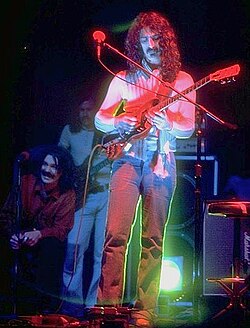
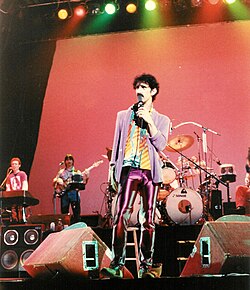
Zappa's commercial peak arrived during this era, characterized by rigorous touring and the launch of DiscReet Records. His live performances became legendary for their precision and unpredictability, often featuring highly skilled musicians who could execute his complex compositions on a whim.
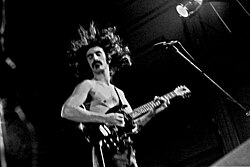
The Role of the Guitar and Composition
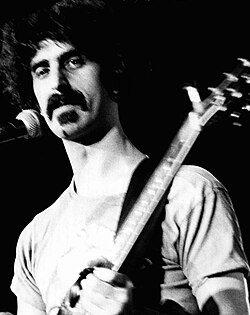
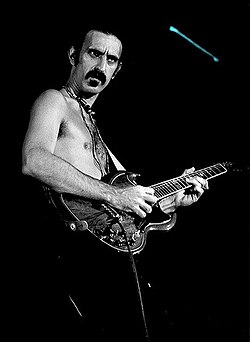
Zappa was renowned for his idiosyncratic guitar playing, blending melodic lines with dissonant, avant-garde solos. He viewed his work through the lens of Project/Object, a philosophy where every piece of music, recording, or performance was a fragment of one larger, lifelong composition.
Later Years and the Digital Frontier
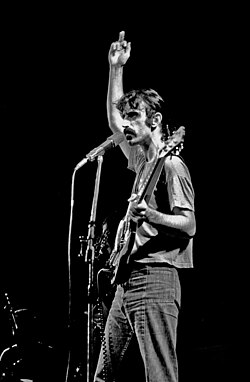
In the 1980s, Zappa shifted his focus toward the Synclavier, a digital workstation that allowed him to compose music with a level of precision impossible for human performers. This era saw the release of Jazz from Hell and a renewed interest in classical performances.
Beyond music, Zappa became a prominent anti-censorship activist, frequently challenging government restrictions on artistic expression. He remained active in the studio and on the road until his health deteriorated, leading to his passing in 1993.
![Left to right: Simon Prentis (Zappa's "Semantic Scrutinizer"), Zappa, Zappa's production assistant Gerry Fialka, and Zappa's second wife Gail outside Zappa's home recording studio Utility Muffin Research Kitchen in 1986. Prentis holds a preview cassette of the album Jazz From Hell that Fialka had just delivered for Zappa's approval.[143]](/images/c4/9e/c49eb3271c5b90ac93b3df586b92b2c5502591c43192c4939ecc91a73894dacc.png)
Legacy and Influence
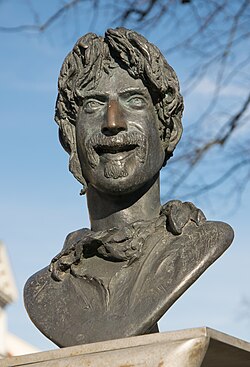
Frank Zappa's influence extends far beyond the rock genre. He is cited as a primary influence by countless musicians and is studied in academic circles for his contributions to contemporary classical music. His commitment to total artistic control and his refusal to conform to industry standards paved the way for future independent artists.
| Category | Details |
|---|---|
| Genres | Rock, Jazz Fusion, Classical, Avant-Garde, Electronic, Comedy |
| Key Instruments | Guitar, Vocals, Synclavier, Percussion |
| Major Labels | Verve, Bizarre, Straight, DiscReet, Barking Pumpkin, Rykodisc |
| Notable Works | Freak Out!, Hot Rats, Joe's Garage, The Yellow Shark |
| Key Collaborators | The Mothers of Invention, Captain Beefheart |
Frequently Asked Questions
What was the 'Mothers of Invention'?
The Mothers of Invention was Zappa's primary band during the 1960s, known for blending rock and roll with avant-garde compositions and satirical lyrics.
What is 'musique concrète' in the context of Zappa's work?
Musique concrète is a compositional technique where recorded natural or industrial sounds are edited and manipulated to create a musical piece, a method Zappa used extensively through tape manipulation.
How did the Synclavier change Zappa's music?
The Synclavier allowed Zappa to compose extremely complex rhythms and melodies that were too difficult for human musicians to play perfectly, enabling him to realize his most ambitious classical and electronic visions.
What was Zappa's stance on censorship?
Zappa was a fierce opponent of censorship and frequently campaigned against government attempts to restrict artistic expression, including testifying before Congress.
Which albums are considered essential for new listeners?
While his discography is vast, early landmarks like Freak Out! and Hot Rats, as well as the satirical Joe's Garage, are often recommended as entry points.