Frank Foley: The British Hero of the Holocaust
The story of Frank Foley is one of extraordinary courage and quiet defiance. While serving as a British official in Berlin during the rise of the Third Reich, Foley risked his own safety to save thousands of German Jews from persecution. Though his actions remained largely unknown for decades, a series of posthumous recognitions has since cemented his legacy as a beacon of humanity during one of history's darkest eras.
Key Facts
- Recognized as Righteous Among the Nations by Yad Vashem.
- Named a British Hero of the Holocaust by the British Government in 2010.
- Operated without diplomatic immunity, increasing the personal risk of his rescue efforts.
- Saved thousands of lives by sheltering refugees and visiting internment camps.
- Honored with statues, plaques, and a dedicated parkway in the United Kingdom.
The Path to Recognition
For years, Foley's contributions were obscured by the secrecy of his profession. His formal recognition began through the research of biographer Michael Smith, who uncovered testimony from living witnesses. This evidence was presented to Yad Vashem (the World Holocaust Remembrance Center in Israel), with support from Lord Janner, chairman of the Holocaust Educational Trust.
The process was not without challenges. Some members of the Yad Vashem committee were initially skeptical that an MI6 officer would lack diplomatic immunity. However, Gill Bennett, a historian for the Foreign Office, provided classified documents proving that Foley did not have such protection. This vulnerability underscored the immense bravery Foley displayed while assisting refugees.
The authenticity of his role was further highlighted by his first diplomatic passport, issued on 11 August 1939, which appears on the cover of Smith's biography.
Commemorations and Tributes
Across the UK and Germany, numerous tributes have been established to ensure Foley's bravery is never forgotten. In November 2004, on the 120th anniversary of his birth, a plaque was unveiled at the British Embassy in Berlin. During the ceremony, Foreign Secretary Jack Straw described Foley as a "true British hero" who sheltered refugees in his own home and visited internment camps.
In his home country, Foley is honored in several locations. A remembrance plaque was placed at the entrance to Mary Stevens Park in Stourbridge in 2004, and a statue was later unveiled there in 2018 by Prince William, Duke of Cambridge, alongside Foley's great-nephew, Stephen Higgs.
His birthplace, Highbridge, has also paid tribute through a statue created by sculptor Jonathan Sells, unveiled on the anniversary of VE Day (and the anniversary of Foley's death). Additionally, the "Frank Foley Parkway" connecting Highbridge and Burnham-on-Sea was opened on 7 July 2009.
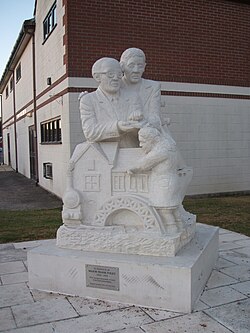
Other notable honors include a dedicated garden at London's Sternberg Centre, unveiled by Cherie Booth in 2009, and a plaque at the Hoop Lane Jewish Cemetery in Golders Green, unveiled by Foreign Secretary William Hague in 2012. Even public transport has played a part, with a National Express West Midlands bus dedicated to his memory.
Summary of Honors
| Year | Honor/Tribute | Location/Organization |
|---|---|---|
| 2004 | Embassy Plaque & Mary Stevens Park Plaque | Berlin, Germany & Stourbridge, UK |
| 2005 | Commemorative Statue | Highbridge, UK |
| 2009 | Frank Foley Parkway & Sternberg Centre Garden | Highbridge/Burnham-on-Sea & London |
| 2010 | British Hero of the Holocaust | British Government |
| 2012 | Hoop Lane Jewish Cemetery Plaque | Golders Green, London |
| 2018 | Stourbridge Statue | Stourbridge, UK |
Frequently Asked Questions
Why was Frank Foley's recognition delayed?
Much of Foley's work was tied to MI6 and remained classified for many years. It took the research of biographer Michael Smith and the release of Foreign Office documents to provide the necessary evidence for official recognition.
What does "Righteous Among the Nations" mean?
This is an official title awarded by Yad Vashem to non-Jews who risked their lives to save Jews during the Holocaust.
Did Frank Foley have diplomatic immunity?
No. Despite his role, classified documents confirmed that he did not have diplomatic immunity, which made his actions of visiting internment camps and sheltering refugees significantly more dangerous.
Where can people visit memorials dedicated to Frank Foley?
Memorials are located at the British Embassy in Berlin, Mary Stevens Park and the town center of Stourbridge, Highbridge, the Sternberg Centre in London, and the Hoop Lane Jewish Cemetery in Golders Green.
How did Frank Foley help Jewish refugees?
Foley used his position to provide shelter to refugees in his own home and courageously visited internment camps to assist those imprisoned.