Francisco Ramírez: The Rise and Fall of El Supremo Entrerriano
In the turbulent era of the Argentine War of Independence, few figures commanded as much respect and fear as Francisco Ramírez. Known by the titles "Pancho" and "El Supremo Entrerriano," Ramírez was a military strategist and the governor of Entre Ríos whose career was defined by his fierce loyalty to federalist ideals and his unmatched discipline on the battlefield.
Born in 1786 in Concepción del Uruguay, Ramírez was the son of a Paraguayan merchant and the half-brother of Ricardo López Jordán. He first gained prominence as a young man within the local military of his hometown, establishing a reputation for leadership that would soon propel him into the center of a continental struggle for autonomy.
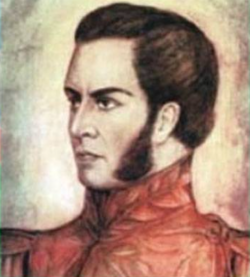
Early Military Career and the Patriot Cause
Ramírez joined the patriot forces in 1810, aligning himself with figures such as Díaz Vélez and Rondeau during the May Revolution—the movement that initiated the process of independence from Spanish rule. By October 1811, he played a pivotal role in leading soldiers to recapture his hometown for the patriot cause.
His trajectory shifted toward the federalist movement when he began fighting alongside José Gervasio Artigas, a key leader of the federalist cause, and his half-brother Ricardo López Jordán. Together, they operated in the Banda Oriental (the region that would later become Uruguay), battling Royalist forces to secure independence.
Defending the Banda Oriental
Ramírez remained a steadfast ally of Artigas even when the Supreme Director in Buenos Aires declared opposition to the federalist leader. Serving under Eusebio Hereñú, Artigas' deputy, Ramírez contributed to the defeat of Baron von Holmberg, the commander of the centralist forces. He later worked to defend the Banda Oriental against Portuguese invasions, though the region was eventually conquered by the Empire of Brazil.
The Governor of Entre Ríos
As the governor of Entre Ríos, Ramírez formed a strategic alliance with Estanislao López of Santa Fe to oppose the centralist authority of Buenos Aires. This period was marked by internal conflict and shifting loyalties. When Supreme Director Juan Martín de Pueyrredón attempted to reincorporate Entre Ríos into the Buenos Aires faction via a pact with Eusebio Hereñú, Ramírez took arms against Hereñú and defeated him in 1817.
While officially acting as a deputy for Artigas in the Uruguay River region, Ramírez effectively controlled the Paraná River and La Bajada regions. His military prowess was further cemented in 1818 when he repelled a directorial army invasion, defeating Colonel Luciano Montes de Oca and blocking General Marcos González de Balcarce near Paraná on March 9.
A Standard of Military Discipline
Among the caudillos (regional military leaders) of the era, Ramírez was regarded as one of the most capable. He was noted for maintaining a level of discipline and organization that surpassed those of Artigas, López, and even the Director's own forces. His troops were regularly uniformed and executed orders with precision, contributing to a record where he remained undefeated for a significant portion of his career, even when outnumbered.
The Battle of Cepeda and Final Conflict
The political landscape shifted as José de San Martín prepared the crossing of the Andes. During this time, José Miguel Carrera joined Carlos María de Alvear in opposition to Pueyrredón, calling upon both López and Ramírez for support. This coalition led to the Battle of Cepeda, where Ramírez and López emerged victorious, subsequently signing the Treaty of Pilar with the city of Buenos Aires.
However, the alliance between the two federalist leaders was short-lived. Estanislao López began to view Ramírez as a threat to national organization, a sentiment shared by Martín Rodríguez of Buenos Aires and Bustos of Córdoba. Despite continued support from Carrera, Ramírez's fortunes turned.
Following a failed attack on Santa Fe and a subsequent defeat at Río Seco, Ramírez was forced into flight. In a tragic final attempt to rescue his captured wife, Ramírez was killed and his body beheaded in 1821.
Key Facts
- Full Name: Francisco "Pancho" Ramírez, also known as "El Supremo Entrerriano."
- Role: Governor of Entre Ríos and military leader during the Argentine War of Independence.
- Key Alliances: Initially allied with José Gervasio Artigas and Estanislao López.
- Major Victory: The Battle of Cepeda, leading to the Treaty of Pilar.
- Military Reputation: Renowned for having the most disciplined and well-uniformed troops of the period.
- Death: Killed and beheaded in 1821 during an attempt to rescue his wife.
| Period/Event | Key Ally/Opponent | Outcome |
|---|---|---|
| May Revolution (1810-1811) | Patriot Army | Recaptured Concepción del Uruguay |
| Banda Oriental Campaign | José Gervasio Artigas | Defeated Baron von Holmberg |
| Conflict with Hereñú (1817) | Eusebio Hereñú | Victory; secured control of Entre Ríos |
| Invasion of 1818 | Gen. Marcos González de Balcarce | Blocked invasion near Paraná |
| Battle of Cepeda | Estanislao López | Victory; signing of Treaty of Pilar |
| Final Conflict (1821) | Estanislao López | Defeat at Río Seco and death |
Frequently Asked Questions
Who was Francisco Ramírez?
Francisco Ramírez was an Argentine military leader and the governor of Entre Ríos during the Argentine War of Independence, famously known as "El Supremo Entrerriano."
What was the significance of the Battle of Cepeda?
The Battle of Cepeda was a major victory for the forces of Ramírez and Estanislao López against the centralist government, resulting in the signing of the Treaty of Pilar.
How did Ramírez's army differ from other forces of the time?
His troops were noted for being significantly more disciplined and better organized than those of other leaders like Artigas or López, and they were consistently uniformed.
What led to the rivalry between Ramírez and Estanislao López?
Despite their initial alliance, López began to view Ramírez as a threat to the stability and organization of the nation, leading to a violent fallout.
How did Francisco Ramírez die?
After being defeated at Río Seco and seeing his wife captured, Ramírez died in a failed attempt to rescue her; he was killed and beheaded in 1821.