Francis Willughby: The Pioneer of Modern Ornithology and Natural History
Long before the modern era of biological classification, Francis Willughby (1635–1672) laid the groundwork for how we study the natural world. An English polymath, Willughby was not only a pioneer in ornithology (the study of birds) and ichthyology (the study of fish) but also a mathematician and an early researcher of linguistics and probability. His collaborative spirit and rigorous approach to observation helped transition natural history from folklore into a disciplined science.
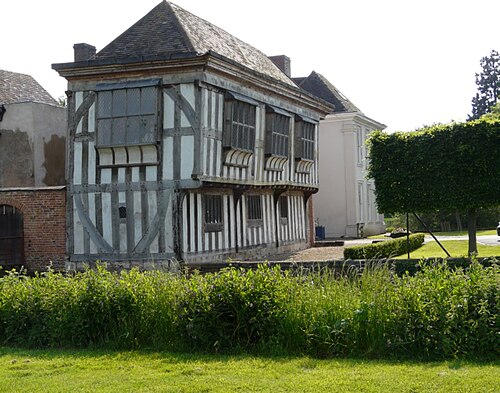
Born into an affluent family at Middleton Hall in Warwickshire, Willughby possessed the resources and curiosity to pursue a wide array of intellectual interests. His life was defined by a profound partnership with the naturalist John Ray, a relationship that would eventually produce some of the most influential biological texts of the 17th century.
Key Facts
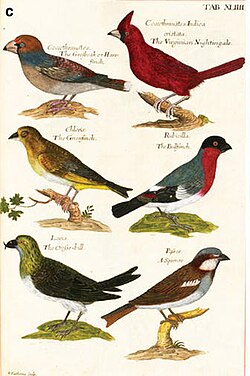
- Primary Contribution: Co-authored Ornithologiae Libri Tres, a foundational work in bird classification.
- Academic Background: Graduated from Trinity College, Cambridge, and was a Fellow of the Royal Society from age 27.
- Scientific Range: Conducted extensive research on birds, fish, insects, and the mathematics of games.
- Key Partnership: Worked closely with John Ray, who later published much of Willughby's research after his early death.
- Death: Passed away at age 36 due to pleurisy, likely related to pneumonia.
Early Life and Education
Francis Willughby was born on November 22, 1635, the only son of Sir Francis Willoughby and Cassandra Ridgeway. Growing up as part of the landed gentry, he inherited Wollaton Hall in Nottingham. His education began at Bishop Vesey's Grammar School before he moved to Trinity College, Cambridge.
At Cambridge, Willughby met John Ray, who served as his tutor. The two formed a lifelong bond based on a shared passion for the natural world. Together, they engaged in early "chymistry" (chemistry) experiments, such as extracting antimony and creating "sugar of lead." Willughby's intellectual appetite was immense; by the time of his death, his personal library contained approximately 2,000 volumes covering history, heraldry, and science.
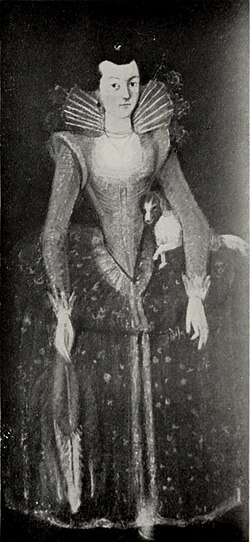
Willughby's academic success was matched by his professional recognition. He earned his BA in 1656 and an MA in 1660. In 1661, at the age of 27, he was elected as a founder Fellow of the Royal Society, nominated by Ray and John Wilkins.
Scientific Expeditions and Travels
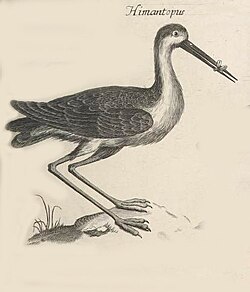
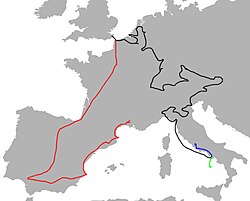
To expand his knowledge, Willughby embarked on extensive travels across Europe and the British Isles. In South Wales, he and Ray documented rare species, including the black-winged stilt.
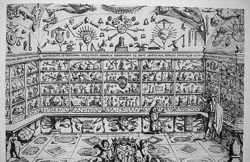
Their European journeys were even more ambitious. The group traveled through the Low Countries, Germany, and Italy. In Venice, they spent several months investigating medical procedures and human dissection in Padua. In Bologna, they visited the public museum of Ulisse Aldrovandi to study vast natural collections.
The party eventually split in Livorno; while Ray and his companion Skippon traveled to Sicily and Malta, Willughby and Bacon headed to Rome, where they spent the summer of 1664.
Major Scientific Contributions
Ornithology and Ichthyology
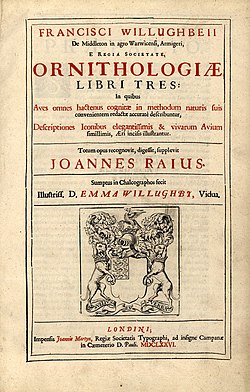
Willughby is most famous for his work on birds. His approach was revolutionary because it relied on anatomical observation rather than anecdotal evidence. This work culminated in Ornithologiae Libri Tres, published posthumously by John Ray in 1678. The text provided a systematic way of classifying birds that influenced generations of naturalists.
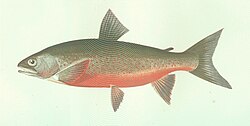
His interest extended to the aquatic world as well, contributing to the study of fish (ichthyology). His legacy in this field is preserved in the naming of the Windermere charr, Salvelinus willughbii.
Insects and Other Studies
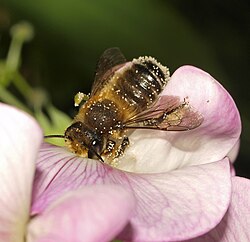
Willughby also conducted significant research on insects. He developed an innovative classification system based on metamorphosis (the process of transformation from an immature form to an adult). Although the Historia Insectorum was published in 1710 under Ray's name, Ray explicitly credited Willughby with the bulk of the research, including detailed descriptions of beetles.
Mathematics and Probability
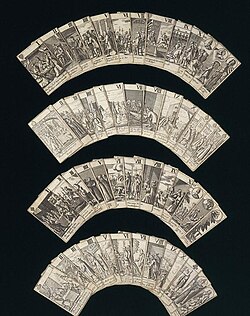
Beyond biology, Willughby was fascinated by the mathematics of chance. He studied probability specifically in the context of card games, blending his analytical mind with his leisure interests.
Final Years and Legacy
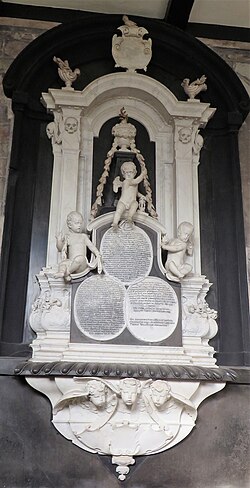
Willughby's later years were marred by poor health and legal stress. He suffered from "tertian ague" (malaria) and was embroiled in a bitter dispute over his inheritance. He fell seriously ill in June 1672 and died on July 3 at the age of 36. He was buried at St John the Baptist's Church in Middleton.
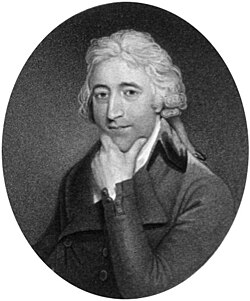
While some later critics, such as James Edward Smith in 1788, suggested that Willughby's contributions were overstated, modern historians recognize him as a pivotal figure. His insistence on empirical evidence and systematic classification helped pave the way for the modern biological sciences.
| Category | Details |
|---|---|
| Lifespan | 1635–1672 (36 years) |
| Key Work | Ornithologiae Libri Tres |
| Primary Fields | Ornithology, Ichthyology, Mathematics |
| Education | Trinity College, Cambridge |
| Notable Partner | John Ray |
| Professional Honor | Fellow of the Royal Society (FRS) |
Frequently Asked Questions
What was Francis Willughby's most significant achievement?
His most significant achievement was the creation of a systematic, observation-based classification of birds, which was published as Ornithologiae Libri Tres. This shifted ornithology from a collection of myths to a rigorous science.
How did John Ray contribute to Willughby's legacy?
John Ray was Willughby's tutor, friend, and collaborator. After Willughby's early death, Ray spent years editing and publishing Willughby's research on birds and insects, ensuring his work reached the scientific community.
What other subjects did Willughby study besides birds?
Willughby was a true polymath; he studied fish (ichthyology), insects (entomology), linguistics, and the mathematics of probability as applied to card games.
What caused the death of Francis Willughby?
Willughby died at age 36 from pleurisy, which was likely a complication of pneumonia, following several years of battling malaria (tertian ague).
Was Willughby's work on insects published during his lifetime?
No. His research on insects, the Historia Insectorum, was not published until 1710, nearly four decades after his death, and it was published under John Ray's name, though Ray credited Willughby's research.