John Ray: The Father of English Natural History
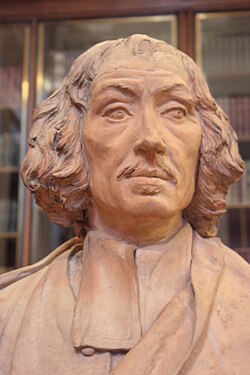
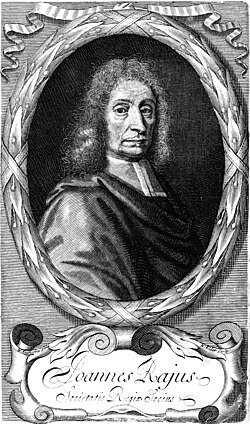
John Ray (1627–1705) was a pioneering English naturalist whose work laid the foundational stones for modern botany and zoology. A dedicated scholar and a Christian clergyman, Ray is remembered as one of the earliest parson-naturalists—clergy members who devoted their leisure and professional lives to the scientific study of nature. His meticulous approach to classification and his insistence on biological definitions transformed the way scientists categorized the living world.
Throughout his long career, Ray bridged the gap between the descriptive traditions of early herbalists and the rigorous systematic biology that would later be championed by Carl Linnaeus. His legacy persists not only in his extensive publications but also through the continued work of the Ray Society.
Key Facts
- First Biological Species Definition: Ray was the first person to produce a formal biological definition of a species in his 1686 work, Historia plantarum.
- Academic Pedigree: He was a fellow of Trinity College, Cambridge, and a Fellow of the Royal Society.
- Pioneering Botany: He authored the first English county flora, the Catalogus plantarum circa Cantabrigiam nascentium (1660).
- Natural Theology: He used the study of nature to argue for the wisdom of God, a field known as natural theology.
- Dendrochronology: He provided an early description of dendrochronology (the science of dating tree rings) using the ash tree.
Early Life and Academic Journey
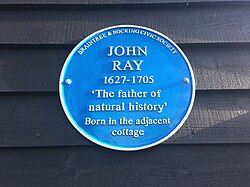
Born on November 29, 1627, in Black Notley, Essex, John Ray was the son of a village blacksmith and is said to have been born in the family smithy. His intellectual journey began at Braintree school before he entered the University of Cambridge at age sixteen. He initially studied at Catharine Hall under Daniel Duckfield before transferring to Trinity College, where he was tutored by James Duport.
At Trinity, Ray became a minor and later a major fellow, holding various prestigious roles including lecturer in Greek, mathematics, and humanity. He developed a close friendship with the mathematician Isaac Barrow and came under the influence of John Wilkins, the master of the college. Ray's passion for natural history was evident early on, and he shared this enthusiasm with his pupils.

Scientific Travels and Collaborations
Ray's commitment to empirical observation led him on extensive journeys. Between 1658 and 1662, he traveled throughout Great Britain, recording detailed notes that were later published as Mr Ray's Itineraries. In 1663, he embarked on a three-year tour of Europe with Francis Willughby and two other pupils, visiting the Low Countries, Germany, Italy, and France. This expedition provided the vast collections of specimens necessary for their future systematic descriptions of the animal and vegetable kingdoms.
In 1667, Ray was elected a Fellow of the Royal Society. His collaboration with Willughby was particularly fruitful; together they published research on the motion of sap in trees in 1669. Following Willughby's death in 1672, Ray took on the monumental task of editing and publishing Willughby's unfinished works on ornithology (birds) and ichthyology (fish), while simultaneously advancing his own research on mammals, reptiles, and insects.
Contributions to Taxonomy and Botany
Ray's approach to taxonomy—the science of naming and classifying organisms—evolved significantly over his life. He began within the Aristotelian tradition but eventually rejected it in favor of a more theoretical and descriptive model. His 1660 catalogue of plants around Cambridge was the first of its kind in England, covering approximately 630 species.
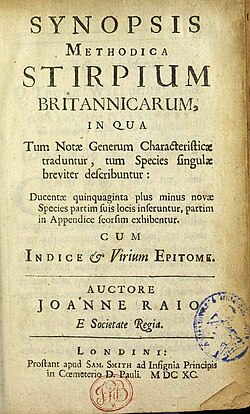
His most significant botanical contribution was the Historia generalis plantarum, published in three volumes between 1686 and 1704. In this work, he moved beyond simple cataloging to consider how nature functioned as a whole. He developed a sophisticated system of classification that distinguished between monocotyledons (plants with one seed leaf) and dicotyledons (plants with two seed leaves).
Ray's Classification System
In his Historia Plantarum, Ray organized the plant kingdom into a logical hierarchy:
- Herbae (Herbaceous plants)
- Imperfectae (Cryptogams/non-seed plants)
- Perfectae (Seed plants)
- Divided further into Monocotyledons and Dicotyledons
- Arborae (Trees)
- Divided into Monocotyledons and Dicotyledons
Faith, Philosophy, and Later Years
Ray's scientific pursuits were deeply intertwined with his faith. In the 1690s, he published works on religion, most notably The Wisdom of God Manifested in the Works of the Creation (1691). In this text, he argued that the intricate adaptations of living creatures served as evidence of a divine creator. This approach helped define the field of natural theology.
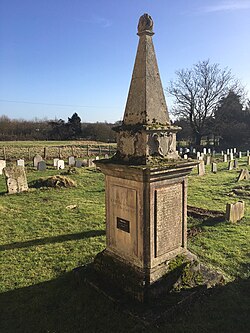
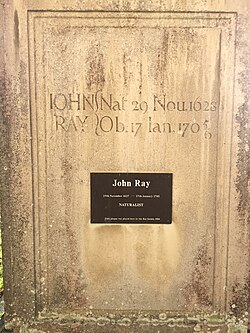
After years of travel and academic service, Ray returned to his birthplace in Black Notley in 1679. Despite suffering from chronic health issues, he remained a prolific writer and correspondent, collaborating with contemporaries like Samuel Dale. He passed away on January 17, 1705, at the age of 77.
Summary of John Ray's Life and Work
| Category | Details |
|---|---|
| Lifespan | 1627 – 1705 |
| Primary Fields | Botany, Zoology, Natural History, Natural Theology |
| Key Institutions | Trinity College (Cambridge), Royal Society |
| Major Work | Historia plantarum (1686–1704) |
| Key Innovation | First biological definition of a species |
| Birth/Death Place | Black Notley, Essex, England |
Frequently Asked Questions
Why is John Ray important to modern biology?
John Ray is critical because he moved biology away from purely alphabetical or anecdotal lists toward a systematic, biological approach. By creating the first biological definition of a species, he provided the conceptual framework that later scientists, including Carl Linnaeus, used to organize the natural world.
What is a "parson-naturalist"?
A parson-naturalist is a member of the clergy who also pursues the scientific study of nature. John Ray is one of the most famous early examples of this tradition, blending his religious duties with a lifelong commitment to botany and zoology.
What was the significance of the Ray Society?
Founded in 1844 and based at the Natural History Museum in London, the Ray Society is a scientific text publication society. It preserves Ray's legacy by publishing books on natural history, specifically focusing on the flora and fauna of the British Isles.
How did Ray's views on species differ from his predecessors?
Unlike earlier herbalists who relied on the Aristotelian tradition or simple physical descriptions, Ray sought a biological definition of species based on the shared characteristics and reproductive nature of organisms, rather than just their utility or appearance.
What was Ray's contribution to the study of trees?
Beyond his classification of trees into monocotyledons and dicotyledons, Ray provided an early description of dendrochronology by explaining how the age of an ash tree could be determined by counting its annual growth rings.