Francis Lieber: The Architect of Modern Political Science and the Laws of War
Francis Lieber was a man of profound contradictions and immense intellectual reach. From the battlefields of the Napoleonic Wars to the lecture halls of Columbia University, his journey took him from a political prisoner in Prussia to one of the most influential legal and academic minds in the United States. A pioneer in both physical education and political theory, Lieber's legacy is most enduringly felt in the legal frameworks that govern modern warfare.
Early Life and European Turmoil
Born into a wealthy Jewish merchant family in Berlin around 1798 or 1800, Lieber's early life was marked by a drive for action and a penchant for political rebellion. To enlist in the Prussian Army during the Napoleonic Wars, he famously lied about his age. By 1815, he had joined the Colberg Regiment and saw combat at the Battle of Waterloo in Namur, Belgium. His military service was plagued by health struggles, including wounds sustained in battle and a bout of typhoid fever that required treatment in several military hospitals.
Following the war, Lieber's intellectual curiosity led him to the University of Berlin, but his political convictions—specifically his membership in the Berliner Burschenschaft (a student fraternity opposing the Prussian monarchy)—led to his rejection. This began a cycle of academic pursuit and political persecution. He completed a mathematics dissertation at the University of Jena in 1820, but continued to face imprisonment and interrogation by Prussian authorities for his republican views.
Lieber's European odyssey continued with a brief, disillusioning stint in the Greek War of Independence, where he was repelled by the religious violence and war crimes he witnessed. He later spent time in Rome tutoring the son of historian Barthold Georg Niebuhr, during which he authored The German Anacharsis. After further periods of imprisonment in Germany, Lieber fled to England in 1825.
In London, Lieber encountered the American writer John Neal, who recognized Lieber's expertise in gymnastics—a discipline Lieber had studied under the influence of professor Jahn. This connection provided the bridge to the United States.
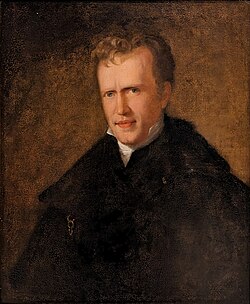
Establishing a Legacy in America
Lieber arrived in Boston in 1827, tasked with managing a gymnasium and swimming program. He shared a philosophy with Charles Follen, the founder of the first American gymnasium, believing that the training of the body was essential to the training of the mind. His swimming school was so innovative that it attracted a visit from President John Quincy Adams, though the gymnasium eventually closed after two years due to waning novelty and media ridicule.
Transitioning from physical to intellectual pursuits, Lieber edited the 13-volume Encyclopaedia Americana between 1829 and 1833. His intellectual network expanded to include figures like Alexis de Tocqueville. However, his personal views on slavery were complex; while he was a nationalist and supporter of free trade, he was hostile to abolition and owned slaves during his tenure at South Carolina College.
Academic Pioneering
Lieber's academic career reached its zenith at South Carolina College (now the University of South Carolina) and later at Columbia College (now Columbia University). At Columbia, he became the first person in the United States to be formally identified as a political scientist. His work was guided by the motto Nullum jus sine officio, nullum officium sine jure ("No right without its duties, no duty without its rights").
The Civil War and the Lieber Code
Despite his ties to South Carolina, Lieber remained loyal to the Union during the American Civil War. This loyalty created a painful family divide: one son fought for the Union and lost an arm, while another joined the Confederate army and was killed at the Battle of Eltham's Landing.
Lieber's most significant contribution to global law came through his collaboration with the Union War Department and President Abraham Lincoln. He drafted General Orders Number 100, better known as the Lieber Code. This document established legal guidelines for the Union army and served as the foundational precursor to the modern international laws of war.
Beyond the code, Lieber proposed seven amendments to the U.S. Constitution in 1865. These included the total abolition of slavery (with the death penalty for violators) and a proposal that prefigured the Fourteenth Amendment by granting citizenship to all free inhabitants regardless of race or origin.
Final Years and Diplomatic Service
In the aftermath of the war, Lieber was entrusted with preserving the records of the Confederate States of America, including the controversial Dahlgren Affair papers. His final chapter was spent in diplomacy; from 1870 until his death at age 72, he served as a final arbitrator and diplomatic negotiator between the United States and Mexico.
Key Facts
- First Political Scientist: He was the first academic in the U.S. to hold the title of professor of political science.
- The Lieber Code: Authored General Orders Number 100, which became the basis for Western laws of war.
- Military Background: Fought in the Napoleonic Wars and was wounded at the Battle of Waterloo.
- Educational Innovation: Established a pioneering swimming school in Boston that attracted President John Quincy Adams.
- Constitutional Influence: Proposed amendments that anticipated the 14th Amendment of the U.S. Constitution.
| Period | Location | Primary Role/Achievement |
|---|---|---|
| 1815–1825 | Europe | Soldier, student, and political dissident |
| 1827–1833 | Boston/Philadelphia | Gymnastics instructor and Encyclopedia editor |
| 1835–1856 | South Carolina | Professor of History and Political Economics |
| 1856–1865 | New York City | Professor of Political Science at Columbia |
| 1862–1865 | Washington D.C. (Consultant) | Author of the Lieber Code |
| 1870–1872 | USA/Mexico | Diplomatic Arbitrator |
Frequently Asked Questions
What is the Lieber Code?
The Lieber Code, officially known as General Orders Number 100, was a set of legal guidelines drafted by Francis Lieber for the Union Army during the American Civil War. It established rules for the conduct of war and served as a primary influence for future international laws of armed conflict.
Was Francis Lieber a supporter of abolition?
Lieber's relationship with abolition was contradictory. While he later proposed constitutional amendments to abolish slavery and supported Abraham Lincoln, he was historically hostile to the abolitionist movement and owned slaves during his time in South Carolina.
Why is Lieber important to political science?
He is recognized as the first academic in the United States to be formally identified as a political scientist, establishing the discipline's academic footing at Columbia University.
What was Lieber's role in the Napoleonic Wars?
Lieber served in the Colberg Regiment of the Prussian Army and was wounded during the Battle of Waterloo in 1815.
How did Lieber contribute to the U.S. Constitution?
Although he could not pass laws, he published a pamphlet in 1865 proposing seven amendments, including one that granted citizenship regardless of race, which closely mirrored the later Fourteenth Amendment.