Fortuna Düsseldorf: A Legacy of Resilience in German Football
Founded on May 5, 1895, Düsseldorfer Turn- und Sportverein Fortuna 1895 e.V.—better known as Fortuna Düsseldorf or F95—stands as one of Germany's most storied football clubs. From its early days as a regional powerhouse to its rollercoaster journey through the tiers of professional football, the club has become a symbol of persistence and passion in the heart of the Rhineland.
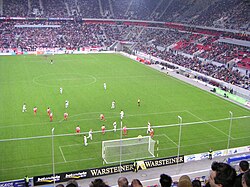
Known affectionately by nicknames such as the Flingeraner and Fortunen, the club currently competes in the 3. Liga after a challenging period in the 2. Bundesliga. Based at the impressive Merkur Spiel-Arena, Fortuna continues to draw massive crowds, reflecting a fan base that has remained loyal through both championship glory and deep sporting declines.
Key Facts
- Founded: May 5, 1895.
- Major Honors: One German Championship (1933) and two DFB-Pokal wins (1979, 1980).
- Stadium: Merkur Spiel-Arena with a capacity of 54,600.
- Unique Record: The only German club to be relegated from the Bundesliga to the fourth tier and subsequently promoted back to the Bundesliga.
- European Peak: Reached the Cup Winners' Cup final in 1979.
A Century of Competition
Foundation and Early Dominance
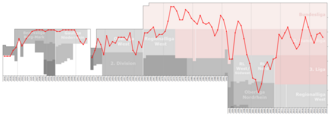
Fortuna entered league play in 1913 and quickly established itself as a top-flight fixture by the early 1920s. During the 1930s, the club dominated the Gauliga Niederrhein—one of the 16 top-flight divisions created during the reorganization of German football—winning five championships between 1936 and 1940. This era saw the club capture the German championship in 1933, though they suffered narrow losses in the 1936 national final and the 1937 Tschammerpokal (the predecessor to the DFB-Pokal).
Post-War Recovery and the Bundesliga Era
After being re-formed in 1945 following the dissolution of sports organizations by Allied authorities, Fortuna spent much of the late 1940s and 50s in the Oberliga West. This period was marked by the presence of legendary figures like goalkeeper Toni Turek, a key part of West Germany's 1954 "Miracle of Bern" World Cup win, and future national coach Jupp Derwall.
While they missed the initial 16-team cutoff for the Bundesliga's creation in 1963, Fortuna fought their way back, eventually enjoying a stable 16-season stay in the premier division between 1971 and 1987, which included two third-place finishes in the early 1970s.
The Rollercoaster Years
The late 20th and early 21st centuries were characterized by extreme volatility. Fortuna experienced a dramatic downfall between 1997 and 2002, slipping as low as the Oberliga Nordrhein (IV). During this financial crisis, the club received notable support from the German punk rock band Die Toten Hosen, who sponsored the team between 2001 and 2003.
The club's ascent was equally remarkable. After gaining promotion from the 3. Liga in 2009, they eventually returned to the Bundesliga in 2012. However, a heartbreaking 2012–13 season ended in relegation after a final 0–3 loss to Hannover 96, leaving them in 17th place.
Club Honors and Achievements
Fortuna's trophy cabinet reflects a history of high peaks, particularly in cup competitions and regional championships.
| Competition | Titles/Achievements | Years |
|---|---|---|
| German Championship | Winner | 1933 |
| DFB-Pokal | Winner (2) | 1979, 1980 |
| 2. Bundesliga | Winner (2) | 1989, 2018 |
| European Cup Winners' Cup | Runner-up | 1979 |
| Intertoto Cup | Winner (3) | 1967, 1984, 1986 |
Rivalries and Cultural Impact
The club's most intense rivalry is the Rheinland Derby against 1. FC Köln, fueled by the geographic and historic tension between the cities of Düsseldorf and Cologne. Due to differing league placements in recent years, these clashes have become rare, adding to the anticipation when they do occur.
Fortuna also maintains a spirited rivalry with FC Bayern München. Historically, Fortuna has been a "bogey team" for the Bavarians; in 1978, they handed Bayern their worst-ever away loss with a 7–1 victory. This specific triumph was immortalized in the song "Bayern" by Die Toten Hosen.
Modern Era and Diversification
Beyond traditional football, Fortuna has expanded its sporting reach. On June 1, 2015, the club established a futsal department. This venture quickly became one of Germany's strongest, with the team winning the Futsalliga West in the 2020–21 season and becoming a founding member of the Futsal Bundesliga.
Frequently Asked Questions
What is the significance of the "Flingeraner" nickname?
The nickname refers to the club's roots and association with the Flingern district of Düsseldorf.
Which is Fortuna Düsseldorf's biggest rivalry?
Their fiercest rivalry is with 1. FC Köln, known as the Rheinland Derby, based on the proximity and historic rivalry between the two cities.
What is the club's most unique historical record?
Fortuna is the only German club to have been relegated from the Bundesliga all the way down to the fourth tier and then successfully promoted back to the Bundesliga.
Who are the most notable players in the club's history?
Notable figures include World Cup winner Toni Turek, Erich Juskowiak, and the influential national team coach Jupp Derwall.
Does the club have any connection to music?
Yes, the famous German punk rock band Die Toten Hosen are enthusiastic fans and sponsored the club between 2001 and 2003 to help them through financial difficulties.