Fortrose: A Historic Gem of the Black Isle
Nestled on the Black Isle in the Highland council area of Scotland, Fortrose is a town that blends ancient heritage with serene coastal beauty. Located approximately six miles (ten kilometres) northeast of Inverness, this former royal burgh serves as a gateway to the Moray Firth and is steeped in ecclesiastical and archaeological significance.
Visitors and residents alike are drawn to the town's striking ruins and its natural surroundings. From the remnants of a medieval cathedral to the wildlife-rich waters of Chanonry Point, Fortrose offers a glimpse into Scotland's spiritual and social evolution over millennia.
Key Facts
- Location: Black Isle, Highland council area, Scotland.
- Population: 1,680 (as of 2020).
- Primary Landmark: The ruined 13th-century Fortrose Cathedral.
- Natural Attraction: Chanonry Point, famous for dolphin spotting.
- Gaelic Name: A' Chananaich, meaning "place of canons".
Etymology and Names
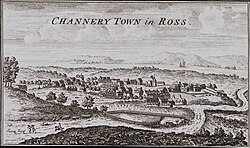
The town's identity is closely tied to its religious roots. Historically, it was known as the Chanonry of Ross, the residence of the canons of Fortrose Cathedral. This legacy persists in the Scottish Gaelic name, A' Chananaich.
The origin of the name "Fortrose" is less certain. One theory suggests it derives from ros (meaning headland) and Fortriu, a local ethonym (the name of an ethnic group). This etymological pattern is similar to that of Montrose in Angus. Locally, the name is typically pronounced with the stress on the first syllable.
A Journey Through History
Ancient Origins
Archaeological work conducted by Headland Archaeology in 2013 revealed that the area has been inhabited since the Neolithic and Early Bronze Age. Evidence found during housing development planning indicated early cereal production and the gathering of wild resources. These findings also highlighted a shift in funerary customs on the peninsula, moving from stone cist burials to cremation burials.
The Medieval Seat of Power
During the Middle Ages, Fortrose served as the seat of the bishopric of Ross. In the 13th century, Bishop Robert established the new Cathedral of Ross here to replace the Church of St Peter in nearby Rosemarkie.
The cathedral's glory was short-lived; in the mid-seventeenth century, Oliver Cromwell ordered its partial demolition to provide building materials for a citadel in Inverness. Today, the site is managed by Historic Scotland. While modest, the remaining vaulted south aisle, bell-tower, and detached chapter house (which served as the town's tollbooth after the Reformation) showcase significant architectural refinement.
Political Evolution
Fortrose once held status as a parliamentary burgh. Between 1708 and 1918, it was part of the Inverness Burghs constituency in the House of Commons. In 1918, this arrangement was abolished, and Fortrose was merged into the Ross and Cromarty constituency.
Community and Infrastructure
Education and Literacy
Fortrose Academy is the sole secondary school on the Black Isle, educating approximately 640 pupils from primary schools in Avoch, Cromarty, Culbokie, Munlochy, North Kessock, Resolis, and Tore. The school has seen both high achievement, such as a 2006 Teacher of the Year award for Mr. A. Tait, and periods of controversy involving former staff.
Integrated into the school is the Fortrose library, part of the Highland Libraries group. Despite its small size and rotating stock, it supports the "power readers" scheme to encourage literacy among younger students.
Leisure and Transport
The Black Isle Leisure Centre, located adjacent to the academy, provides a gym and a multi-purpose indoor court used for badminton, basketball, and football.
Transport is primarily road-based via the A832. A half-hourly weekday bus service connects the town to Inverness, with hourly extensions to Cromarty. While Fortrose once had a railway station, it closed in 1951, and the entire line was decommissioned by 1960.
Town Overview Summary
| Category | Details |
|---|---|
| Council Area | Highland |
| Postcode District | IV10 |
| Dialling Code | 01381 |
| Key Geography | Black Isle / Moray Firth |
| Notable Residents | Eliza Junor, Brahan Seer |
Frequently Asked Questions
What is Chanonry Point known for?
Chanonry Point is a headland projecting into the Moray Firth that has become a popular destination for dolphin spotting.
Why was the Fortrose Cathedral demolished?
The cathedral was largely demolished in the mid-17th century by Oliver Cromwell to provide building materials for a citadel located in Inverness.
What does the Gaelic name A' Chananaich mean?
The name A' Chananaich translates to "place of canons," referring to the clergy who lived at the Chanonry of Ross.
Is there a train station in Fortrose?
No, the railway station in Fortrose closed in 1951, and the associated line closed entirely in 1960.
Which secondary school serves the Black Isle?
Fortrose Academy is the only secondary school on the Black Isle, serving pupils from several surrounding primary schools.