Forres: A Historic Royal Burgh on the Moray Coast
Nestled between the floodplain of the River Findhorn and the scenic wooded slopes of the Cluny and Sanquhar Hills, Forres (Scottish Gaelic: Farrais) is a town of deep historical significance in the north of Scotland. Located in the Moray council area, approximately 25 miles northeast of Inverness and 12 miles west of Elgin, Forres is celebrated for its blend of ancient archaeology, royal heritage, and award-winning floral displays.
From its origins as a royal burgh to its modern role as a hub for design and innovation, Forres offers a rich tapestry of Scottish culture and natural beauty.
Key Facts
- Population: 9,296 (2022 Census).
- Status: Former royal burgh and parliamentary burgh.
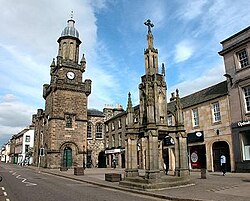
- Major Landmarks: Sueno's Stone, Forres Tolbooth, and Nelson's Tower.
- Notable Nearby Sites: Brodie Castle and the River Findhorn.
- Climate: Maritime, characterized by cool summers and mild winters.
Ancient Roots and Archaeology
Archaeological investigations conducted between 2002 and 2013 on the southern fringes of the town revealed that Forres has been inhabited for millennia. Evidence spans from the Neolithic period (4th to mid-3rd millennium BC) through to the Early Historic period (9th–12th centuries AD).
One of the most significant finds was an extensive Iron Age settlement featuring metalworking furnaces and a souterrain—an underground gallery or chamber. Such structures are rare in Moray, with this being only the second such excavation in the region. Other discoveries include Bronze Age ceramics and cup-marked rock art.
A Journey Through History
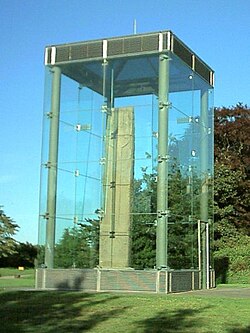
Forres is home to Sueno's Stone, a massive 20-foot (6.1 m) carved stele dating from AD 850 to AD 950. Likely created by the Picts to commemorate a victory over Norse invaders, the stone is now encased in glass to protect it from graffiti and weathering.
The town's status grew in the 12th century when it became a royal burgh—a settlement founded by the Kings of Scots to stimulate trade and economic growth. A royal castle existed here as early as 900 AD, and in 1496, King James IV issued a Royal Charter confirming the town's long-held rights and privileges.
Cultural history also links Forres to literature; William Shakespeare's 1606 play Macbeth places Duncan's castle in Forres and depicts the Three Witches meeting on the nearby moorland.
Industrial and Modern Development
The town's economy has been shaped by various industries. In 1898, two distilleries were established: the Benromach Distillery, which remains active today, and the Dallas Dhu distillery, which is now maintained as a historic site by Historic Environment Scotland.
In more recent decades, Forres has embraced innovation and community. The Findhorn Foundation, an intentional community, was established in the 1940s, and in 2016, the Glasgow School of Art opened a campus dedicated to design and innovation.
Geography, Climate, and Transport
Forres experiences a maritime climate. According to data from the nearby Kinloss weather station, temperatures typically range from a record low of −16.5 °C (2.3 °F) in December 1995 to a record high of 31.2 °C (88.2 °F) in August 2003.
The town is strategically located on the A96 trunk route connecting Aberdeen and Inverness. While the town center was once heavily congested, a bypass was constructed in the late 1980s, with further dual carriageway improvements planned by the Scottish Government. Forres is also served by ScotRail, though the former line to Grantown-on-Spey now serves as The Dava Way, a popular scenic footpath.
| Category | Details |
|---|---|
| Council Area | Moray |
| Postcode District | IV36 |
| Dialling Code | 01309 |
| Notable Residents | Sir Alexander Grant, Roy Williamson, Lorna McNee |
| Twin Towns | Mount Dora (USA), Vienenburg (Germany) |
Community and Culture
Sports and Recreation
Forres is a vibrant sporting community. The Forres Mechanics Football Club is the oldest association football club in the North of Scotland and a founding member of the Highland League (1893). The town also boasts a renowned golf course, the Forres St. Lawrence cricket club, and the Forres Harriers running club, once home to ultra-distance record-holder Don Ritchie.
Education and Religion
The town provides comprehensive education through state schools like Forres Academy and Andersons Primary, as well as the private Drumduan School. Spiritually, the community is served by various denominations, including the Church of Scotland, the Scottish Episcopal Church, the Roman Catholic Church, and the Baptist Union of Scotland.
Frequently Asked Questions
What is Sueno's Stone?
Sueno's Stone is a 20-foot tall carved Pictish stele dating from the 9th to 10th century, believed to commemorate a battle against Norse invaders.
Which Shakespearean play mentions Forres?
The play Macbeth locates King Duncan's castle in Forres and features the Three Witches meeting on the moorland near the town.
What is the significance of the Forres Mechanics Football Club?
It is the oldest association football club in the North of Scotland and one of only two original teams to have played in the Highland League since its inception in 1893.
What is The Dava Way?
The Dava Way is a scenic footpath created from the former railway line that once connected Forres to Grantown-on-Spey.
Who is Sir Alexander Grant?
Sir Alexander Grant was a notable resident of Forres, a businessman and philanthropist known as the creator of McVities Digestive Biscuits.