Foehn Winds: The Science of Warm Downslope Air
In the lee of great mountain ranges, a peculiar meteorological phenomenon often occurs: the sudden arrival of dry, relatively warm air that can transform a landscape in a matter of hours. Known as a Foehn (or Föhn), this type of downslope wind is a classic example of a rain shadow wind. By stripping moisture from the air on one side of a mountain and warming it on the other, the Foehn effect significantly influences regional climates, from the peaks of the Alps to the plains of North America.
These winds are capable of raising local temperatures by as much as 14 °C (25 °F) very quickly. This effect is particularly prominent in Austria, southern Germany, and Switzerland, where moist air from the Mediterranean Sea is pushed over the Alps, leaving the leeward side warmer and drier.
![The causes of the Foehn effect in the lee of mountains (adapted from:[1])](/images/91/4d/914d06f34b41a408630ccf050e46c829e1dbbaa3ea33e14f63c25b6ea66cb3f6.png)
Key Facts
- Definition: A dry, warm downslope wind occurring on the leeward side of a mountain range.
- Temperature Impact: Can increase temperatures by up to 14 °C (25 °F) within hours.
- Primary Cause: Adiabatic warming of air that has lost its moisture on the windward slopes.
- Common Names: Known as Chinook in North America and Nor'wester in New Zealand.
- Environmental Impact: Accelerates snow melt (earning the name "snow-eaters") and increases wildfire risk.
The Mechanics of Foehn Warming
The Foehn effect is not caused by a single factor but by a combination of four primary meteorological mechanisms. These vary depending on the mountain's shape, wind speed, and humidity.
Condensation and Precipitation
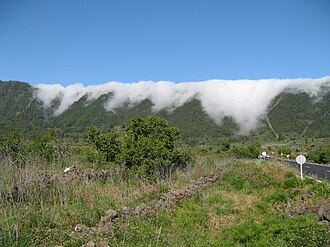
This is the most common textbook explanation involving orographic lift—the process of air being forced upward by terrain. As air rises, it expands and cools due to decreasing pressure. Because cold air holds less water vapor, the moisture condenses into clouds and falls as rain or snow on the windward side. This phase change releases latent heat, which partially offsets the cooling. Once the moisture is removed, the air descends the leeward slope, warming rapidly and irreversibly.
Isentropic Draw-down
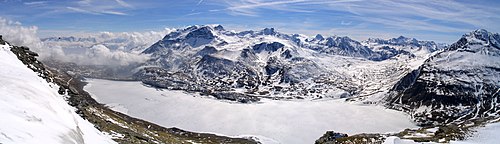
When surface winds are too weak to push low-level air over a mountain, the airflow is "blocked." In these cases, only the warmer, drier air from higher altitudes is able to pass over the summit. As this high-altitude air descends and is compressed by increasing pressure near the surface, it becomes even warmer and drier.
Mechanical Mixing
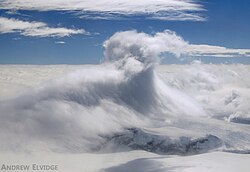
Similar to how river rapids create white water through turbulence, air passing over rugged mountains undergoes vertical mixing. This turbulence blends different layers of the atmosphere, typically resulting in the downward movement of warmth and the upward movement of moisture, contributing to the warm, dry conditions in leeward valleys.
Radiative Warming
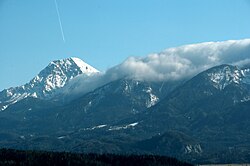
Because Foehn winds create rain shadows—areas of clear, sunny weather—they allow for significant daytime solar (radiative) warming. This is especially critical in polar or alpine regions where solar heating can trigger rapid ice melt or increase the risk of avalanches.
Environmental and Human Impacts
Due to their low relative humidity and high temperatures, Foehn winds are often called "snow-eaters." They cause snow and ice to sublimate or melt rapidly, which can lead to the disintegration of polar ice shelves. However, this dryness also makes these winds dangerous; they are frequently associated with the rapid spread of wildfires.
For mountaineers, particularly those tackling the Eiger in the Alps, these winds add significant technical difficulty and danger to the ascent.
There are also anecdotal reports of "Foehn-sickness" (Föhnkrankheit), with residents reporting migraines, circulatory problems, or even psychosis. While some studies in Central Europe suggested a 10% increase in accidents and suicides during Foehn events, the medical causation remains unproven. Some researchers suggest these effects may actually be caused by changes in atmospheric electrical fields, low humidity, or the stress of gusty winds.
Global Examples of Foehn-like Winds
While the term "Foehn" originated in the Alps (from the Latin favonius), similar phenomena occur worldwide under different names.
| Region | Local Name | Specific Location |
|---|---|---|
| North America | Chinook | Rocky Mountains / Cascade Range |
| North America | Santa Ana | Southern California |
| South America | Zonda | Argentina |
| Oceania | Nor'wester | New Zealand |
| Europe | Halny | Carpathian Mountains |
| Asia | Loo | Indo-Gangetic Plain |
| Asia | Laos wind | Northern/Central Vietnam |
Frequently Asked Questions
What is the difference between a Foehn wind and a normal breeze?
Unlike a standard breeze, a Foehn wind is specifically a downslope wind that has been modified by a mountain barrier, resulting in a significant increase in temperature and a decrease in humidity compared to the air on the windward side.
Why are Foehn winds called "snow-eaters"?
They are called snow-eaters because their combination of warm temperatures and very low relative humidity causes snow and ice to melt or sublimate (turn directly into gas) at an accelerated rate.
Does the Foehn effect happen everywhere there are mountains?
While the physical potential exists anywhere with elevated terrain, a true Foehn event requires specific meteorological conditions, such as a moist air mass on the windward side and sufficient wind speed to drive the air over the barrier.
Is Foehn-sickness a scientifically proven medical condition?
No, the causation of Foehn-sickness is unproven. While many people report symptoms like headaches or irritability, scientists believe these may be secondary effects of low humidity, atmospheric pressure changes, or the psychological stress of strong winds.