Florida Oeste: A History of Growth and Community in Vicente López
The story of Florida Oeste is one of transformation, evolving from a nameless railway stop into a vibrant residential and industrial hub. Its development was driven by the expansion of transportation networks, the arrival of diverse families, and the establishment of key social and health institutions that continue to serve the community today.
The Railway Era and Early Foundations
The neighborhood's origins are tied to the Córdoba Central Railway, which extended its tracks into the area in 1907. Initially, the stop was a precarious, unnamed location informally known as La Trocha (The Gauge). By 1920, the original roof was replaced with a building featuring sheds, and following requests from local residents, the station was officially named "Florida."
Parallel to the railway's growth, infrastructure improvements began in 1913 when the company Narciso Agüero & Cía. was granted a concession to pave San Martín Avenue. During this period, a large company poster led locals to refer to the area as "Agüero." This combination of rail and road access attracted families who opened stores to serve the growing population of farmers and railway workers.
Industrialization and Urban Expansion
As the neighborhood grew, transportation diversified with the introduction of bus services provided by companies such as Fano and Boraso. The 1930s marked a significant industrial boom for Florida Oeste, seeing the establishment of numerous factories. Notable companies included the textile firm La Hidrófila, as well as 3M, Editorial Abril, Refinerías de Maíz, Casa Sudamericana, and Granix.
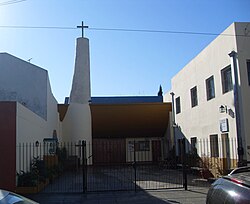
Education and spirituality also took root during this expansion. Schools were established over several decades, including Mariano Moreno n° 5 (1908), José Mármol n° 14 (1926), and Lucas Azcuaga n° 33 (1956). The community's first religious center, the Parroquia Santa María Magdalena, opened its doors in 1963.
Sports and Social Life
Sports have always played a central role in the social fabric of Florida Oeste. Early organizations included Unión Florida (founded in 1929) and the American Football Club (founded in 1934), the latter of which was a predecessor to the Florida Football Club. Eventually, the Florida Club was formed through the merger of the Florida FC and the Asociación de Fomento Vecinal.
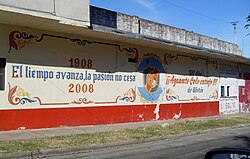
The most prominent sports institution in the area is Colegiales. Founded on April 1, 1908, the club achieved significant success in the 1920s, competing in the Primera División, the top tier of the Argentine football league system. In 1948, the club relocated to its current home at the intersection of Antonio Malaver and Gervasio Posadas streets.
Healthcare and Public Services
Public health services in Florida Oeste have expanded significantly since the mid-20th century. The Santa Rosa Hospital and Maternity was founded in October 1944. Originally operating solely as a maternity ward, it underwent successive enlargements and remodels to become the second most important health center in Vicente López.
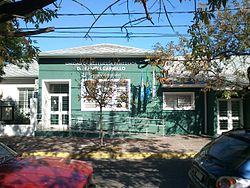
Further enhancing local care, the Unidad de Respuesta Inmediata (URI) Ramón Carrillo opened in July 2013. This emergency health center provides a wide array of medical specialties, including cardiology, pediatrics, traumatology, dentistry, and mental health.
Key Facts
- Railway Origins: Started as a nameless stop called "La Trocha" in 1907.
- Industrial Hub: Hosted major companies like 3M and La Hidrófila during the 1930s.
- Sports Legacy: Club Colegiales competed in the Argentine Primera División during the 1920s.
- Health Infrastructure: Home to the Santa Rosa Hospital (est. 1944) and the URI Ramón Carrillo (est. 2013).
| Year | Event/Institution | Category |
|---|---|---|
| 1907 | Córdoba Central Railway extension | Transport |
| 1908 | Foundation of Colegiales and Mariano Moreno n° 5 | Sports/Education |
| 1920 | Station officially named "Florida" | Transport |
| 1930s | Establishment of factories (e.g., 3M, La Hidrófila) | Industry |
| 1944 | Santa Rosa Hospital and Maternity founded | Health |
| 1963 | Parroquia Santa María Magdalena opened | Religion |
| 2013 | URI Ramón Carrillo opened | Health |
Frequently Asked Questions
Why was the area once called "Agüero"?
The area was informally called "Agüero" because a large poster for the company Narciso Agüero & Cía., which was granted the concession to pave San Martín Avenue in 1913, was placed prominently during the works.
What is the significance of Club Colegiales in the neighborhood?
Founded in 1908, Colegiales is the most notable sports club in Florida Oeste and is distinguished by having played in the Primera División, the top level of Argentine football, during the 1920s.
What health services are available at the URI Ramón Carrillo?
The URI Ramón Carrillo is an emergency center that also offers specialized care in cardiology, pediatrics, traumatology, dentistry, and mental health.
How did the railway influence the growth of Florida Oeste?
The arrival of the Córdoba Central Railway in 1907 acted as a catalyst for development, attracting families who established stores to sell goods to the railway workers and local farmers.
Which schools were established early in the neighborhood's history?
Early educational institutions include Mariano Moreno n° 5 (1908), José Mármol n° 14 (1926), and Lucas Azcuaga n° 33 (1956).