First Sino-Japanese War: The Conflict That Reshaped East Asian Power
Between July 1894 and April 1895, a pivotal conflict erupted that would fundamentally alter the geopolitical landscape of East Asia. The First Sino-Japanese War, known in China as the Jiawu War, pitted the established Qing dynasty of China against the rapidly modernizing Empire of Japan. While the struggle was ostensibly over influence in the Korean Peninsula, the outcome signaled a massive shift in regional hegemony.
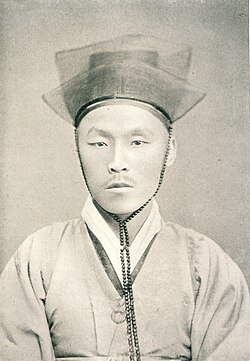
At the heart of the tension was the status of Korea. In the late 19th century, Korea was a tributary state of the Qing dynasty, meaning it acknowledged Chinese suzerainty (overlordship). However, Japan viewed Korea as a vital target for its own imperial expansion. The spark for open warfare arrived in June 1894, when the Korean King Gojong requested Chinese military assistance to suppress the Donghak Peasant Revolution.
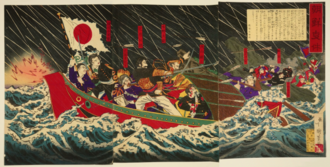
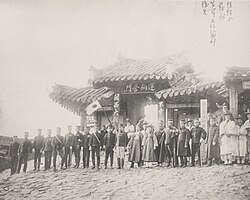
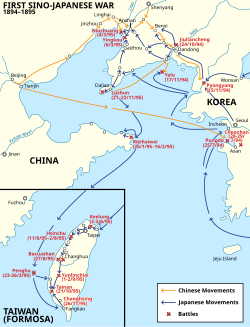
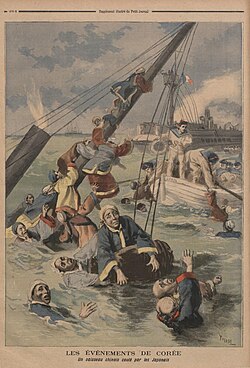
Japan viewed the deployment of Chinese troops as a violation of the 1885 Convention of Tientsin. In response, Japan dispatched an expeditionary force to Korea. By July 1894, Japanese troops had occupied the Gyeongbokgung palace in Seoul and established a pro-Japanese government. The situation escalated rapidly on July 25, 1894, when the Japanese Navy won the Battle of Pungdo and sank the steamer Kowshing, which was transporting 1,200 Chinese reinforcements. A formal declaration of war followed on August 1.
Key Facts
- Duration: 25 July 1894 – 17 April 1895 (8 months and 23 days).
- Primary Belligerents: The Qing Dynasty (China) and the Empire of Japan.
- Major Result: Decisive Japanese victory.
- Territorial Changes: China ceded Taiwan, the Penghu Islands, and the Liaodong Peninsula (though the latter was later returned) to Japan.
- Political Shift: China lost suzerainty over Korea, which became a Japanese sphere of influence.
Military Capabilities and Combatants
The war highlighted the stark difference between the two nations' military readiness. Japan possessed a modern, professionally trained, Western-style army and navy, with officers educated in contemporary European strategy and tactics.
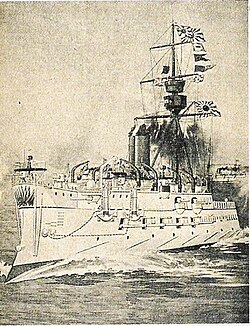
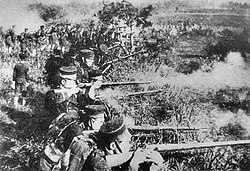
The Imperial Japanese Forces
The Imperial Japanese Army was well-equipped, capable of fielding 120,000 men across five divisions. Their artillery included a significant number of heavy guns, such as 50 280-mm howitzers and various 274-mm and 240-mm pieces. The Imperial Japanese Navy also played a crucial role in securing command of the seas.
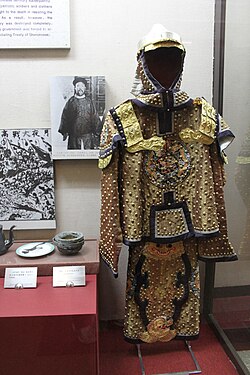
The Qing Dynasty Forces
While the Qing dynasty possessed massive numbers on paper, their effective strength was much lower. The Huai Army (also known as the Beiyang Army) formed the core of the fighting force. Although they utilized modern weaponry like Mauser breech-loading rifles and Krupp artillery, the overall Chinese military structure struggled with coordination and modernization.
| Metric | Empire of Japan | Qing Dynasty (Effective) |
|---|---|---|
| Total Troops | 240,616 | ~357,100 |
| Key Land Units | 5 Divisions | Huai Army, Green Standard, Bannermen |
| Naval Focus | Modernized Combined Fleet | Beiyang Fleet |
Major Engagements and Naval Warfare
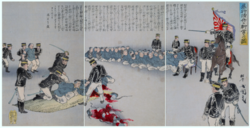
The conflict was fought across land and sea, with several decisive battles determining the course of the war. In Korea, the Battle of Pyongyang saw intense fighting as Chinese forces attempted to hold a defensive line against Japanese advances.
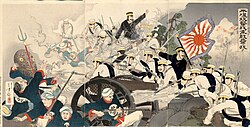
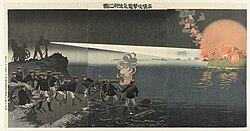
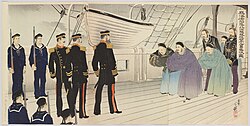
The naval dimension was perhaps the most consequential. On September 17, 1894, the Japanese Combined Fleet engaged the Chinese Beiyang Fleet in the Battle of the Yalu River. This was the largest naval engagement of the war. Japan's superiority in speed and firepower allowed them to destroy eight of the ten Chinese warships, effectively granting Japan control over the Yellow Sea.
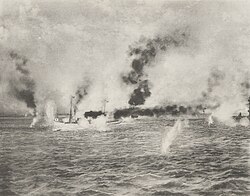
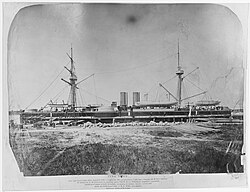
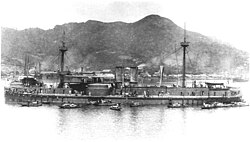
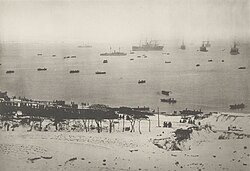
The loss of naval supremacy shattered Chinese morale and left their coastal defenses vulnerable. Following the naval defeat, Japanese forces continued their advance, eventually capturing key ports such as Lüshunkou (Port Arthur) and Weihaiwei.
The Treaty of Shimonoseki and Aftermath
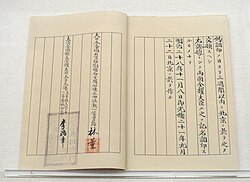
By early 1895, the Qing government, facing unbroken successes by Japanese forces, sued for peace. The war concluded with the signing of the Treaty of Shimonoseki on April 17, 1895.
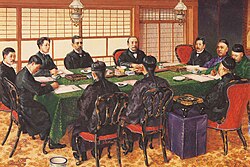
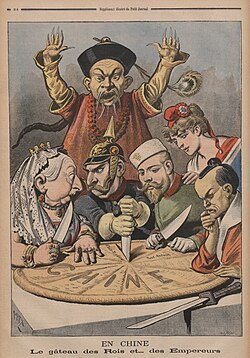
Under the treaty terms, China recognized the independence of Korea and ceded several territories to Japan, including Taiwan and the Penghu Islands. While the Liaodong Peninsula was initially ceded to Japan, it was later returned to China following the Triple Intervention by Western powers.
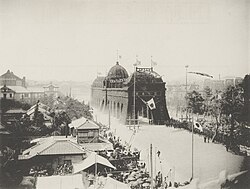
The war had profound long-term effects. In Japan, the victory provided a massive economic boost and solidified its status as a rising global power. In Korea, the war paved the way for the Kabo Reforms, which introduced significant social and legal changes, including the abolition of slavery and the adoption of the Gregorian calendar.
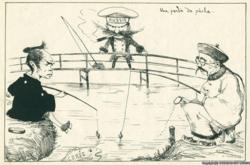
![Satirical drawing in the magazine Punch[139] (29 September 1894), showing the victory of "small" Japan over "large" China](/images/dd/55/dd55253dd505ff7cfb3cfe8ba8627bbc1e5d25282b4aa8571c6f563aa805a34e.jpg)
Frequently Asked Questions
What was the primary cause of the First Sino-Japanese War?
The primary cause was the struggle for influence over the Korean Peninsula. Japan sought to expand its imperial reach, while China aimed to maintain Korea as a traditional tributary state.
How did the Battle of the Yalu River affect the war?
The Battle of the Yalu River was a decisive naval victory for Japan. It destroyed much of the Chinese Beiyang Fleet, gave Japan control of the Yellow Sea, and significantly damaged Chinese military morale.
What territories did China lose as a result of the war?
Through the Treaty of Shimonoseki, China ceded Taiwan and the Penghu Islands to Japan. The Liaodong Peninsula was also ceded but was subsequently returned due to international intervention.
How did the war impact Korea?
The war ended China's suzerainty over Korea, leading to increased Japanese influence. This period saw the implementation of the Kabo Reforms, which brought about significant social, legal, and educational changes in Korea.
Was the war profitable for Japan?
Yes. The indemnity paid by the Qing government—200 million Kuping taels—exceeded Japan's initial war fund of 250 million yen, resulting in a net profit for the Japanese state.