First Council of Constantinople
The First Council of Constantinople, held in AD 381, stands as a pivotal moment in early Christian history. Convened by the Roman Emperor Theodosius I, this second ecumenical council sought to unify a fractured church and establish a definitive consensus on faith and discipline. Meeting from May to July in the Church of Hagia Irene, the assembly represented nearly all of Christendom, with the notable exception of the Western Church.
Key Facts
- Date: AD 381
- Convoked by: Emperor Theodosius I
- Primary Goal: To resolve the Arian controversy and unify the Eastern Church under Nicene Christianity.
- Major Outcome: The expansion of the Nicene Creed into the Niceno-Constantinopolitan Creed.
- Attendance: Approximately 150 bishops.
- Key Theological Focus: The divinity of the Holy Spirit and the condemnation of Arianism.
Theological and Political Background
The council was born out of a need for stability. While the First Council of Nicaea (325) had attempted to clarify the nature of Christ, the Arian controversy—the belief that Jesus Christ was a created being and not co-eternal with God the Father—continued to persist. Following the death of Constantine I, Arian-leaning leaders gained influence, leading to the exile of key Nicene defenders like Athanasius of Alexandria.
By the time Theodosius I ascended the throne in 380, he was determined to bring the Eastern Church back to the Orthodox position. However, new theological disputes had emerged. The Macedonians (also known as Pneumatomachians) denied the divinity of the Holy Spirit, the third person of the Trinity, creating a gap in the existing Nicene doctrine that required urgent resolution.
Other controversies also surfaced, such as the teachings of Apollinaris of Laodicea. Apollinaris argued that Christ possessed a human body but a divine mind, rejecting a complete human nature. His views were condemned for confounding the persons of the Godhead and leaning toward Sabellianism.
Proceedings and Leadership
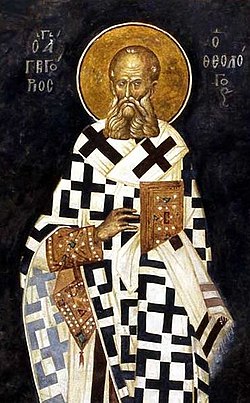
The council was presided over by several key figures, including Timothy of Alexandria, Meletius of Antioch, Gregory of Nazianzus, and Nectarius of Constantinople.
The proceedings were not without drama. A significant dispute arose regarding the legitimacy of Gregory of Nazianzus's position as bishop of Constantinople. Opponents argued that his transfer from the See of Sasima violated the canons of the Council of Nicaea, which forbade bishops from moving between sees.
To prevent further division within the church, Gregory chose to resign his office in a dramatic fashion, comparing himself to the Prophet Jonah by sacrificing his position for the "salvation of the ship." Following his departure, Nectarius, a previously unbaptized civil official, was chosen to lead the council.
The Niceno-Constantinopolitan Creed
The most enduring legacy of the council is the Niceno-Constantinopolitan Creed. While theologically equivalent to the original Nicene Creed of 325, it expanded the doctrine to include specific articles on the Holy Spirit, describing Him as "the Lord, the Giver of Life, Who proceeds from the Father, Who with the Father and the Son is worshipped and glorified." It also added articles regarding the church, baptism, and the resurrection of the dead.
Although some modern scholars debate whether the creed was an official act of the council or a separate expansion of tradition, the Council of Chalcedon in 451 explicitly associated the creed with the 150 fathers assembled in Constantinople.
The "New Rome" and Church Hierarchy
The council also addressed the geopolitical structure of the church through its canons. The third canon declared that the Bishop of Constantinople should hold the "prerogative of honour" after the Bishop of Rome, justifying this by stating that Constantinople is New Rome.
This decision demoted the patriarchs of Antioch and Alexandria, though Jerusalem retained its place of honor. This shift in influence caused long-term tension. While some evidence suggests Pope Damasus I initially approved the council's dogmatic utterances, the Western Church later contested the third canon. Over the following centuries, Rome asserted supreme authority based on the succession of St. Peter, leading to disputes that contributed to the Great Schism of 1054.
| Category | Details |
|---|---|
| Date & Location | AD 381, Church of Hagia Irene, Constantinople |
| Key Figures | Theodosius I, Gregory of Nazianzus, Nectarius |
| Theological Targets | Arianism, Pneumatomachianism, Apollinarianism |
| Primary Document | Niceno-Constantinopolitan Creed |
| Ecclesiastical Shift | Elevation of Constantinople as "New Rome" |
Frequently Asked Questions
What was the main purpose of the First Council of Constantinople?
The council was convened by Emperor Theodosius I to resolve the Arian controversy, unify the Eastern Church under Nicene Christianity, and clarify the divinity of the Holy Spirit.
How does the 381 Creed differ from the 325 Creed?
The Niceno-Constantinopolitan Creed expanded the original Nicene Creed by adding detailed articles on the Holy Spirit, the nature of the church, baptism, and the resurrection of the dead.
Why was the third canon so controversial?
The third canon granted the Bishop of Constantinople honor second only to the Bishop of Rome because the city was the "New Rome." This demoted the ancient sees of Alexandria and Antioch, sparking centuries of jurisdictional disputes between the East and West.
Who were the Pneumatomachians?
The Pneumatomachians, also known as Macedonians, were a group that denied the divinity of the Holy Spirit, which became a primary theological target of the council.
Why did Gregory of Nazianzus resign?
Gregory resigned to avoid further division within the council after Egyptian and Macedonian bishops challenged the canonical legitimacy of his transfer to the See of Constantinople.