FIGC: The History and Legacy of the Italian Football Federation
The Federazione Italiana Giuoco del Calcio (FIGC), known in English as the Italian Football Federation, serves as the governing body for football in Italy. With a history spanning over a century, the FIGC has overseen one of the most successful national teams in sporting history, navigating eras of global dominance and periods of significant institutional challenge.
The Foundations of Italian Football
The federation was established in Turin on March 26, 1898, originally named the Federazione Italiana del Football (FIF). This initiative was led by Enrico D'Ovidio, with Mario Vicary serving as the first official president. By 1909, the organization adopted its current name, the Federazione Italiana Giuoco del Calcio (FIGC), following a vote by the active clubs of the time.
The Men's National Team made its debut on May 15, 1910, securing a 6–2 victory over France. While the team initially wore white, they introduced the iconic blue jersey (the Azzurri) the following year during a match against Hungary as a tribute to the House of Savoy.

Governance and Institutional Evolution
The FIGC has faced various periods of administrative upheaval. In May 2006, the federation was placed under administration following the 2006 Italian football scandal. This led to a series of leadership changes, including the appointments of Guido Rossi and Luca Pancalli, before Giancarlo Abete was elected president in 2007.
Following the 2014 FIFA World Cup, Carlo Tavecchio took over the presidency, introducing reforms focused on the financial sustainability of professional clubs and the integration of young Italian players. However, Tavecchio resigned in November 2017 after Italy failed to qualify for the 2018 FIFA World Cup for the first time since 1958.
Gabriele Gravina was elected president on October 22, 2018, and was subsequently re-elected in 2021 and 2025. Under Gravina's leadership, the FIGC has sought to maintain its international standing, including Gravina's election to the UEFA Executive Committee in 2021.
Triumphs and Trials on the Pitch
The modern era of the Italian national team has been a rollercoaster of historic highs and disappointing lows. Under coach Roberto Mancini, Italy achieved a world record of 37 consecutive matches without defeat between October 2018 and October 2021. This golden period culminated in winning the UEFA Euro 2020 (played in 2021) and finishing third in the 2021 UEFA Nations League Finals.
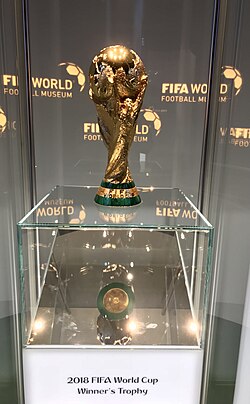
Despite these successes, the federation struggled with consistency. Italy failed to qualify for the 2022 FIFA World Cup after a loss to North Macedonia, a failure attributed to both the team's performance and the federation's choice of venue. Following Mancini's resignation in August 2023, Luciano Spalletti was appointed coach. While Spalletti led the team to UEFA Euro 2024, the campaign ended in a Round of 16 exit against Switzerland.
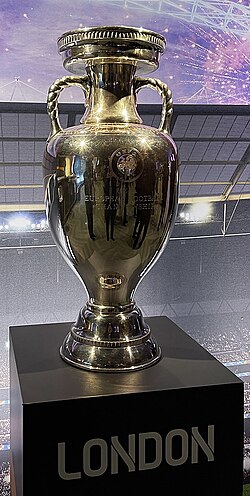
More recently, Italy has continued to compete in the UEFA Nations League, showing strength against teams like France, though they were eliminated in the quarter-finals by Germany. The federation also faced a setback in June 2025, failing to qualify directly for the 2026 FIFA World Cup after a defeat to Norway.
Future Ambitions
Looking forward, the FIGC is focused on infrastructure and global hosting. The federation has already secured a joint bid with Turkey to co-host the 2032 UEFA European Football Championship. Additionally, the FIGC intends to submit a bid to host the 2038 FIFA World Cup and is planning a comprehensive modernization of stadiums across Italy.
Key Facts
- Founded: March 26, 1898, in Turin.
- World Cup Titles: 4 (1934, 1938, 1982, 2006).
- European Championships: 2 (1968, 2020).
- World Record: 37 consecutive matches without defeat (2018–2021).
- Current President: Giovanni Malagò (as of 2026).
- Headquarters: Rome.
| Competition | Titles (Winner) | Runner-up | Other Notable Finishes |
|---|---|---|---|
| FIFA World Cup | 4 | 2 | 3rd (1), 4th (1) |
| UEFA European Championship | 2 | 2 | Semi-finals (1), 4th (1) |
| UEFA Nations League | 0 | 0 | 3rd (2) |
| FIFA Confederations Cup | 0 | 0 | 3rd (1) |
Frequently Asked Questions
Why does the Italian national team wear blue?
The blue jersey was introduced in 1911 as a tribute to the color of the House of Savoy, the royal house of Italy at the time.
How many times has Italy won the FIFA World Cup?
Italy has won the FIFA World Cup four times, with victories in 1934, 1938, 1982, and 2006.
Who is the current president of the FIGC?
As of 2026, the president of the FIGC is Giovanni Malagò.
What is the significance of the 37-match unbeaten run?
Between October 2018 and October 2021, under coach Roberto Mancini, Italy set a world record for the most consecutive matches without a defeat.
Which major tournaments will Italy host in the future?
Italy will co-host the 2032 UEFA European Football Championship alongside Turkey, and the federation plans to bid for the 2038 FIFA World Cup.