Fig Leaves in Art: The Evolution of Nudity and Censorship
The depiction of the human body has long been a central theme in art, but the boundaries of what is considered acceptable to display have shifted dramatically across centuries. From the celebrated heroic nudity of antiquity to the strict modesty of the Victorian era, the use of the fig leaf became a symbolic tool for balancing artistic expression with social and religious morality.
The Tradition of Nudity in Antiquity
In Ancient Greek art, male nakedness—including the genitals—was normalized and often used to convey heroism and physical perfection. While the female vulval area was typically covered in public displays, the male form was celebrated. This tradition persisted through the Roman Empire, where the human physique remained a primary subject of sculpture and painting.
This openness changed abruptly with the conversion of the Roman Empire to Christianity. As new religious values took hold, the practice of depicting nudity vanished from public art, marking a significant shift in the visual language of the West.
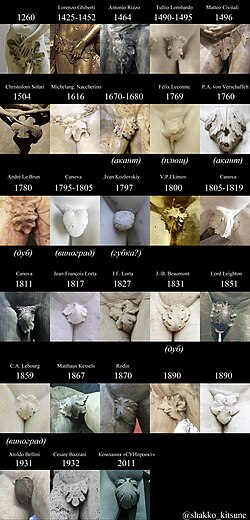
The Middle Ages and the Northern Renaissance
During the Middle Ages, nudity lost its association with heroism and instead became a symbol of misfortune or sin. Nakedness was most frequently reserved for depictions of the damned. However, the biblical story of Adam and Eve introduced a specific form of modest covering: the fig leaf. Following the Biblical description, artists—particularly those in the Northern Renaissance—began depicting the first humans wearing leaves to cover their modesty.
The Fig Leaf Campaign and the Counter-Reformation
By approximately 1530, the Catholic Church responded to the Reformation ideologies sweeping Europe. This movement culminated in the Council of Trent, which prompted a wave of censorship to reduce nudity in public spaces and churches. This era saw the rise of the "fig leaf campaign," where existing artworks were altered to meet new modesty standards.
In some instances, artists used drapery or added branches from nearby bushes to cover figures. A famous example is Michelangelo's The Last Judgment, which underwent such modifications. For free-standing statues, where drapery was impractical, carved or cast fig leaves were physically attached to the sculptures.
Victorian Reticence and the "Decent" Statue
The culture of modesty reached a peak during the reign of Queen Victoria. In Victorian England, male nudity was highly contentious. A notable example occurred with a plaster copy of Michelangelo's David in London; the museum kept a removable fig leaf on hooks, which was applied whenever the Queen or other female dignitaries visited to avoid shocking them.
Historian Daniel J. Boorstin noted that this era of the rising middle class was defined by "the fig leaves of decent reticence," a sentiment that extended beyond sculpture and into the literature of the time. Even the Ghent Altarpiece, which originally featured fig leaves by Jan van Eyck, saw its Adam and Eve panels replaced in the 19th century with versions where the figures were fully clothed.
The Grecian Ideal and Eugen Sandow
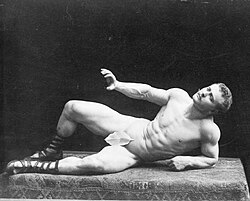
The influence of classical sculpture extended into the birth of modern bodybuilding. Eugen Sandow, a pioneer of the sport, admired the masculine physique and sought to embody what he called the Grecian Ideal—a look based on Greco-Roman musculature. During his "muscle displays," Sandow posed nude except for a fig leaf, directly emulating the modified statues he had seen in Italy as a youth.
Key Facts
- Ancient Greece/Rome: Male nudity was normalized as a symbol of heroism.
- Middle Ages: Nudity was primarily used to depict the damned or biblical figures like Adam and Eve.
- Council of Trent: Triggered the "fig leaf campaign" to censor nudity in Catholic art around 1530.
- Victorian Era: Characterized by extreme modesty, leading to the use of removable fig leaves on statues.
- Eugen Sandow: Used the fig leaf in his bodybuilding poses to emulate the Grecian Ideal.
| Era | View of Nudity | Common Treatment |
|---|---|---|
| Ancient Greek/Roman | Heroic/Normalized | Open display of male form |
| Middle Ages | Symbol of Sin/Misfortune | Explicit for the damned; leaves for Adam/Eve |
| Counter-Reformation | Immodest/Forbidden | Addition of drapery or carved fig leaves |
| Victorian Era | Shocking/Contentious | Removable covers and fully clothed replacements |
Frequently Asked Questions
What was the "fig leaf campaign"?
The fig leaf campaign refers to the systematic alteration of artworks, particularly after the Council of Trent around 1530, to cover nudity with drapery, branches, or carved leaves to satisfy Catholic Church modesty standards.
How did the Victorian era handle male nudity in museums?
Male nudity was considered shocking. In some cases, museums used removable fig leaves attached with hooks to cover statues when female dignitaries or Queen Victoria herself were visiting.
Who was Eugen Sandow and why did he wear a fig leaf?
Eugen Sandow was a bodybuilding pioneer who promoted the "Grecian Ideal." He wore a fig leaf during his muscle displays to emulate the appearance of classical statues he had seen in Italy.
Were the alterations to the Ghent Altarpiece permanent?
No, many of the 19th-century alterations—where clothed panels replaced Jan van Eyck's original fig-leaf figures—have since been reversed, though some statues were damaged in the process.
Why was nudity acceptable in Ancient Greece but not the Middle Ages?
Ancient Greek art used nudity to represent heroic ideals and physical perfection. In contrast, Middle Age art shifted toward Christian values where nudity often symbolized shame, sin, or the state of being damned.