FIFA World Player of the Year: A History of Football's Greatest Honors
The FIFA World Player of the Year was one of the most prestigious individual accolades in association football. Presented annually by FIFA, the sport's global governing body, the award recognized the players who demonstrated the highest level of performance during the previous calendar year. From its inception in 1991 until its rebranding in 2016, the award served as a definitive benchmark for excellence on the pitch.
The selection process was rigorous, involving a voting panel of national team coaches, captains, and international media representatives. To ensure fairness and transparency, FIFA introduced official shortlists in 2004, allowing voters to choose from a curated group of the year's top performers.
Key Facts
- Men's Award Duration: Presented from 1991 to 2009.
- Women's Award Duration: Presented from 2001 to 2015.
- Most Men's Wins: Ronaldo and Zinedine Zidane (3 awards each).
- Most Women's Wins: Marta (5 awards).
- Youngest Winners: Both Ronaldo and Marta won the award at age 20.
- Unique Achievement: Nadine Angerer is the only goalkeeper of either sex to win the award.
The Men's Era (1991–2009)
The men's award began in 1991, with Lothar Matthäus becoming the first recipient. Over the next two decades, Brazilian players dominated the honor, winning in 8 out of the 19 years. France followed as the second most successful nation with three wins.
Individual brilliance was highlighted by Ronaldo and Zinedine Zidane, who both secured the trophy three times. Ronaldo also holds the distinction of being the youngest winner, claiming the title at age 20 in 1996. At the other end of the spectrum, Fabio Cannavaro became the oldest recipient in 2006 at age 33. Notably, only Ronaldo and Ronaldinho managed to win the award in successive years.
In 2010, the men's award was merged with the France Football Ballon d'Or to create the FIFA Ballon d'Or. This partnership lasted until 2015, after which the award was rebranded as The Best FIFA Men's Player in 2016.
The Women's Era (2001–2015)
FIFA introduced a parallel award for women in 2001. This honor was dominated by a small group of elite athletes from Germany, the United States, Brazil, and Japan.
The Brazilian star Marta set a record that remains unmatched, winning five successive awards. Other dominant forces included Birgit Prinz, who won three consecutive titles, and Mia Hamm, who won twice in a row.
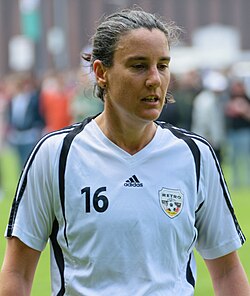
The women's award also saw a historic milestone in 2013 when Nadine Angerer won at age 35, making her the oldest winner and the only goalkeeper to ever receive the honor. Like the men's award, the women's trophy was integrated into The Best FIFA Football Awards starting in 2016.
Voting and Selection Process
The winners were determined through a positional voting system. Each eligible voter—comprising national team captains, coaches, and media members—was allotted three votes. These were weighted as follows: five points for first place, three points for second, and one point for third. The player with the highest total point tally was declared the winner.
Award Summary Table
| Category | Period | Most Wins (Player) | Youngest Winner | Oldest Winner |
|---|---|---|---|---|
| Men's Award | 1991–2009 | Ronaldo, Zinedine Zidane (3) | Ronaldo (20) | Fabio Cannavaro (33) |
| Women's Award | 2001–2015 | Marta (5) | Marta (20) | Nadine Angerer (35) |
Frequently Asked Questions
Who is the most successful player in the history of the award?
Marta is the most successful player overall, having won the FIFA Women's World Player of the Year award five times.
What happened to the award after 2015?
After 2015, both the men's and women's awards were replaced by The Best FIFA Men's Player and The Best FIFA Women's Player as part of The Best FIFA Football Awards.
How were the winners selected?
Winners were chosen by a combination of national team coaches, captains, and international media representatives using a weighted point system (5, 3, and 1 points).
Which country had the most success in the men's category?
Brazil was the most successful nation, with its players winning the award in 8 out of the 19 years the original men's award was presented.
Has any goalkeeper ever won the award?
Yes, Nadine Angerer is the only goalkeeper of either sex to have won the award, achieving this feat in 2013.