FIFA World Cup 2018: France's Triumph in Russia
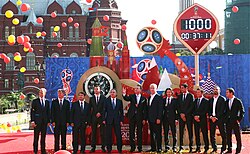
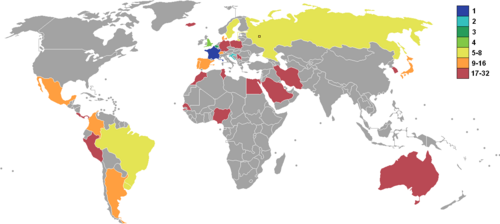
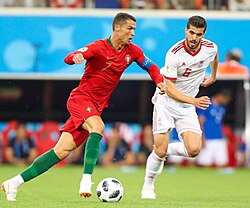
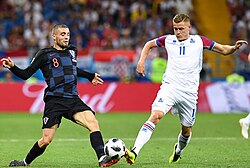
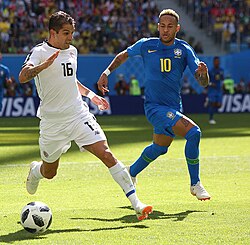
The FIFA World Cup 2018 was a monumental sporting event hosted by Russia from June 14 to July 15. Bringing together 32 national teams from five confederations, the tournament showcased the pinnacle of global football, blending high-stakes competition with state-of-the-art infrastructure across 11 host cities.
The event culminated in a thrilling final where France secured their second World Cup title, defeating Croatia 4–2. The tournament was characterized by a high scoring rate and massive global engagement, with over 3 million spectators attending matches in person.
Key Facts
- Champion: France (2nd title)
- Host Country: Russia
- Total Attendance: 3,031,768 spectators
- Top Scorer: Harry Kane (6 goals)
- Best Player: Luka Modrić (Golden Ball)
- Total Goals: 169 goals across 64 matches
Tournament Organization and Branding
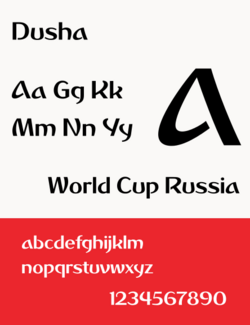
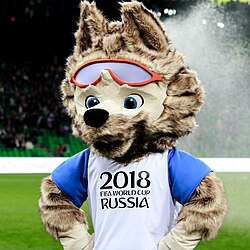
Russia's preparation for the event involved significant infrastructure spending and the construction of several new venues. The branding of the tournament featured the unique "Dusha" typeface and the official mascot, a wolf named Zabivaka.
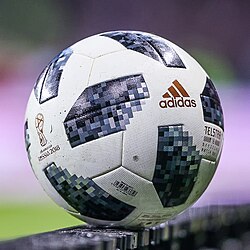
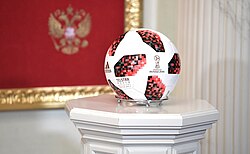
The tournament utilized two distinct match balls: the "Telstar 18" for the group stages and the "Telstar Mechta" for the knockout rounds.
Venues and Infrastructure
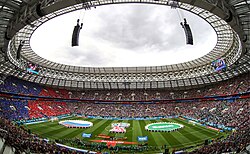
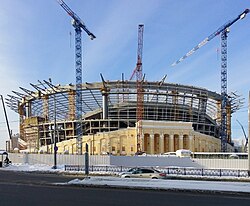
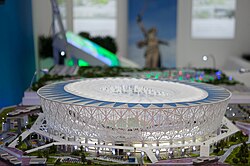
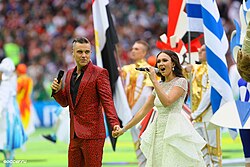
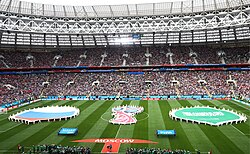
Matches were held across 12 venues in 11 cities. The Luzhniki Stadium in Moscow served as the centerpiece, hosting both the opening and final matches. Other notable venues included the Krestovsky Stadium in Saint Petersburg and the Volgograd Arena.
Host City Stadiums
| City | Stadium | Capacity |
|---|---|---|
| Moscow | Luzhniki Stadium | 78,011 |
| Saint Petersburg | Krestovsky Stadium | 64,468 |
| Sochi | Fisht Olympic Stadium | 44,287 |
| Moscow | Otkritie Arena | 44,190 |
| Volgograd | Volgograd Arena | 43,713 |
| Rostov-on-Don | Rostov Arena | 43,472 |
| Nizhny Novgorod | Nizhny Novgorod Stadium | 43,319 |
| Kazan | Kazan Arena | 42,873 |
| Samara | Samara Arena | 41,970 |
| Saransk | Mordovia Arena | 41,685 |
| Kaliningrad | Kaliningrad Stadium | 33,973 |
| Yekaterinburg | Central Stadium | 33,061 |
The Road to the Final
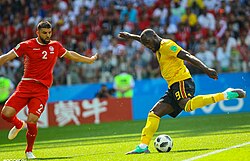
The tournament began with a group stage where 32 teams were divided into eight groups. The ranking was determined by points, goal difference, and goals scored. A Fair Play system was also implemented, deducting points for yellow and red cards to break ties.
Group Stage Highlights
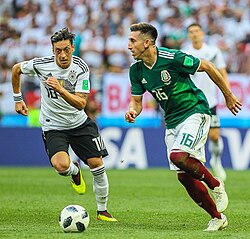
The group stages saw several surprises, including the early exit of defending champions Germany in Group F. Meanwhile, France and Croatia emerged as dominant forces, setting the stage for their eventual clash in the final.
Knockout Stage and Final
The knockout stage introduced the Video Assistant Referee (VAR) system to assist officials in critical decision-making. France progressed through the bracket with a strong defense and the clinical finishing of Kylian Mbappé and Antoine Griezmann.
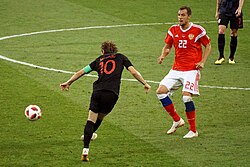
Croatia's journey was marked by resilience, including a dramatic extra-time victory over England in the semi-finals. However, in the final at Luzhniki Stadium, France's offensive power proved too much, resulting in a 4–2 victory.
Individual Awards and Recognition
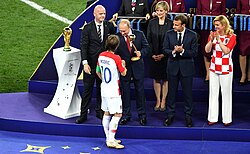
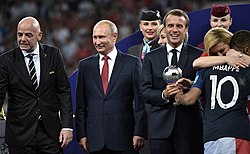
The tournament recognized individual excellence through several prestigious awards. Luka Modrić of Croatia received the Golden Ball as the best player, while Harry Kane took home the Golden Boot for his six goals.
The FIFA Young Player Award was given to Kylian Mbappé, highlighting his breakout performance on the world stage. Spain was honored with the Fair Play Trophy for their disciplined conduct throughout the competition.
Frequently Asked Questions
Who won the 2018 FIFA World Cup?
France won the tournament, defeating Croatia 4–2 in the final to claim their second World Cup title.
Who was the top scorer of the tournament?
England's Harry Kane was the top scorer, finishing the tournament with 6 goals.
Which player won the Golden Ball?
Luka Modrić of Croatia was awarded the Golden Ball as the best player of the tournament.
How many cities hosted matches in Russia?
Matches were hosted in 11 different cities across Russia, utilizing 12 stadiums.
What was the total prize money distributed?
The total prize money for the tournament was 400 million USD, with the champions receiving 38 million USD.