European Golden Shoe: History, Scoring Rules, and Record Winners
The European Golden Shoe, frequently referred to as the European Golden Boot, is one of football's most prestigious individual honors. Awarded each season to the player who accumulates the most points in the top divisions of European national leagues, the trophy—a sculpture of a football boot—serves as the definitive benchmark for goalscoring excellence across the continent.
Originally launched in the 1967–68 season under the French name Soulier d'Or, the award was first presented by the newspaper L'Équipe. Since the 1996–97 season, the responsibility for presenting the award has shifted to European Sports Media.
Key Facts
- Most Wins: Lionel Messi holds the record with six titles.
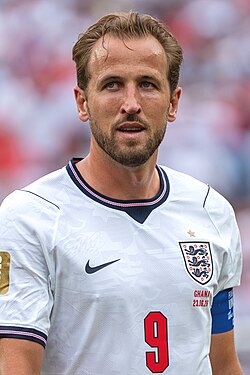
- Current Holder: Harry Kane (his second win).
- Single Season Record: Lionel Messi scored 50 goals (100 points) in 2011–12.
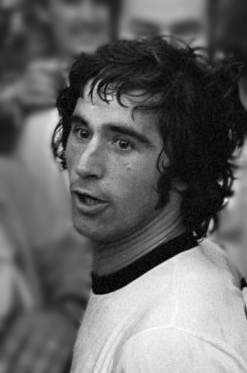
- First Multi-Winner: Gerd Müller was the first player to win the award twice.
- Weighting System: Goals are multiplied based on the UEFA coefficient ranking of the league.
The Evolution of the Award
The Early Era (1968–1991)
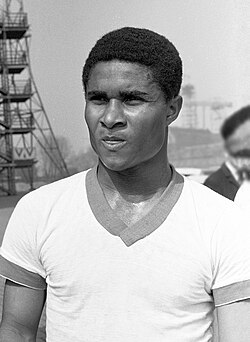
In its first two decades, the Golden Shoe was straightforward: it was awarded to the player who scored the most goals in any European league, regardless of the league's strength or the number of matches played. During this period, players like Eusébio, Gerd Müller, Dudu Georgescu, and Fernando Gomes each secured the trophy twice.
The Hiatus and Controversy
Between 1991 and 1996, L'Équipe ceased issuing the award. This followed a protest from the Cyprus FA, which claimed a Cypriot player had scored 40 goals in a season, despite official records listing the top scorers with only 19 goals.
The Modern Points System (1997–Present)
To ensure the award reflects the difficulty of scoring in elite competitions, European Sports Media introduced a weighting system based on UEFA coefficients (rankings determined by club performance in European competitions over the previous five seasons). This prevents players in lower-ranked leagues from winning solely through high volume in weaker competitions.
The current multipliers are as follows:
- Top 5 Leagues: Goals are multiplied by 2.
- Leagues ranked 6 to 22: Goals are multiplied by 1.5.
- Leagues ranked 22 and below: Goals are multiplied by 1.
Since this change, only Henrik Larsson (2000–01) and Mario Jardel (1998–99, 2001–02) have won the award while playing outside the top five leagues.
Legendary Winners and Records
The Dominance of Messi and Ronaldo
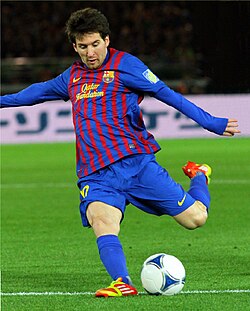
Lionel Messi stands alone as the most successful recipient, winning the award six times, all with Barcelona. He also holds the record for the most goals (50) and points (100) in a single season, achieved in 2011–12. He is also the only player to win the award in three consecutive seasons (2016–17 to 2018–19).
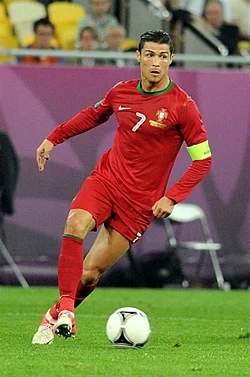
Cristiano Ronaldo follows with four wins, including two consecutive titles. His personal best came in the 2014–15 season with 48 goals and 96 points.
Other Notable Achievements
While many stars have won the award, only a few have done so across different clubs. Diego Forlán, Luis Suárez, Mário Jardel, and Cristiano Ronaldo have all won with multiple clubs. Specifically, Ronaldo and Suárez are the only players to win the award in two different leagues (the Premier League and La Liga).
Summary of Award Metrics
| Category | Criteria / Multiplier | Impact |
|---|---|---|
| Top 5 UEFA Leagues | x 2.0 | Highest point value per goal |
| Leagues 6–22 | x 1.5 | Moderate point value per goal |
| Leagues 22+ | x 1.0 | Standard point value per goal |
| Tie-breaker 1 | Fewest minutes played | Determines winner if points are equal |
| Tie-breaker 2 | Most league assists | Secondary tie-breaker |
| Tie-breaker 3 | Fewest penalties scored | Tertiary tie-breaker |
Frequently Asked Questions
Who has won the European Golden Shoe the most times?
Lionel Messi holds the record with six wins, all achieved while playing for Barcelona.
How is the winner determined since 1997?
The winner is determined by a points system where goals are multiplied by a factor based on the league's UEFA coefficient ranking. Goals in the top five leagues count for double.
What happens if two players have the same number of points?
The award is given to the player with the fewest minutes played. If a tie still exists, the player with the most league assists wins. If it remains tied, the player with the fewest penalties scored is chosen. If all these criteria are equal, the award is shared.
Who was the first player to win the award twice?
Gerd Müller was the first player to achieve two wins, securing the trophy in 1970 and 1972.
Can players from any European league win?
Yes, any player in a top division of a European national league is eligible, though the weighting system makes it significantly harder for those in leagues ranked below the top five to win.