Field Marshal: The Highest Rank of the British Army
Since 1736, the rank of Field Marshal (abbreviated as FM) has stood as the pinnacle of the British Army's hierarchy. As a five-star rank designated by the NATO rank code OF-10, it represents the highest level of professional achievement and authority within the land forces. It is the army equivalent to an Admiral of the Fleet in the Royal Navy and a Marshal of the Royal Air Force in the RAF.
Historically, Field Marshals were officers for life, remaining on half-pay even after retirement or when not holding a specific appointment. While the rank was used sporadically during the 18th and 19th centuries—sometimes remaining vacant for years—it later became a standard honor for the highest-ranking officers of the British military establishment.
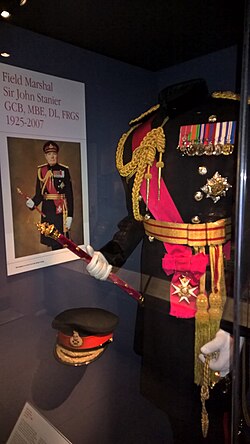
Key Facts
- Established: 1736.
- NATO Code: OF-10 (Five-star rank).
- Total Holders: 143 men have held the rank.
- Insignia: Two crossed batons surrounded by yellow laurel leaves, topped by the Tudor Crown.
- Last Active Promotion: Sir Peter Inge in 1994.
- Unique Achievement: Sir William Robertson is the only person to rise through every single rank from private to field marshal.
The Evolution of Appointments
Following the Second World War, the British Army adopted a routine of promoting the Chief of the Imperial General Staff (now the Chief of the General Staff) to Field Marshal on their final day in office. Similarly, officers appointed as the Chief of the Defence Staff (CDS)—the professional head of all British Armed Forces—were typically promoted to this rank upon their appointment.
However, this practice changed in the mid-1990s. A 1995 Ministry of Defence report suggested abolishing five-star ranks to save costs and align with allies like the United States, which reserves its highest rank for officers commanding massive armies in major wars. While the ranks were not abolished, routine promotions ceased. Sir Peter Inge became the last active officer promoted to the rank in 1994.
Modern and Honorary Promotions
In recent years, the rank has been reserved for special circumstances or honorary appointments. In 2012, Queen Elizabeth II promoted Prince Charles (now King Charles III) to the five-star ranks of all three services. Other honorary promotions include Sir Charles Guthrie in 2012 and Lord Walker of Aldringham in 2014. Most recently, in June 2025, Lord Richards of Herstmonceux and Lord Houghton of Richmond were promoted to the rank.
Distinguished Holders and Gallantry
The 143 men who have held the rank come from diverse backgrounds. While most were professional soldiers in the British or colonial British Indian Army, others were members of the Royal Family or foreign dignitaries. Twelve foreign monarchs once held the honor, though some, including the Emperors of Germany, Austria-Hungary, and Japan, were stripped of it during the World Wars.
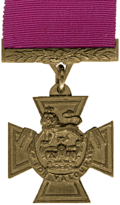
The rank has also been associated with extreme bravery. Four Field Marshals were recipients of the Victoria Cross (VC), the UK's highest award for gallantry in the face of the enemy: Sir Evelyn Wood, Sir George White, Earl Roberts, and Lord Gort.
Notable Records
- Youngest Non-Royal: The Duke of Wellington, promoted at age 44. He is also the only Field Marshal to serve as Prime Minister of the United Kingdom.
- Oldest: The 1st Marquess of Drogheda, promoted at age 91.
- Combat Experience: At least 57 Field Marshals were wounded in battle, and eight were prisoners of war.
Insignia and Symbolism
The visual identity of a Field Marshal is distinct. The insignia features two crossed batons within a wreath of laurel leaves, surmounted by a crown. Upon their appointment, British Field Marshals are presented with a gold-tipped baton, which serves as a ceremonial symbol of their authority during formal occasions.
While the rank is not used within the Royal Marines, the insignia is worn by the Captain General, who serves as the ceremonial head of the corps.
Summary of Rank Details
| Attribute | Detail |
|---|---|
| Service Branch | British Army |
| NATO Rank Code | OF-10 |
| Equivalent Ranks | Admiral of the Fleet (RN), Marshal of the RAF (RAF) |
| Next Lower Rank | General |
| Primary Insignia | Crossed batons, laurel leaves, and Tudor Crown |
Frequently Asked Questions
How many people have held the rank of Field Marshal?
A total of 143 men have held the rank of Field Marshal in the British Army.
Is the rank of Field Marshal still routinely awarded?
No. Following a 1995 Ministry of Defence report, routine promotions for service chiefs were stopped. The rank is now reserved for special circumstances or honorary appointments.
Who was the youngest non-royal to achieve this rank?
The Duke of Wellington was the youngest non-royal officer to be promoted to Field Marshal, achieving the rank at age 44.
What is the difference between a Field Marshal and a General?
A Field Marshal is a five-star rank (OF-10), which is the highest possible rank in the British Army, whereas a General is the next lower rank.
Which Field Marshals received the Victoria Cross?
Four Field Marshals were awarded the Victoria Cross: Sir Evelyn Wood, Sir George White, Earl Roberts, and Lord Gort.