Discovering Fennel: The Versatile Herb of the Mediterranean
With its distinct licorice-like aroma and feathery green foliage, fennel (Foeniculum vulgare) is far more than just a kitchen staple. A hardy perennial herb belonging to the Apiaceae (carrot) family, fennel has traveled from the sunny shores of the Mediterranean to become a global favorite in both culinary and medicinal traditions. Whether used as a crisp vegetable, a potent spice, or a decorative garden plant, fennel offers a unique blend of flavor and history.
Key Facts
- Scientific Name: Foeniculum vulgare
- Family: Apiaceae (the carrot family)
- Primary Flavor Compound: Anethole, which provides the characteristic anise or licorice taste.
- Edible Parts: Bulb (stem base), leaves, fruits (seeds), and pollen.
- Top Producer: India produces approximately 60% of the world's fennel output.
- Origin: Indigenous to the Mediterranean region.
Botanical Profile and Description
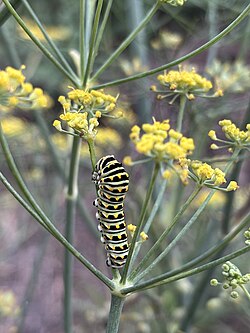
Fennel is a perennial herb characterized by its hollow, erect, and glaucous green stems, which can reach heights of up to 2.1 meters (7 feet). Its leaves are finely dissected and filiform (threadlike), measuring up to 40 centimeters (16 inches) in length. While they resemble dill, fennel leaves are typically thinner.
The plant produces flowers in terminal compound umbels—umbrella-like clusters—that range from 5 to 17.5 cm in width. Each section of the umbel holds 20 to 50 tiny yellow flowers. The resulting fruit is a dry schizocarp (a fruit that splits into two single-seeded parts), measuring 4 to 10 mm in length and featuring distinct grooves.
Varieties of Fennel
While wild fennel is common, humans have developed specific cultivars for different uses:
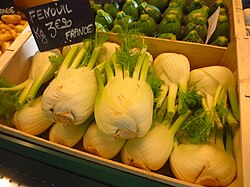
- Florence Fennel: Also known as finocchio, this variety features a swollen, bulb-like stem base used as a vegetable. It is sweeter and more aromatic than the wild type.
- Bronze-leaved Fennel: Known as Foeniculum vulgare 'Purpureum' or 'Nigra', this variety is primarily grown as a decorative garden plant.
Chemistry and Nutritional Value
The aromatic profile of fennel is driven by volatile oils. The primary compounds include trans-anethole and estragole (licorice scents), fenchone (mint and camphor), limonene, and 1-octen-3-ol (mushroom scent). It also contains polyphenols such as luteolin and rosmarinic acid.
Nutritionally, the plant varies significantly between its bulb and its seeds. A raw fennel bulb consists of 90% water, 1% protein, and 7% carbohydrates. In contrast, dried fennel seeds are nutrient-dense. A 100-gram serving of seeds provides 345 kcal and is exceptionally rich in manganese (283% DV), iron (103% DV), calcium (92% DV), and magnesium (92% DV), along with significant amounts of dietary fiber and B vitamins.
Culinary Applications Around the World
Fennel is prized globally for its versatility. The most potent and expensive form is fennel pollen, harvested from the tiny yellow flowers. The fruits are used as a spice, while the bulb can be eaten raw, sautéed, grilled, or roasted.
Global Traditions
- South and West Asia: In India, fennel fruits (saunf) are eaten raw or roasted as mukhwas, a breath freshener and digestive aid. It is a critical component of Kashmiri and Gujarati cuisines and the panch phoron spice mix of Bengal and Assam.
- East Asia: In China, fennel stems and leaves are used in the fillings for jiaozi (dumplings) and baozi (steamed buns), and are a key ingredient in five-spice powder.
- Europe: In Italy, Florence fennel is a staple in salads and risottos, and the fruits provide the primary flavor for Italian sausage. In Spain, fennel stems are used to prepare berenjenas de Almagro (pickled eggplants).
- Beverages: Fennel is one of the three primary herbs used to create absinthe and is used to flavor Scandinavian brännvin (distilled spirits).
Ecology and Cultivation
Fennel thrives in dry soils near coastlines and riverbanks. However, its ability to propagate via both seed and root crown has led it to become an invasive species in parts of the United States and Australia. It can outcompete native plants for nutrients and water, and may release allelopathic substances—chemicals that inhibit the growth of neighboring plants.
Similar Species and Identification
Because some members of the Apiaceae family are poisonous, correct identification is vital. Fennel is often confused with:
- Dill, Coriander, and Caraway: These are generally shorter (40–60 cm). Coriander and caraway have white flowers, whereas fennel and dill have yellow flowers.
- Giant Fennel (Ferula communis): A larger, coarser plant with a pungent aroma.
- Lomatium: Native to North America, these species often have yellow flowers but are distinguished by roots with a rice-like odor, unlike the musty smell of poison hemlock.
History and Cultural Significance
Fennel has been valued since antiquity. The ancient Greeks and Romans used it as food, medicine, and an insect repellent. The Greek word for fennel, marathon, is the origin of the name for the famous Battle of Marathon, which took place on a "plain with fennel." In mythology, Prometheus is said to have stolen fire from Mount Olympus using a hollow fennel stalk.
In the 10th century, fennel was one of the nine plants mentioned in the Anglo-Saxon "Nine Herbs Charm." Later, Emperor Charlemagne mandated its cultivation on all imperial farms. Even the city of Funchal in Madeira derives its name from the Portuguese word for fennel, funcho.
Production and Global Output
Fennel production is often grouped with similar spices like anise and coriander. India is the dominant global producer, followed by China and Bulgaria.
| Country | Production (Tonnes) |
|---|---|
| India | 584,000 |
| China | 48,002 |
| Bulgaria | 36,500 |
| Iran | 32,771 |
| Mexico | 29,251 |
| Syria | 27,668 |
| World Total | 970,404 |
Frequently Asked Questions
What is the difference between fennel and anise?
While both have a similar licorice flavor due to the compound anethole, they are different plants. Fennel fruits are generally larger than anise seeds, and the fennel plant is a larger perennial herb with edible bulbs and leaves, whereas anise is primarily grown for its seeds.
Is fennel invasive?
Yes, in certain regions such as the United States and Australia, fennel is considered an invasive weed. It can dominate landscapes by outcompeting native species for light and water and by releasing chemicals that hinder the growth of other plants.
What is "Florence fennel"?
Florence fennel is a cultivated variety of Foeniculum vulgare that develops a swollen, bulb-like stem base. This "bulb" is used as a vegetable in cooking and has a milder, sweeter flavor than wild fennel.
Are there any poisonous plants that look like fennel?
Yes, some members of the Apiaceae family, such as poison hemlock, can look similar to fennel or its relatives like Lomatium. It is important to be cautious when foraging, as these poisonous species can be difficult to distinguish from edible herbs.
What are the health benefits of fennel seeds?
Fennel seeds are a rich source of essential minerals, including manganese, iron, calcium, and magnesium. They are traditionally used in various cultures as a digestive aid and a breath freshener.