Fellowship of the Royal Society: The Pinnacle of Scientific Achievement
The Fellowship of the Royal Society is one of the most prestigious honors in the global scientific community. Granted by the Royal Society of London, this distinction is awarded to individuals who have made a substantial contribution to the improvement of natural knowledge, spanning the fields of mathematics, engineering science, and medical science. Established in 1663, the Society stands as the oldest known scientific academy in continuous existence.
Often described as the scientific equivalent of a lifetime achievement Oscar, the Fellowship recognizes a career of excellence and impact. Over its 363-year history, the Society has inducted approximately 8,000 fellows, including some of the most influential minds in human history.

Key Facts
- Founded: 1663 in London, United Kingdom.
- Purpose: To recognize substantial contributions to natural knowledge.
- Total Fellows: Approximately 8,000 (with 1,743 living Fellows as of the latest records).
- Nobel Connection: Over 280 Nobel Laureates have been inducted since 1900.
- Selection: Based on rigorous peer review and a secret ballot.
Types of Fellowship
The Royal Society grants several distinct types of membership, each with its own criteria and post-nominal letters.
Fellow (FRS)
The primary fellowship is awarded to scientists from the United Kingdom, Ireland, and the Commonwealth of Nations. These individuals are elected for life based on scientific excellence and are entitled to use the letters FRS. Up to 52 new Fellows are typically elected each year.

Foreign Member (ForMemRS)
To recognize global excellence, the Society elects up to ten new foreign members annually. Like Fellows, they are elected for life via peer review and use the post-nominal ForMemRS.
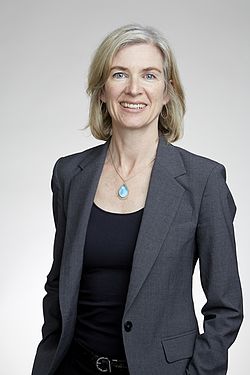
Honorary Fellow (HonFRS)
This title is awarded to those who have provided distinguished service to the cause of science, even if they do not possess the specific scientific research achievements required for a standard Fellowship. These members use the post-nominal HonFRS.
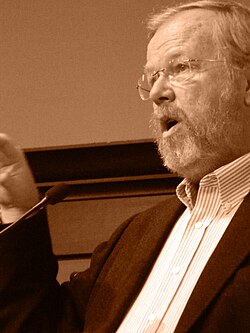
Royal Fellow and Special Categories
The Council may recommend members of the British royal family for election as Royal Fellows. As of 2023, this includes King Charles III, Princess Anne, the Duke of Kent, and the Prince of Wales. Additionally, the Society previously used "Statute 12" as a legacy mechanism for electing members before the formal creation of honorary membership in 1997.
The Election Process
Becoming a Fellow is a rigorous process designed to ensure only the most qualified candidates are admitted. Each year, around 700 candidates are proposed, but only up to 60 are elected across all categories.
Nomination and Peer Review
Candidates must be nominated by two existing Fellows (a proposer and a seconder). The process is overseen by the Council of the Royal Society, which utilizes 10 Sectional Committees. These committees consist of at least 12 Fellows each and are rotated every three years to prevent in-group bias.
The Sectional Committees cover diverse specializations, including:
- Computer science and Mathematics
- Astronomy, Physics, and Chemistry
- Engineering and Earth/Environmental science
- Molecules of Life, Cell biology, Multicellular organisms, and Patterns in Populations
Final Selection and Admission
After the committees recommend the strongest candidates, a secret ballot is held in May. A candidate must secure two-thirds of the votes to be elected. New Fellows are formally admitted in July, where they sign the Charter Book and the Obligation, promising to promote the good of the Society.
![Brian Cox, a professor of physics, was elected a Fellow of the Royal Society in 2016 having previously held a Royal Society University Research Fellowship (URF) from 2005 to 2013.[37]](/images/e0/16/e0167058bf07e577e0dfa421bc9412d68c64e85cd3ad8af4769d9099b83a3c72.jpg)
Research Fellowships and Grants
Distinct from the elected Fellowship (FRS), the Royal Society also provides competitive research grant awards. These are applied for by individuals rather than through election.
| Fellowship Name | Target Audience | Primary Purpose |
|---|---|---|
| University Research Fellowship (URF) | Early-career UK scientists | Developing future leaders in science |
| Leverhulme Trust Senior Fellowship | Established scientists | Full-time research without teaching duties |
| Newton Advanced Fellowship | International researchers | Developing research group capabilities |
| Industry Fellowship | Academic and industry scientists | Collaborative projects between sectors |
| Dorothy Hodgkin Fellowship | Early-career UK scientists | Flexible working for personal circumstances |
Frequently Asked Questions
Who can be nominated for Fellowship of the Royal Society?
Candidates must be nominated by two existing Fellows of the Royal Society. They are evaluated based on their substantial contributions to the improvement of natural knowledge in fields such as mathematics, engineering, or medical science.
What is the difference between an FRS and a ForMemRS?
An FRS (Fellow) is typically from the UK, Ireland, or the Commonwealth, while a ForMemRS (Foreign Member) is a scientist from outside these regions. Both are elected for life based on scientific excellence.
How many people are elected as Fellows each year?
Up to 60 new members are elected annually in total, which includes up to 52 Fellows, up to 10 Foreign Members, and a small number of Honorary or Royal Fellows.
What are the post-nominal letters for Honorary Fellows?
Honorary Fellows, who are recognized for distinguished service to science rather than primary research achievements, use the post-nominal letters HonFRS.
Is the Royal Society only for physicists and chemists?
No. The Society covers a vast array of natural knowledge, including computer science, biology, earth sciences, engineering, and mathematics, organized into 10 different Sectional Committees.