Fatimid Caliphate: The Rise and Fall of an Ismaili Empire
The Fatimid Caliphate (909–1171) was a powerful Ismaili Shia state that reshaped the political and cultural landscape of North Africa and Egypt. Emerging from a secret network of missionaries, the dynasty established a hereditary monarchy that challenged the Abbasid Caliphate, eventually moving its center of power to the newly founded city of Cairo. At its peak, the empire spanned approximately 4,100,000 square kilometers, blending religious zeal with a sophisticated administrative system.
Key Facts
![Fatimid ewer, 10th century CE[53]](/images/17/b1/17b1301ffa9726a42ef4dc788a377679f40b17d29dc31f1d3ede7e3ad6c8bfda.jpg)
- Duration: 909 to 1171 CE.
- State Religion: Ismaili Shia Islam.
- Major Capitals: Raqqada, Mahdia, al-Mansuriya, and Cairo.
- Founder: Abd Allah al-Mahdi Billah.
- Final Caliph: Al-Adid li-Din Allah.
- End of Dynasty: Abolished by Saladin on September 17, 1171.
The Foundation of the Ismaili State
![Architectural fragment from a bathhouse in al-Fustat, 11th century CE (pre-1168 CE). Museum of Islamic Art, Cairo, 12880.[87][88]](/images/ee/c7/eec7ad2b124f4127b49330c3211f91fa25ec5e0ba65b6cfee552da5e4111c609.jpg)
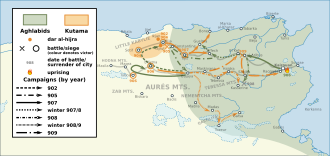
The origins of the caliphate lie in the work of Abu Abdallah, a da'i (missionary) who organized Kutama Berber forces to overthrow the Aghlabid dynasty in Ifriqiya (modern-day Tunisia). This military success paved the way for the arrival of Abd Allah al-Mahdi Billah, who was proclaimed the Imam and first Caliph in 909.
To secure his rule and distance the court from the Sunni stronghold of Kairouan, al-Mahdi established a fortified palace city called al-Mahdiyya on the Mediterranean coast in 921. This strategic move allowed the Fatimids to build a secure base and develop a powerful navy, transforming the caliphate into a major Mediterranean power by 934.
Internal Struggles and Consolidation
The dynasty faced significant challenges, most notably the Kharijite rebellion led by Abu Yazid in the 940s. This uprising besieged the capital at al-Mahdiyya, during which Caliph al-Qa'im died. His successor, al-Mansur, kept his father's death secret until the rebellion was suppressed. Following this conflict, the capital was moved to al-Mansuriyya, a new palace city south of Kairouan.
The Golden Age in Egypt
![Image of two standing soldiers. 11th century, Fatimid period, from Fustat near Cairo. Museum of Islamic Art, Cairo, inv. no. 13703.[99][100] Attribution to the Fatimid period is sometimes questioned.[101]](/images/3c/17/3c172da0a38b6bb431e2c921c090ea102fcf3484ffd4e723bf4e86952650f484.jpg)
The most pivotal moment in Fatimid history occurred in 969 when the forces of Caliph al-Mu'izz conquered Egypt. In 973, the seat of the caliphate was transferred to the newly constructed city of Cairo. Egypt quickly became the empire's political, cultural, and religious heart, fostering a unique indigenous Arabic culture.
Central to this new capital was the Al-Azhar Mosque, built between 970 and 972. By 988, Al-Azhar evolved into a premier academic institution dedicated to the dissemination of Ismaili teachings.
![Al-Azhar Mosque in Cairo, built by the Fatimids between 970 and 972[77]](/images/59/2b/592b17cbb7e7da1da040219dde4ccc003ce7db0dac4125700767b56b4e980885.jpg)
Society and Religious Pluralism
While the state was officially Ismaili, the majority of the population remained Sunni. The Fatimids generally practiced religious tolerance toward non-Shi'a Muslims, Christians, and Jews, though they struggled to convert the general Egyptian population to Ismaili beliefs. This pluralism is evident in the historical records of the era, including the production of the Leningrad Codex, a Hebrew Bible manuscript copied in Cairo/Fustat in the early 11th century.
![Cover page of the Leningrad Codex, a manuscript of the Hebrew Bible copied in Cairo/Fustat in the early 11th century[194]](/images/57/65/57659e4573d11321a8a494f4dbbe8c0479443ef3ed662e45f9d83bb0b92a41a2.jpg)
Art, Architecture, and Economy
![The Al-Hakim Mosque in Cairo, commissioned by al-Aziz in 990 and completed by al-Hakim in 1013 (later renovated in the 1980s by the Dawoodi Bohra)[129]](/images/65/02/6502e8d6be4a15b93cf2672b04510b7a390d707854d64669532ca7b20a3dc5ca.jpg)
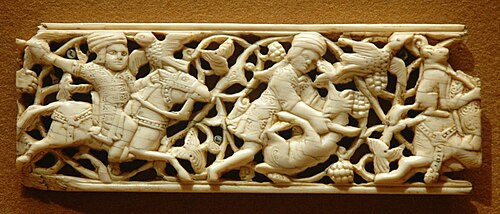
The Fatimids are renowned for their contributions to Islamic art and architecture. Their style is characterized by grand mosques, intricate palace designs, and high-quality crafts. Fustat, the economic hub near Cairo, became a center for the production of ceramics, particularly lustreware, and luxury items like ivory panels.
![Lustreware Plate with Bird Motif, 11th century. Archaeological digs have found many kilns and ceramic fragments in al-Fustat, and it was likely an important production location for Islamic ceramics during the Fatimid period.[226]](/images/8a/ef/8aef1a5d7467d1d05487e6e3e56ab2a32c34b1cc78ace306cd2ca1daa65a5a35.jpg)
| Capital City | Period | Significance |
|---|---|---|
| Raqqada | 909–921 | Initial seat of power. |
| Mahdia | 921–948 | Fortified Mediterranean coastal base. |
| al-Mansuriya | 948–973 | Transition period before the move to Egypt. |
| Cairo | 973–1171 | Imperial center and cultural hub. |
Decline and Fall
The decline of the caliphate began with a period of political instability. Caliph al-Mustansir (1036–1094) had the longest reign in the dynasty's history but remained largely detached from governance, leaving power to a series of viziers.
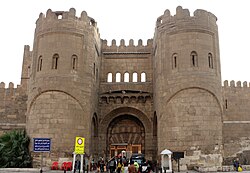
By the 12th century, the caliphs' authority had faded. The state became increasingly dependent on powerful viziers, including the Armenian general Badr al-Jamali, who oversaw a temporary revival of the city's defenses. However, internal disorder and conflicts between rival viziers like Shawar and Dirgham invited foreign intervention from the Sunni Zengid ruler Nur ad-Din and the Crusaders.
The end came when the Zengid general Asad al-Din Shirkuh seized Egypt to reinstall Shawar. Eventually, Shirkuh's nephew, Saladin, rose to power. On September 17, 1171, Saladin officially abolished the Fatimid Caliphate, marking the return of Sunni political dominance in Egypt.
Frequently Asked Questions
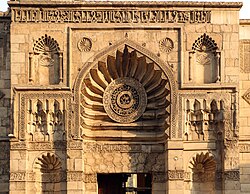
![Al-Salih Tala'i Mosque in Cairo, built by Tala'i ibn Ruzzik in 1160 and originally intended to house the head of Husayn (the head ended up being interred instead at the present-day al-Hussein Mosque)[178]](/images/ec/e1/ece1e7b717dfc229230fbfbe910496b54c23adc6ac367eb88c19e40aa2abce5f.jpg)
![The original Fatimid-period mihrab inside the al-Azhar Mosque[205]](/images/2c/dc/2cdc8334759951787a34e08caadcc60e0ff56a96358de2ac77614134c6a2be53.jpg)
![Side chapel in the Hanging Church in Old Cairo, including frescoes (partly visible behind the screen here) dating from the late 12th or 13th century, before the church's later renovation[212]](/images/27/be/27bef145b1e9ca3863c7b90a29efd8214f72142bbaf12c1b55c710a2238916c9.jpg)
Who founded the Fatimid Caliphate?
The state was established through the efforts of the missionary Abu Abdallah, but Abd Allah al-Mahdi Billah was the first Caliph and founder of the dynasty in 909.
Why was Cairo founded?
Cairo was constructed as a palatine and administrative city to serve as the royal capital for the Fatimid Caliphs after their conquest of Egypt in 969.
What was the role of Al-Azhar Mosque?
Originally the official state mosque, Al-Azhar became a central academic institution in 988 for teaching Ismaili religious doctrines.
How did the Fatimids treat other religions?
The Fatimids generally allowed a degree of religious tolerance for Jews, Christians, and other Muslim sects, although some periods saw increased persecution, such as under Caliph al-Hakim.
Who finally ended the Fatimid dynasty?
The dynasty was abolished by Saladin in 1171, who replaced the Ismaili caliphate with the Ayyubid Sultanate.