Far North Line: A Journey Through the Scottish Highlands
The Far North Line (known in Gaelic as Loidhne a' Chinn a Tuath) is one of the most scenic and remote railway routes in the United Kingdom. Stretching from the city of Inverness to the northernmost reaches of mainland Britain, this operational line traverses the rugged landscapes of Highland Scotland, connecting isolated communities and providing a vital transport link through the mountains and coasts.
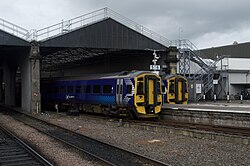
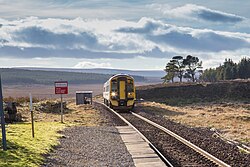
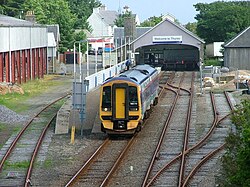
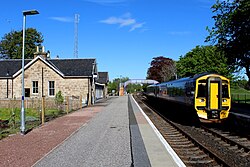
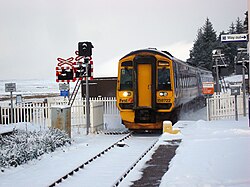
Owned by Network Rail and operated by ScotRail, the line is characterized by its rural atmosphere and single-track layout with passing loops. It serves as a lifeline for the region, utilizing Class 158 "Express Sprinter" rolling stock to navigate the challenging terrain.
Key Facts
- Total Length: 168 miles and 3 chains (270.4 km).
- Termini: Inverness (Southern), Wick and Thurso (Northern).
- Northernmost Station: Thurso.
- Shortest Platform: Beauly station (15.06 meters).
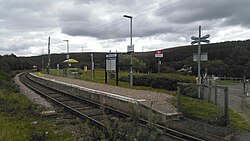
- Infrastructure: Single-track, non-electrified, and contains no tunnels.
- Northernmost Junction: Georgemas Junction.
Route Overview and Geography
Inverness to Tain
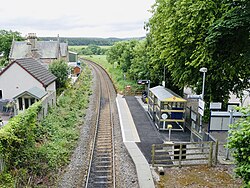
The journey begins in Inverness, where the track crosses the River Ness and the Caledonian Canal. As the line heads north toward the village of Beauly, it parallels the A862 road. A notable feature of this section is Beauly station; reopened in 2002, it holds the record for the shortest operational platform on the National Rail network at just 15.06 meters.
Continuing north into Ross and Cromarty, the line passes through Muir of Ord, the site of the first passing loop. It then reaches Dingwall, which stands as the busiest station on the line after Inverness. The route then turns east toward Invergordon before heading northeast to Tain, located on the south side of the Dornoch Firth.
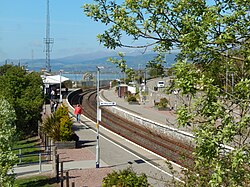
Tain to Helmsdale: The Sutherland Coast
From Ardgay, the railway follows the Kyle, featuring two request stops—Culrain and Invershin—separated by the Invershin Viaduct. The distance between these two stations is among the shortest in Britain. Historically, the railway was the only way to travel between these points without a significant seven-mile detour via Bonar Bridge until a public footpath was added in 2000.
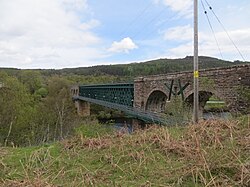
The line continues through the scenic landscapes of Sutherland, calling at stations such as Lairg, Golspie, and Dunrobin Castle, before reaching Helmsdale.
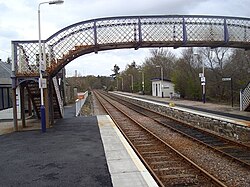
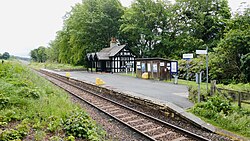
Helmsdale to Wick and Thurso
The final leg of the journey enters Caithness. This section includes some of the most remote stops, such as Scotscalder, which often averages fewer than one passenger per day. The line eventually reaches Georgemas Junction, the northernmost railway junction in the UK.
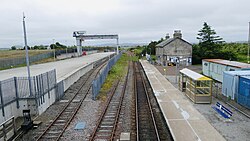
At this junction, the line splits: one branch leads to Thurso, the northernmost railway station in Britain and the gateway to the Scrabster ferry for the Orkney Islands. The main line continues to Wick on the east coast, the nearest station to Wick Airport and the village of John o' Groats.
Technical Infrastructure and History
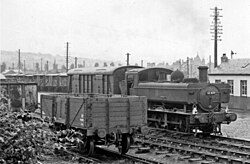
The Far North Line was constructed in stages between 1862 and 1874, beginning with the Inverness and Ross-shire Railway and concluding with the Sutherland and Caithness Railway. Despite the mountainous terrain of the Highlands, the line is unique for having no tunnels.
A significant event in the line's history occurred on February 7, 1989, when the Ness Viaduct collapsed due to unprecedented flooding. This forced operations to move to a temporary site at Muir of Ord until a new viaduct opened in May 1990.
Service and Passenger Volume
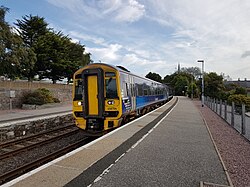
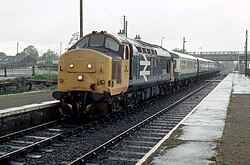
Passenger services are infrequent and irregular. As of 2022, the weekday schedule includes 14 trains arriving at Inverness and 12 departing. Services vary from short shuttles to Dingwall to full journeys to the northern termini. While Inverness sees the highest volume of traffic, Dingwall and Thurso also serve as significant hubs for the region.
| Station | 2018-19 | 2020-21 | 2022-23 |
|---|---|---|---|
| Inverness | 1,243,338 | 231,894 | 974,808 |
| Dingwall | 81,408 | 9,864 | 55,536 |
| Thurso | 39,974 | 6,474 | 31,446 |
| Wick | 17,890 | 3,442 | 14,924 |
| Beauly | 48,270 | 14,918 | 36,588 |
Frequently Asked Questions
What is the northernmost railway station in Britain?
Thurso station is the northernmost railway station in Britain, located on the northern coast of Scotland.
Which station has the shortest platform on the National Rail network?
Beauly station has the shortest operational platform, measuring exactly 15.06 meters (49 ft 5 in).
Are there any tunnels on the Far North Line?
No, despite passing through the mountainous Scottish Highlands, there are no tunnels on the entire length of the line.
What is Georgemas Junction known for?
Georgemas Junction is the northernmost railway junction in the United Kingdom, where the line diverges toward the termini of Wick and Thurso.
How was the line constructed?
The line was built in four stages between 1862 and 1874 by the Inverness and Ross-shire Railway, the Sutherland Railway, the Duke of Sutherland's Railway, and the Sutherland and Caithness Railway.