Falcon Genus: Biology, Taxonomy, and Evolutionary History
The genus Falco comprises some of the most efficient predators in the animal kingdom. Known for their incredible speed and precision, these birds of prey are distinguished by their specialized hunting techniques and remarkable physiological adaptations. From the tiny pygmy falcon to the massive gyrfalcon, the genus exhibits a diverse range of sizes and habitats across the globe.
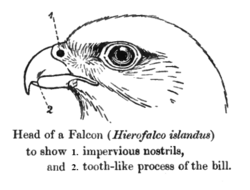
One of the most distinctive physical traits of the genus is the presence of a "tooth" on the upper mandible, a specialized notch used to dispatch prey quickly.
Key Facts
- Fastest Animal: The Peregrine falcon is the fastest-moving creature on Earth, with recorded diving speeds reaching 390 km/h (240 mph).
- Visual Power: Falcons possess exceptional vision, with some species measuring 2.6 times the visual acuity of humans.
- Size Range: The genus ranges from the pygmy falcon (20 cm) to the gyrfalcon (up to 65 cm).
- Evolutionary Ties: Despite being raptors, falcons are more closely related to parrots and songbirds than to other birds of prey.
- Sexual Dimorphism: Females are typically larger than males, allowing the species to hunt a broader variety of prey.
Taxonomy and Etymology
The genus Falco was established in 1758 by the Swedish naturalist Carl Linnaeus. The name is derived from the Late Latin falco, which comes from falx (meaning "sickle"), referring to the bird's sharp claws. While the merlin (Falco columbarius) serves as the type species, the genus currently encompasses approximately 38 species.
Scientific Classification
Falcons belong to the order Falconiformes and the family Falconidae. Historically, various other genus names such as Tinnunculus and Hierofalco were used, but these are now considered synonyms of Falco.
Evolution and Fossil Record
The evolutionary history of falcons is marked by a sparse fossil record compared to other raptors. While many modern genera became recognizable during the Late Miocene (less than 10 million years ago), the oldest known falconid fossil is estimated to be 55 million years old. Evidence suggests that falcons may have originated in North America, Africa, Europe, or the Middle East.
Major groups, such as the kestrels and hobbies, diversified between 2.4 and 5.3 million years ago (from the Miocene-Pliocene boundary through the Gelasian). In contrast, the peregrine-Barbary falcon superspecies and the hierofalcon complex evolved more recently, with some hierofalcons appearing only about 120,000 years ago.
Species Diversity and Distribution
Falcons are found worldwide, occupying a vast array of ecological niches. They are generally categorized into groups such as the typical kestrels, hobbies, and the larger peregrine-hierofalcon complex.
| Common Name | Scientific Name | Primary Distribution |
|---|---|---|
| Peregrine Falcon | Falco peregrinus | Cosmopolitan |
| Gyrfalcon | Falco rusticolus | Arctic/Subarctic |
| American Kestrel | Falco sparverius | North and South America |
| Eurasian Hobby | Falco subbuteo | Eurasia, North Africa |
| Merlin | Falco columbarius | Eurasia, North Africa, North America |
| Pygmy Falcon | Falco monetarius | Africa |
Frequently Asked Questions
What is the fastest speed a falcon can reach?
The Peregrine falcon is the fastest animal on Earth, with a typical diving speed of 320 km/h (200 mph) and a maximum recorded vertical dive of 390 km/h (240 mph).
How do falcons differ from other birds of prey?
Genetically, falcons are not closely related to hawks or eagles; their nearest living relatives are actually parrots and songbirds.
Why are female falcons usually larger than males?
This is known as sexual dimorphism. Having females of a larger size allows the species as a whole to hunt a wider range of prey sizes.
What does the name "Falco" mean?
The name comes from the Late Latin word for falcon, rooted in falx, meaning "sickle," which describes the shape of their claws.
When did the genus Falco first appear?
While the oldest falconid fossil dates back 55 million years, the genus Falco specifically became more recognizable in the fossil record during the Late Miocene, roughly 10 million years ago.