Facultad de Derecho: A Pillar of Legal Education at the University of Buenos Aires
The Facultad de Derecho (Faculty of Law) is a cornerstone of the University of Buenos Aires (UBA), the largest university in Argentina. Established in 1821 alongside the university itself, this institution has spent over two centuries shaping the legal landscape of the nation. Today, it remains one of UBA's largest constituent schools, serving a massive student body of 23,790 enrolled graduate students.
Located in the prestigious Recoleta neighborhood, the faculty is housed in a stunning Neoclassical complex on Avenida Figueroa Alcorta. Inaugurated in 1949, the building has become an architectural landmark of Buenos Aires and is easily accessible via the Facultad de Derecho station on Line H of the Buenos Aires Underground.
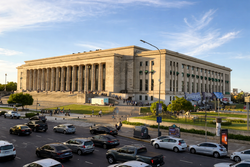
Key Facts
- Founded: 1821
- Affiliation: University of Buenos Aires (UBA)
- Current Dean: Dr. Leandro Vergara
- Student Population: 23,790 graduate students
- Notable Alumni: 16 Argentine presidents and Nobel laureate Carlos Saavedra Lamas
- Location: Av. Figueroa Alcorta 2263, Recoleta, Buenos Aires
Academic Programs and Degrees
The faculty provides a comprehensive range of graduate-level education, focusing on law and specialized legal services. The curriculum is designed to move students from foundational knowledge to professional specialization.
Law Degrees (Abogacía)
The law program is divided into two primary stages:
- Ciclo Profesional Común (CPC): The "common professional cycle" consists of 14 mandatory subjects. Upon completion, students are awarded the title of "University Bachelor in Law" (Bachiller Universitario en Derecho).
- Ciclo Profesional Orientado (CPO): The "oriented professional cycle" allows students to specialize in specific legal fields, including:
- Public Law (Administrative or International Public Law)
- Private Law
- Criminal Law
- Corporate Law
- Labor and Social Security Law
- Tax Law
- Notary Law
Specialized Legal Degrees
Beyond traditional law, the faculty offers degrees in legal translation and public (forensic) calligraphy, as well as a professorship in judicial sciences. The legal translation program offers certifications in English, German, French, Italian, and Portuguese, with options for other languages depending on faculty availability.
For advanced scholars, the institution provides various specialization degrees, magister degrees, doctorates, and post-doctoral programs across diverse legal fields.
Institutional Governance
The Facultad de Derecho operates under a system of tripartite co-governance. This democratic model ensures that the faculty's governing bodies represent three key stakeholders: professors, students, and graduates.
The institution is led by a dean, currently Dr. Leandro Vergara (since 2022), supported by vice dean Dr. Silvia Nonna. The dean presides over the Directive Council (Consejo Directivo), which consists of 16 representatives: eight professors, four students, and four graduates. While the council is elected every two years, the dean is elected by the council every four years.
A Legacy of Distinguished Alumni
The faculty's influence is evident in the high number of national leaders and international jurists who have walked its halls. Of the 17 Argentine presidents who attended the University of Buenos Aires, 16 graduated from the Faculty of Law. Notable names include Raúl Alfonsín, Arturo Frondizi, and Alberto Fernández, the latter of whom also taught criminal law at the graduate level.
One of the most distinguished alumni is Carlos Saavedra Lamas, a diplomat and jurist who became the first Latin American to win the Nobel Peace Prize in 1936 for his role in ending the Chaco War between Bolivia and Paraguay. He later served as the rector of UBA in 1941.
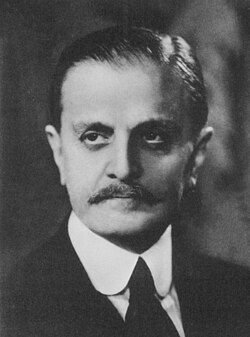
The faculty has also produced world-renowned legal experts, such as Luis Moreno Ocampo (former Chief Prosecutor of the International Criminal Court) and Inés Mónica Weinberg de Roca (judge for the International Criminal Tribunal for Rwanda). Additionally, several ministers of the Supreme Court of Argentina, including Carlos Rosenkrantz and Elena Highton de Nolasco, are alumni.
| Category | Details |
|---|---|
| Established | 1821 |
| Primary Degrees | Law, Legal Translation, Forensic Calligraphy, Judicial Sciences |
| Governance Model | Tripartite Co-governance (Professors, Students, Graduates) |
| Key Alumni | 16 Argentine Presidents, Carlos Saavedra Lamas |
| Campus Style | Neoclassical (Inaugurated 1949) |
Frequently Asked Questions
What is the difference between the CPC and CPO in the law degree?
The CPC (Ciclo Profesional Común) is the foundational stage consisting of 14 mandatory subjects that lead to a Bachelor in Law. The CPO (Ciclo Profesional Orientado) is the specialization stage where students choose a specific field of law, such as criminal, corporate, or tax law.
Who is the current dean of the Faculty of Law?
Since 2022, the faculty has been led by Dr. Leandro Vergara, with Dr. Silvia Nonna serving as vice dean.
Which languages are offered for the legal translation degree?
The faculty offers degrees in English, French, German, Italian, and Portuguese. Other "non-regular" languages may be available depending on the availability of professors.
How is the faculty governed?
It uses a tripartite co-governance system where professors, students, and graduates are democratically represented in the governing bodies, specifically the Directive Council.
Which Nobel laureate graduated from this faculty?
Carlos Saavedra Lamas, who won the Nobel Peace Prize in 1936 for his efforts in resolving the Chaco War, is a notable alumnus and former rector of the university.