Ezequiel Martínez Estrada: The Intellectual Journey of an Argentine Polymath
Ezequiel Martínez Estrada (1895–1964) was a towering figure in Argentine letters—a writer, poet, essayist, and literary critic whose work mirrored the turbulent political and social shifts of 20th-century Latin America. Known for his profound skepticism and intellectual rigor, he evolved from a poet of the pampas into a fierce political critic and a supporter of revolutionary ideals.
Throughout his career, Martínez Estrada navigated a complex ideological landscape. While his middle years were marked by an affinity for the existential and philosophical depths of Friedrich Nietzsche and Franz Kafka, his final years saw him align with Fidel Castro and the Cuban Revolution. His legacy is defined by a relentless quest to understand the soul of Argentina and the broader struggles of the Third World.
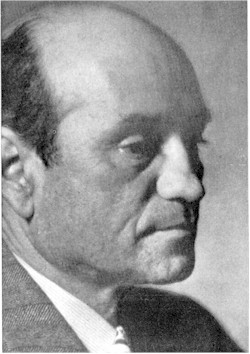
Key Facts
- Born: September 14, 1895, in San José de la Esquina, Santa Fe Province, Argentina.
- Died: November 4, 1964, in Bahía Blanca, Argentina.
- Major Work: Radiografía de la pampa (1933), a seminal sociological and psychological study of Argentina.
- Political Stance: A confirmed anti-Peronist who later became a staunch supporter of the Cuban Revolution.
- Key Honors: Multiple National Prizes for Literature and the "Gran Premio de Honor" from SADE.
- Academic Roles: Professor at the Colegio Nacional of the Universidad Nacional de La Plata and Extraordinary Professor at the Universidad Nacional del Sur.
Early Life and Professional Beginnings
Born in rural Argentina, Martínez Estrada spent his early childhood in Santa Fe and Goyena. Following his parents' separation in 1907, he moved to Buenos Aires to live with his aunt and attend the Colegio Avellaneda. Due to poverty, his formal education was cut short, leading him to work at the central post office in Buenos Aires from 1914 until his retirement in 1946.
Despite the lack of formal degrees, his intellectual appetite was insatiable. He quickly gained a reputation as a poet and essayist. In 1921, he married Agustina Morriconi, an Italian-born artist who served as a primary muse for his poetry, often subordinating her own artistic career to support his work.
Literary Evolution and Political Conflict
Martínez Estrada's academic career began in 1924 at the Colegio Nacional of the Universidad Nacional de La Plata. However, his professional life was deeply intertwined with Argentine politics. In 1933, reacting to the coup led by José Félix Uriburu, he published Radiografía de la pampa. This work launched his reputation as a master of the sociological-psychological-historical essay, characterized by a pessimistic view of the national condition.
The rise of Juan Domingo Perón in 1945 marked a period of significant hardship. Martínez Estrada lost his teaching position and suffered from severe neurodermatitis—a skin condition potentially triggered by psychosomatic stress. After Perón's fall in 1956, he returned to academia and began writing his "catilinarias." Named after Cicero's Catiline Orations, these were acerbic critiques directed at the Argentine elite, predicting a long cycle of Pre-Peronism, Peronism, and Post-Peronism.
Contributions to Sur and International Influence
From 1946, he became a regular contributor to Sur, the influential magazine edited by Victoria Ocampo. His contributions spanned poetry, essays, and short stories influenced by the surreal and absurd style of Kafka. He also traveled extensively; while he generally held anti-American views, a 1942 U.S. government-sponsored visit left him with favorable impressions, later detailed in the posthumous Panorama de los Estados Unidos.
The Cuban Years and Final Exile
In 1959, Martínez Estrada entered a period of semi-exile. After lecturing in Chile and attending a peace conference in Vienna, he spent a year in Mexico at the Universidad Nacional Autónoma de México. There, he wrote Diferencias y semejanzas entre los países de América Latina, an essay that embraced a Third World-ist perspective, condemning colonialism and imperialism.
This intellectual shift led him to Cuba, where from 1960 to 1962, he directed the Center for Latin American Studies at Casa de las Américas. He became deeply immersed in the revolution, editing speeches by Fidel Castro and studying the works of José Martí. He viewed Cuba as having a manifest destiny, linking the indigenous Taínos to the utopian ideals of Thomas More and Martí.
Following the Cuban Missile Crisis and Cuba's expulsion from the Organization of American States (OAS), Martínez Estrada returned to Argentina. He spent his final years in Bahía Blanca, continuing his studies on Balzac and Martí until his death in 1964.
Intellectual Themes and Legacy
Martínez Estrada's work is characterized by a skepticism toward modernity and a concern for the dehumanization caused by industrial society. He engaged deeply with the themes of "civilization" and "barbarism" established by Domingo Sarmiento, though he viewed the virtues of civilization with more ambivalence. He also shared a kinship with Horacio Quiroga in criticizing the mediocrity of contemporary technological society.
| Year | Work | Genre/Focus |
|---|---|---|
| 1933 | Radiografía de la pampa | Sociological-Psychological Essay |
| 1946 | Sarmiento | Book-length Essay |
| 1947 | Nietzsche | Biography/Criticism |
| 1956 | Cuadrante del pampero | Political Critique ("Catilinarias") |
| 1962 | Diferencias y semejanzas entre los países de América Latina | Latin American Essay |
| 1966 (Posth.) | Martí: el héroe y su acción revolucionaria | Biography/Criticism |
Frequently Asked Questions
What was the significance of Radiografía de la pampa?
Published in 1933, it was the first of several essays that established Martínez Estrada's reputation. It provided a pessimistic sociological and psychological analysis of the Argentine pampa and the national identity.
How did his relationship with Peronism affect his life?
He was a confirmed anti-Peronist. This political stance led to the loss of his teaching job in 1945 and coincided with a period of severe health decline, specifically a disabling form of neurodermatitis.
What role did he play in the Cuban Revolution?
He served as the director of the Center for Latin American Studies at Casa de las Américas from 1960 to 1962, edited speeches for Fidel Castro, and wrote extensively on the revolutionary potential of Cuba and the legacy of José Martí.
Who were the primary intellectual influences on his work?
His writings were heavily influenced by Friedrich Nietzsche, Franz Kafka, and Montaigne, as well as Latin American figures like Domingo Sarmiento and José Martí.
What are the "catilinarias"?
The "catilinarias" are a series of acerbic, critical writings directed at the Argentine government and intellectual elite, written after the fall of Perón and named after the orations of Cicero.