European Philanthropy: The Evolution of Charitable Giving and Social Welfare
The landscape of modern charity in Europe evolved from small, localized religious bequests into sophisticated, international humanitarian networks and state-sponsored welfare systems. This transition reflects a broader shift in societal values, moving from simple acts of mercy to organized efforts to solve systemic social issues such as poverty, slavery, and the devastation of war.
The Rise of Organized Charity in Great Britain
Before the 18th century, charity in London was primarily the domain of civic and parochial organizations. These were typically funded by bequests and managed by local church parishes, such as St Dionis Backchurch, or professional guilds like the Carpenters' Company. However, the 18th century saw the emergence of a more activist, Protestant tradition of direct engagement during one's lifetime, leading to the creation of the Society for the Promotion of Christian Knowledge and Societies for the Reformation of Manners.
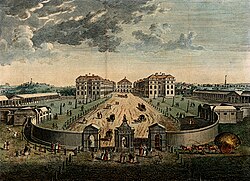
A pivotal moment occurred in 1739 when Thomas Coram established the Foundling Hospital in Bloomsbury. Driven by the sight of abandoned children on London's streets, Coram secured a royal charter to create the country's first children's charity. This institution set the precedent for incorporated associational charities, moving philanthropy toward a more structured, organizational model.
Other pioneers followed, such as Jonas Hanway, who founded The Marine Society in 1756 to assist navy recruitment—recruiting over 10,000 men by 1763—and the Magdalen Hospital for the rehabilitation of prostitutes. These voluntary associations relied on subscriptions and used the growing popular press to raise awareness, often gaining prestige through Royal Charters.
19th Century Activism and the Middle Class
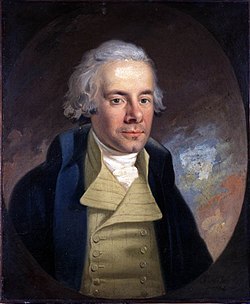
By the 19th century, philanthropy shifted toward active campaigning and legislative lobbying. Figures like William Wilberforce championed causes such as the protection of animals and children, and most notably, the campaign to end the slave trade throughout the British Empire, which succeeded in 1807. While slavery was not legal within Britain, the movement faced resistance from wealthy sugar plantation owners in the West Indies until total abolition in 1833.
Charitable giving became a hallmark of middle-class status. The scale of giving grew exponentially: by 1869, over 200 London charities earned roughly £2 million annually; by 1885, this grew to over 1,000 charities with an income of £4.5 million. This era saw the rise of both large organizations, like the YMCA, and niche groups, such as the Metropolitan Drinking Fountain Association. Wealthy industrialists also left massive legacies; a sample of 466 wills from the 1890s showed £20 million of £76 million in total wealth bequeathed to charity.
The Professionalization of Giving
To maximize the impact of these funds, Lord Shaftesbury helped establish the Charity Organisation Society in 1869. This federation coordinated efforts across 42 Poor Law divisions to better assist the slum-dwelling poor. This period also saw the birth of housing associations, such as the Peabody Trust and the Guinness Trust. An early example was the first Model Dwellings Company (1844), which improved working-class housing while providing a competitive return to investors—a concept known as "five per cent philanthropy."
Humanitarianism in Switzerland and France
In Switzerland, the modern humanitarian movement was catalyzed by Henry Dunant. In 1863, he funded the Geneva Society for Public Welfare, which evolved into the International Committee of the Red Cross (ICRC). Dunant's leadership during the 1870 Franco-Prussian War earned him a share of the first Nobel Peace Prize in 1901.
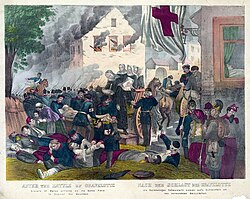
The ICRC became vital during World War II, establishing a Central Prisoner of War Agency that provided food and mail to 365,000 British and Commonwealth captives. However, suspicions regarding the ICRC's tolerance of Nazi Germany led to its replacement by the UN Relief and Rehabilitation Administration (UNRRA) as the primary agency after 1945.
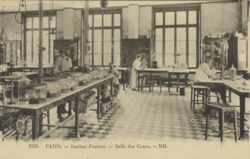
In France, the Red Cross evolved into a major non-religious humanitarian force closely linked to the army's Service de Santé. By 1914, it boasted 164,000 members and 21,500 trained nurses. Simultaneously, the Pasteur Institute operated as a hybrid between a commercial pharmaceutical venture and a philanthropic enterprise, utilizing its monopoly on microbiological knowledge to fund serum production.
During the Great Depression, France addressed welfare needs without raising taxes by introducing a national lottery. Additionally, the Rockefeller Foundation provided critical support, funding the National Institute of Hygiene and establishing schools for physicians and nurses.
The German Model and the Welfare State
Germany became a global blueprint for the welfare state. While the aristocracy funded arts and parks, the emerging middle class (bourgeoisie) used philanthropy to establish social influence after their failed political bid in 1848. They focused on higher education, cultural institutions, and alleviating the hardships of industrialization.
Religious divisions shaped German giving: Catholics often left bequests to reduce time in purgatory, while Protestants focused on eradicating "social evils" like alcoholism and socialism. Chancellor Otto von Bismarck later implemented state-sponsored philanthropy—the modern welfare state—specifically to neutralize the political threat of socialist labor unions.
German private funding for public purposes was exceptionally high, leading to the creation of the kindergarten, the research university, and the welfare state, all of which were later adopted by Anglo-Saxon nations. Although the Nazi regime and World War II destroyed this civil society by 1945, middle-class philanthropy returned during the "economic miracle" of the 1950s.
War Relief in Belgium and Eastern Europe
During World War I, the Commission for Relief in Belgium (CRB), led by Herbert Hoover, managed a massive international effort to feed 11 million people in German-occupied Belgium and northern France. Between 1914 and 1919, the CRB shipped 697,116,000 pounds of flour using purely voluntary contributions.
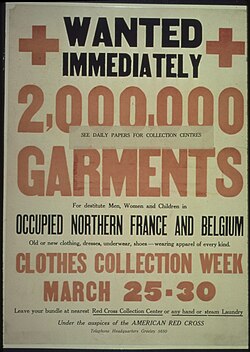
Following the war, Hoover led the American Relief Administration (ARA), which transitioned from government to private funding. Through the European Children's Fund, the ARA fed millions of starving children across Central and Eastern Europe, including those in Bolshevik Russia, under the principle that starving people should be fed regardless of their politics.
Key Facts
- First Children's Charity: The Foundling Hospital, established by Thomas Coram in 1739.
- Five Per Cent Philanthropy: The practice of building social housing for the poor while ensuring a competitive financial return for investors.
- The Red Cross: Founded by Henry Dunant in 1863; Dunant received the first Nobel Peace Prize in 1901.
- Bismarck's Strategy: The modern welfare state was created in Germany partly to weaken socialist labor unions.
- CRB Impact: Herbert Hoover's Commission for Relief in Belgium fed up to 9 million people daily during WWI.
| Region/Entity | Key Figure/Organization | Major Contribution | Era |
|---|---|---|---|
| Great Britain | Thomas Coram | Foundling Hospital (First children's charity) | 18th Century |
| Great Britain | William Wilberforce | Anti-slavery campaigning and legislation | 19th Century |
| Switzerland | Henry Dunant | International Committee of the Red Cross | 19th Century |
| Germany | Otto von Bismarck | Modern state-sponsored welfare system | 19th Century |
| International | Herbert Hoover | Commission for Relief in Belgium (CRB) | Early 20th Century |
Frequently Asked Questions
What was "five per cent philanthropy"?
It was a 19th-century British model of housing associations, such as the Model Dwellings Company, where philanthropic goals (improving working-class housing) were combined with a capitalist return on investment, typically around five percent.
How did the German welfare state originate?
While the middle class funded education and culture, Chancellor Otto von Bismarck established the state-sponsored welfare system to provide social security and neutralize the political influence of socialist labor unions.
What role did the Rockefeller Foundation play in France?
The Rockefeller Foundation helped design and fund France's modern public health system through the National Institute of Hygiene and established specialized schools for nurses and physicians.
How did the International Committee of the Red Cross assist during WWII?
The ICRC established a Central Prisoner of War Agency, providing essential food, mail, and assistance to 365,000 British and Commonwealth soldiers and civilians held captive.
Who was Herbert Hoover in the context of European relief?
Hoover led the Commission for Relief in Belgium (CRB) during WWI, feeding millions in occupied territories, and later headed the American Relief Administration (ARA) to provide food to starving populations in Central and Eastern Europe.