Geneva Convention I: The Foundation of International Humanitarian Law
The Geneva Convention (I) for the Amelioration of the Condition of the Wounded in Armies in the Field, commonly known as the First Geneva Convention or GCI, represents a pivotal moment in human history. Signed in August 1864, this multilateral treaty established the first international legal framework for protecting victims of armed conflict, specifically focusing on the care of sick and wounded soldiers.
This landmark agreement did not emerge in a vacuum but was a response to the brutal realities of 19th-century warfare. It laid the groundwork for what we now recognize as international humanitarian law, ensuring that even in the midst of war, basic human dignity and medical neutrality are preserved.
Key Facts
- Signed: 22 August 1864 in Geneva, Switzerland.
- Effective Date: 22 June 1865.
- Primary Goal: To protect wounded and sick soldiers and the medical personnel treating them.
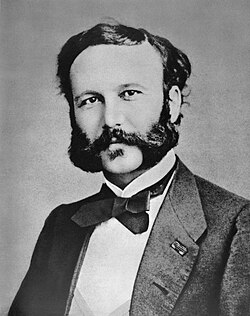
- Key Figure: Henry Dunant, whose experiences at the Battle of Solferino sparked the movement.
- Governing Body: The International Committee of the Red Cross (ICRC).
- Evolution: Revised in 1906, 1929, and 1949 to adapt to modern warfare.
The Origins of the Convention
The impetus for the convention began with Henry Dunant, a relief activist who witnessed the aftermath of the Battle of Solferino in 1859. Fought between Austrian and French-Piedmontese armies in Northern Italy, the battle left approximately 40,000 wounded soldiers suffering on the field due to a critical lack of medical facilities, personnel, and temporary truces.
Deeply moved by this carnage, Dunant published Un Souvenir de Solferino, in which he advocated for an international conference to standardize the care of wounded soldiers. In 1863, Dunant and Swiss lawyer Gustave Moynier co-founded the International Committee of the Red Cross (ICRC). The ICRC recognized that while nations are primarily responsible for their citizens' health, voluntary agencies are essential to supplement official efforts during wartime.
The 1864 Diplomatic Conference
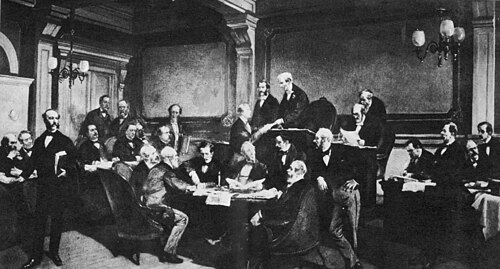
In 1864, the Swiss government invited representatives from European nations, as well as the United States, Brazil, and Mexico, to a diplomatic conference. Presided over by General Guillaume Henri Dufour, sixteen countries sent twenty-six delegates to the Alabama room at Geneva's Hotel de Ville. On 22 August 1864, twelve states signed the resulting convention.
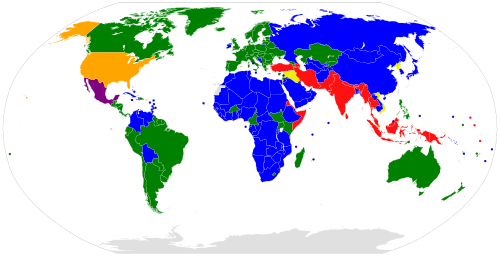
Adoption varied by nation: the United Kingdom of Norway and Sweden signed in December 1864, the United Kingdom in 1865, and the Ottoman government ratified it in July 1865. Later, Austria, the Kingdom of Bavaria, and the Grand Duchy of Hesse signed in 1866, while the United States signed in 1882.
Core Provisions and Application
The original 1864 treaty was concise, consisting of ten articles that derived their power from the implied consent of the states applying them. Its primary mandates included:
- Immunity: All establishments used for treating wounded and sick soldiers were granted immunity from capture or destruction.
- Impartiality: All combatants were to be received and treated impartially, regardless of their side in the conflict.
- Civilian Protection: Civilians providing aid to the wounded were granted protection.
- The Red Cross Symbol: The adoption of the Red Cross as a universal symbol to identify protected persons and equipment.
Expanding the Scope: From 1864 to 1949
As military technology and the nature of warfare evolved, the original treaty became insufficient. It was significantly revised in 1906, 1929, and finally in 1949. The current version has expanded from ten to 64 articles, protecting those who are hors de combat (a French term meaning "out of the fight" due to sickness or injury), as well as religious and medical personnel.
Key articles in the modern framework include:
- Article 12: The keystone of the treaty, mandating that wounded and sick soldiers be treated humanely and prohibiting torture, killing, or biological experimentation.
- Article 15: Requiring that wounded soldiers be collected, cared for, and protected, even if they become prisoners of war.
- Article 16: Mandating that parties record the identity of the dead and wounded and share this information with the opposing side.
- Article 9: Authorizing the ICRC or other impartial humanitarian organizations to provide relief and protection.
Summary of the First Geneva Convention
The following table summarizes the key administrative and legal details of the original 1864 treaty.
| Category | Details |
|---|---|
| Official Name | Convention for the Amelioration of the Condition of the Wounded in Armies in the Field |
| Treaty Type | Multilateral Treaty |
| Date Signed | 22 August 1864 |
| Effective Date | 22 June 1865 |
| Depositary | Swiss Federal Archives |
| Current Status | Integrated into the 1949 Geneva Conventions (196 parties) |
Frequently Asked Questions
What inspired the creation of the First Geneva Convention?
The convention was inspired by Henry Dunant's experience at the Battle of Solferino in 1859, where he witnessed thousands of wounded soldiers left without medical care. This led him to advocate for an international agreement to protect the wounded and the creation of the International Committee of the Red Cross.
What does the term "hors de combat" mean?
"Hors de combat" is a French term meaning "out of the fight." In the context of the Geneva Conventions, it refers to soldiers who can no longer participate in hostilities due to sickness, injury, or capture, and therefore must be protected from attack.
Why was the 1864 treaty revised multiple times?
The treaty was revised in 1906, 1929, and 1949 because the nature of warfare and military technology changed rapidly. Revisions were necessary to close legal ambiguities and expand protections to include maritime warfare and a broader range of victims.
What is the significance of the Red Cross symbol?
The Red Cross symbol serves as a visible sign of neutrality and protection. Under the convention, it identifies medical personnel, facilities, and equipment that must not be attacked, ensuring that humanitarian aid can reach the wounded safely.
Who is responsible for enforcing the Geneva Conventions?
While the responsibility to safeguard the well-being of people lies primarily with individual nations, the International Committee of the Red Cross (ICRC) acted as the instigator for the conventions and continues to serve as a primary enforcer and monitor of these humanitarian articles.