European Parliament Elections: South Constituency Results and Trends
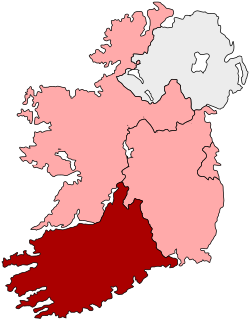
The South constituency has served as a critical battleground in the European Parliament elections, reflecting the shifting political landscape of Ireland. Utilizing the Single Transferable Vote (STV) system—a proportional representation method where voters rank candidates by preference—the constituency has seen a diverse array of representatives from major parties and independent candidates.
Over the last two decades, the region has transitioned through various electoral cycles, with voter turnout and party dominance fluctuating in response to national and European political climates.
Key Facts
- Consistent Performers: Seán Kelly (Fine Gael) and Brian Crowley (Fianna Fáil) have been prominent figures across multiple election cycles.
- Turnout Trends: Voter turnout peaked in 2004 at 62.1% and reached its lowest point in 2009 at 59.2%, stabilizing around 53% in recent years.
- 2024 Outcome: The most recent election saw a diverse split, with Fine Gael, Fianna Fáil, and several Independents securing seats.
- Brexit Impact: The 2019 election results were uniquely affected by the United Kingdom's withdrawal from the EU, delaying Deirdre Clune's seating until January 31, 2020.
Detailed Analysis of the 2024 Election
The 2024 election was characterized by a highly competitive field. Seán Kelly of Fine Gael secured the highest first-preference vote (FPv) at 17.83%, followed by Billy Kelleher of Fianna Fáil at 13.23%.
The distribution of seats highlighted a strong appetite for independent and smaller party representation. Michael McNamara (Independent) and Mick Wallace (Inds. 4 Change) both secured significant support, while Kathleen Funchion of Sinn Féin and Grace O'Sullivan of the Green Party also successfully navigated the count to earn seats.
The electoral data shows a total electorate of 1,345,792, with a turnout of 53.0% (713,323 voters). The quota required for election was 114,761 votes.
Historical Election Performance (2004–2019)
Looking back at previous cycles, the South constituency has evolved in its party preferences. In 2019, the race was marked by a dramatic recount request from Sinn Féin candidate Liadh Ní Riada, which was eventually withdrawn on June 4, leading to the election of Grace O'Sullivan and Deirdre Clune.
In 2014, Brian Crowley dominated the first-preference vote with 27.4%, while the 2009 election saw a strong showing for both Fine Gael and Fianna Fáil, alongside a significant performance by Independent Kathy Sinnott.
The 2004 election established a baseline for the region, with Brian Crowley and Simon Coveney leading the polls, reflecting a period of strong support for the traditional center-right parties.
Comparative Election Summary
The following table summarizes the key metrics across the last five major election cycles in the South constituency.
| Election Year | Electorate | Turnout (%) | Valid Votes | Quota |
|---|---|---|---|---|
| 2024 | 1,345,792 | 53.0% | 688,564 | 114,761 |
| 2019 | 1,417,017 | 53.4% | 719,194 | 119,866 |
| 2014 | 1,221,683 | 55.6% | 657,498 | 131,500 |
| 2009 | 861,727 | 59.2% | 498,127 | 124,532 |
| 2004 | 802,359 | 62.1% | 484,270 | 121,068 |
Frequently Asked Questions
What is the quota in the context of these elections?
The quota is the minimum number of votes a candidate must receive to be declared elected. It is calculated based on the number of valid votes and the number of seats available.
Why did Deirdre Clune not take her seat immediately in 2019?
Although elected in 2019, she could not take her seat until January 31, 2020, because the seat became available only after the United Kingdom officially withdrew from the European Union (Brexit).
Which candidate had the highest first-preference percentage in 2024?
Seán Kelly of Fine Gael received the highest first-preference vote in 2024, with 17.83% of the total.
How has voter turnout changed since 2004?
Voter turnout has generally declined over the two decades, dropping from a high of 62.1% in 2004 to 53.0% in 2024.
What happened with the Rabharta party in 2024?
Lorna Bogue did not appear on the ballot as a Rabharta candidate because the Electoral Commission's registration decision was subject to a 21-day appeal period and was not in force by the June 7 election date.