European Nuclear Energy: National Strategies and Power Capacities
Nuclear energy remains a cornerstone of the electrical infrastructure for many European nations, though the continent is deeply divided on its long-term viability. While some countries have aggressively expanded their nuclear fleets to ensure energy security and self-sufficiency, others have implemented strict phase-out policies in response to safety concerns and public opposition. This landscape is characterized by a complex mix of legacy reactors, cutting-edge third-generation technology, and innovative waste management solutions.
Key Facts
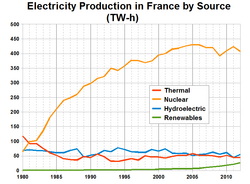
- France is a global leader in nuclear energy, generating approximately 78.1% of its electricity from nuclear sources.
- Germany and Belgium have committed to phasing out nuclear power, with Germany announcing a complete abandonment of the technology in 2011.
- Finland is pioneering nuclear waste disposal with the Onkalo deep geological repository.
- Ukraine possesses one of the world's largest power sectors by installed capacity, with 54 GW.
- Russia is diversifying its nuclear portfolio by developing floating nuclear power plants.
Nuclear Power Leaders and Expansionists
France
Following the oil crisis of the 1970s, France pivoted toward nuclear energy to achieve electricity self-sufficiency. Today, nuclear power provides about 78.1% of the nation's electricity, allowing France to export surplus energy. The government has focused on European Pressurized Reactors (EPR)—third-generation reactors that are safer and more efficient, producing 1,600 MW compared to the 900 MW of older models.
France also leads in fuel recycling, reprocessing roughly 850 of 1,200 tons of used fuel annually into plutonium, which is then converted into mixed oxide (MOX) fuel used in over 35 European reactors.
Ukraine and Russia
Ukraine operates 15 reactors, which supplied 47.5% of its electricity (based on 2007 data). With an installed capacity of 54 GW, it ranks as the twelfth-largest power sector globally. Russia operates 31 reactors and is expanding its reach through floating nuclear power plants. The Akademik Lomonosov, completed in 2018, can power a city of 200,000 people or serve as a desalination plant.
Czech Republic and Sweden
The Czech Republic has seen significant growth, posting a 114% increase in nuclear capacity between 1990 and 2005. It currently operates six reactors with a net capacity of 3,472 MWe. Similarly, Sweden utilizes nuclear energy to supplement hydropower and mitigate oil price volatility, with 10 reactors providing over 40% of its electricity.
The Shift Toward Phase-Outs and Moratoriums
Germany and Belgium
Germany's approach shifted dramatically following the Fukushima I accident in 2011. The government announced a plan to completely abandon nuclear energy, shutting down its remaining plants by 2022. This Energiewende (Energy U-turn) aims to transition the nation toward renewables, though critics warn of potential blackouts and increased reliance on fossil fuels during the transition.
Belgium passed legislation in 2003 banning new reactors and phasing out existing ones after a 40-year lifespan, with a target for all seven operating reactors to be shut down by 2025.
Italy and Serbia
Both Italy and Serbia have historically restrictive policies. Italy shut down its four plants following a referendum after the 1986 Chernobyl disaster. While there were brief attempts to restart nuclear programs under the Berlusconi government, public support remains low. Serbia maintains a moratorium on nuclear power established in 1989, which prohibits the construction of plants and fuel fabrication facilities.
Technical Innovations and Waste Management
Finland's Geological Solution
Finland has taken a global lead in the permanent disposal of spent nuclear fuel. After a 1994 law prohibited exporting waste, Finland began developing deep geological repositories. The Onkalo repository involves encapsulating fuel assemblies in boron steel canisters, enclosing them in copper capsules, and packing them in bentonite clay deep underground.
Romania's Heavy Water Technology
Romania's Cernavodă Nuclear Power Plant utilizes Canadian technology, employing heavy water as a neutron moderator. Currently providing 18% of the nation's power, the plant is designed to eventually meet 40% of Romania's electricity needs once all units are functional.
Summary of Nuclear Energy Status by Country
| Country | Current Status | Key Detail |
|---|---|---|
| France | Active/Expanding | ~78.1% of electricity from nuclear |
| Germany | Phasing Out | Complete abandonment planned after 2011 decision |
| Finland | Active | Developing Onkalo deep geological repository |
| Ukraine | Active | 15 reactors; 54 GW installed capacity |
| Belgium | Phasing Out | Target shutdown for all reactors by 2025 |
| Italy | Inactive | Last reactor closed in 1990 |
| Russia | Active/Expanding | Developing floating nuclear power plants |
Frequently Asked Questions
What is an EPR reactor?
The European Pressurized Reactor (EPR) is a third-generation nuclear reactor designed to be safer and more efficient than previous models. It can produce approximately 1,600 MW of electricity, significantly more than the 900 MW produced by older generation reactors.
How does Finland handle its nuclear waste?
Finland uses deep geological repositories. Spent fuel is placed in boron steel canisters, sealed in copper capsules, and buried in the Onkalo repository, where they are packed with bentonite clay to prevent leakage.
Why did Germany decide to phase out nuclear power?
While nuclear energy was already a subject of political debate, the 2011 Fukushima I accident in Japan accelerated the decision. The German government sought to transition toward renewable energy to gain a competitive advantage in new technologies.
What is MOX fuel?
Mixed oxide (MOX) fuel is created by reprocessing spent nuclear fuel to extract plutonium, which is then blended with uranium. This allows reactors to recycle waste and utilize it as a fresh energy source.
Which European country has the highest reliance on nuclear power?
France has the highest reliance, producing approximately 78.1% of its total electricity through nuclear power stations.