Eurasian Coot: Behavior, Breeding, and Ecology
The Eurasian coot is a distinctive member of the rail family, known for its bold presence on open waters and waterside grasslands. Unlike many of its more secretive relatives, the coot is frequently seen in the open, exhibiting a combination of aggressive territoriality and complex social structures that vary by season.
Key Facts
- Diet: Omnivorous, consuming algae, vegetation, seeds, fruit, and small live prey.
- Clutch Size: Typically 6 to 10 buff-colored, speckled eggs.
- Incubation: 21 to 24 days, shared by both parents.
- Development: Chicks are precocial (born relatively mature) and nidifugous (leaving the nest shortly after hatching).
- Behavior: Highly territorial during breeding; forms large flocks during non-breeding seasons.
Behavior and Ecology
The Eurasian coot is characterized by its assertive nature. During the breeding season, both parents vigorously defend their territory. In contrast, during the non-breeding season, they may gather in large flocks, a behavior likely evolved to avoid predators.
While the coot is a capable migrant—often traveling long distances at night—it is generally reluctant to fly. When taking off, it performs a characteristic run across the water's surface with significant splashing. This same running motion is used on land or water to escape intruders or during territorial disputes without actually taking flight. While swimming, the coot is noted for bobbing its head and performing short dives initiated by a small jump.
In physical confrontations with other waterbirds, particularly other coots, the species employs a specific combat tactic: charging the opponent and striking them with its long legs.
Breeding and Nesting
Coot nests are bulky, bowl-shaped structures made of plant stems and leaves, lined with finer materials. These nests may float on the water or be built on low, submerged stumps and logs. While usually concealed in vegetation, some nests are placed in the open. The male typically collects the nesting material, which the female then incorporates into the structure.
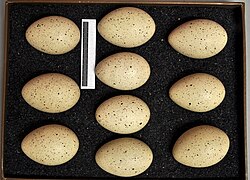
The female lays eggs at daily intervals, usually resulting in a clutch of six to ten smooth, buff-colored eggs with black or dark brown speckles. On average, these eggs measure 53 mm by 36 mm and weigh 38 g.
Parental Care and Chick Development
Both parents incubate the eggs, starting after the second egg is laid. Because eggs hatch asynchronously (at different times), the chicks emerge over a period of 21 to 24 days. The chicks are precocial and nidifugous, meaning they are mobile and leave the nest almost immediately.
Young coots are covered in black down with yellow hair-like tips on the body. They feature orange-red tips on the throat, nape, and sides of the head, with red tips between the eyes and on the lores. Their bills and shields are bright red, though the bill tip is white.
For the first three to four days, the female broods the chicks while the male provides food. The male also constructs platforms for roosting and brooding. As the brood grows, parents may split the group, with each adult caring for a separate set of chicks. Young coots can feed themselves at approximately 30 days and fledge between 55 and 60 days.
Reproductive Challenges
Most Eurasian coots produce a single brood per year, though some populations, such as those in Britain, may attempt a second. They typically begin breeding between one and two years of age.
Chick mortality is primarily driven by starvation rather than predation, with most deaths occurring in the first 10 days. Under extreme food scarcity, adults can be brutal, biting begging chicks to silence them; in severe cases, this can result in the death of the chick. Additionally, some coots engage in brood parasitism, laying eggs in the nests of other coots to extend their reproductive life or compensate for poor physical condition.
Feeding Habits
As an omnivore, the Eurasian coot maintains a diverse diet. It consumes algae, seeds, fruit, and various vegetation, as well as small live prey and the eggs of other waterbirds. Its feeding techniques are highly adaptable; it may graze on land or in the water, upend its body like a mallard to reach food, or dive completely submerged to forage.
| Feature | Detail |
|---|---|
| Egg Dimensions | 53 mm × 36 mm |
| Egg Weight | 38 g |
| Incubation Period | 21–24 days |
| Fledging Age | 55–60 days |
| First Breeding Age | 1–2 years |
Frequently Asked Questions
Why do Eurasian coots run on water?
Coot's are reluctant flyers. They run across the water surface to gain momentum for takeoff or to move quickly during territorial disputes and escapes without needing to fly.
What do Eurasian coots eat?
They are omnivores that eat a wide range of foods, including algae, aquatic vegetation, seeds, fruit, small live prey, and occasionally the eggs of other waterbirds.
How do coots handle their young during food shortages?
Under pressure from lack of food, coots can become aggressive toward their own offspring, biting chicks that beg for food to stop the behavior, which can sometimes be fatal.
Do both parents help raise the chicks?
Yes, both parents are involved. The female typically broods the chicks for the first few days while the male provides food and builds roosting platforms.
What is the difference between precocial and nidifugous chicks?
Precocial means the chicks are born in a relatively advanced state (with down and the ability to move), and nidifugous means they leave the nest shortly after hatching.